It has been a trip that wears down both body and mind. And yet, although I never once sat down to write, today I feel so much that I'm finally putting it into words. The truth is, I wanted to tell this story first to the person closest to me, but it breaks my heart that I can no longer do that. So instead I'm heading straight into writing it down, and since it's been a while, I'm not sure it'll come out well.
In fact, Madrid is not an old city. It's a city that became a capital not all that long ago. In a way, I wonder if there's any other city that sprang up so abruptly in empty space the way Madrid did. Paris, for example, has been the center of France since long, long ago; Germany was so heavily divided, and in Italy's case there were many periods of fragmentation into states like the Duchy of Florence and the Republic of Venice, so each city carries its own history, and even Seoul has a civic history that goes back to a time of contention among the Three Kingdoms. But Madrid's history as a city does not reach a thousand years. Actually, not reaching a thousand years isn't what matters. What matters is that Madrid's identity as a city was determined from the time the 'railroad'—which drove rapid urbanization—was laid. (Of course, Madrid was chosen as a city in order to break away from places where aristocrats had settled, like Toledo. After that, the railroad cultivated this city into rapid development.) This city is close to a typical modern city.
When you go to London, there's an atmosphere unique to London. If you picture low buildings, winding streets that lead on and on, countless paths where you don't know where to go, and stone-paved sidewalks, then you're picturing London. In Paris, the city's buildings generally share a similar design and color palette. There's an astonishing degree of uniformity, and even the way the streets spread out is similar. On top of that, this Paris of theirs reportedly still won't let you put up a building, under city policy, if it doesn't harmonize with the surrounding buildings—so that says it all. Madrid has none of that. That's why the city is bleak and not much fun; Madrid is a city like Seoul.
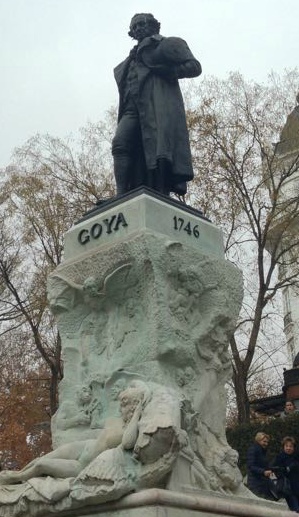
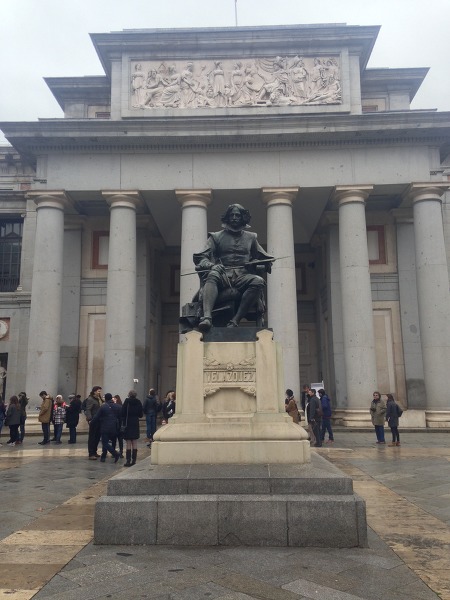
In that Madrid, what left a deep impression on me were the very statues of Goya and Velázquez. Francisco Goya and Diego Velázquez are Spain's 'national painters.' That is to say, most Spaniards know these two painters. Then again, even I know these two, so how could they not? You could think of them as painters with roughly the level of recognition that Kim Hong-do and Sin Yun-bok have in Korea. We'll look at their representative paintings below. The point I want to make is that the statues of Goya and Velázquez stand prominently in important spots at the Archaeological Museum and the Prado Museum. Statues that don't exist for Jeong Seon, Sin Yun-bok, or Kim Hong-do in Korea are erected this grandly in this nation. So that you can see them when you go to the museum.
1. Goya
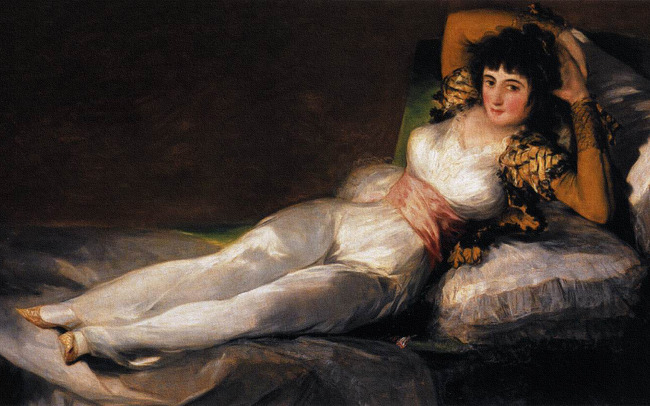
I first saw this painting as a child. I'm not sure if it was luck, but my mother bought me several books containing paintings and explanations of them, and among the paintings I saw, this was one of the most captivating. Of course, this painting is better known as 'The Nude Maja,' but in any case, whether it's the clothed Maja or the nude Maja, it's Goya's work. Even people who don't really know Goya knew this painting.
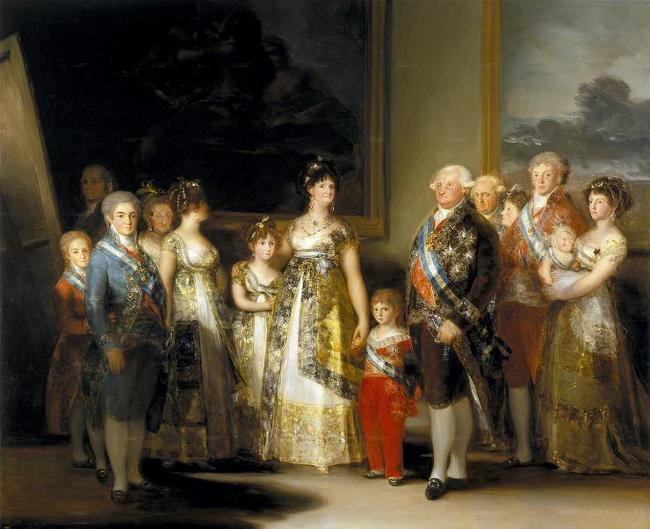
Goya was a court painter of Spain, and this painting depicts King Charles III—the king before Spain was overthrown by the French Revolution of the time—and his family. Goya is said to have had a distinctive ability in depicting people. They say he captured a person's character in their face; Goya was that kind of painter. There were apparently quite a few people who were dissatisfied with his paintings. Even I felt that the king seemed to be painted a little more humorously than majestically.
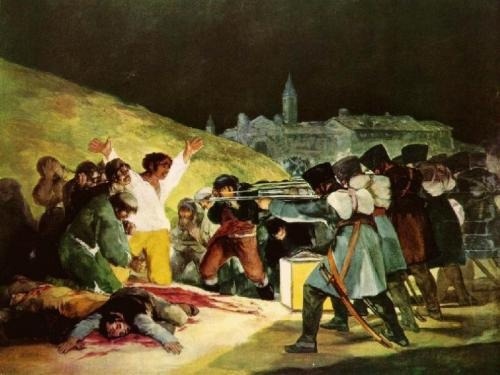
This painting bears the title The Third of May 1808. Besides this one, there is one more painting by Goya related to the 'French Revolution' on display at the Prado Museum. The Prado can be regarded as the museum that represents Spain, and this painting, the Charles III painting, and the Maja painting are exhibited together. In any case, this painting of Goya's lets us examine a cross-section of history that hints the French Revolution was not simply a 'revolution.' To some it was a revolution, but to others it was violence.
These three paintings of Goya's are the most essential works in placing him among the ranks of national painters. Next, let's look at just two or so of Velázquez's paintings.
2. Velázquez
The Velázquez statue is truly magnificent. If Goya's statue shows the image of a dignified and authoritative court painter, Velázquez's statue has, how should I put it, a posture that seems to say 'I am the best,' and I like that. Usually when you look at statues, most are of figures holding a weapon, simply standing, or riding a horse, but this statue gives a strong sense of expressing through sculpture the 'painting' that lies at the core of 'Velázquez.' The reason this statue is wonderful is that it imbued the statue with 'identity.'
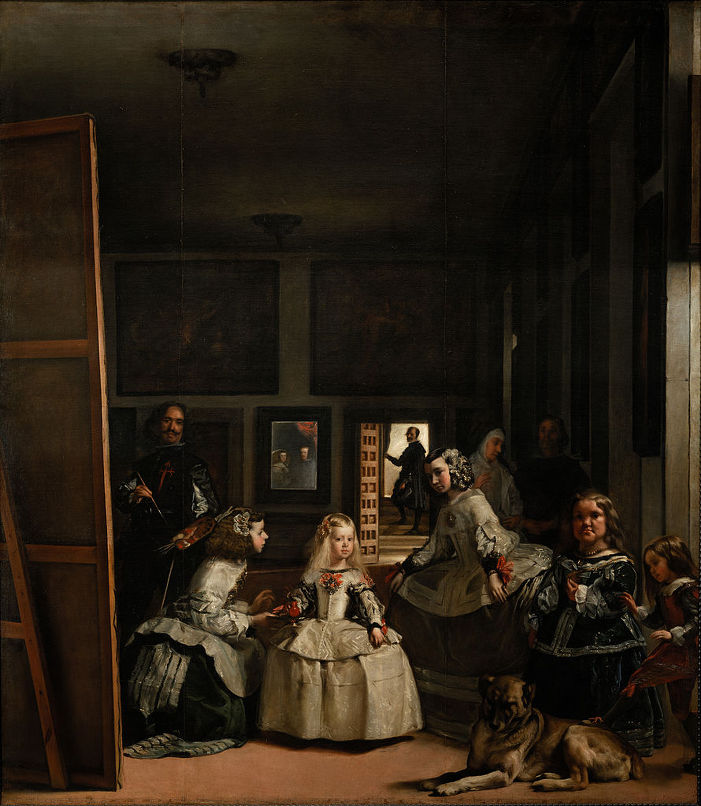
This painting, better known to us under the title Las Meninas (The Maids of Honor) by Velázquez, would be the masterpiece among his countless works. To summarize the many explanations of this painting: ordinarily the palace 'maids of honor' were not subjects of paintings, yet Diego incorporated these figures into his work, and here an unattractive maid stands out conspicuously. (From the clothing, you can tell who is the princess and who is the maid.) In other words, the greatest significance lies in his having turned into a painting those who had never been painted, and the 'king'—who was the most important subject and presence of the time—is often noted to be painted as a tiny figure in the far back. This is the most accurate explanation. He is highly praised for the boldness of inserting himself, 'Velázquez,' who usually didn't appear, into the painting, and for shrinking the king and depicting the back area of the court. Moreover, his realist technique is used as important reference material by later painters.
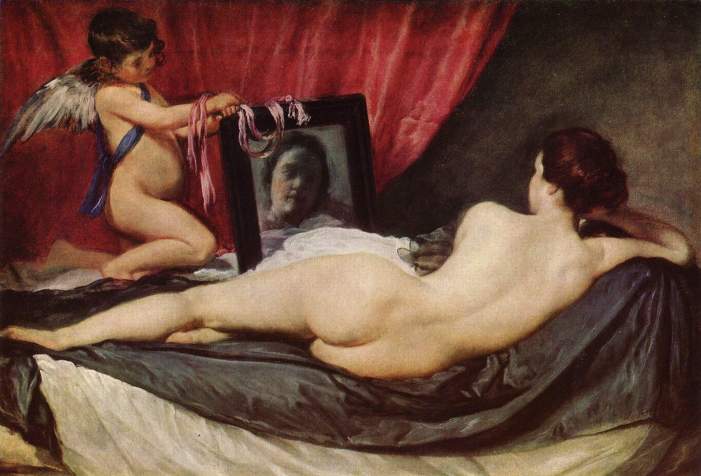
This painting is the work called The Rokeby Venus (The Toilet of Venus); on the left sits Venus's son 'Cupid,' who reflects Venus through a mirror. One distinctive feature you can pick out is that it's a rare 'nude' painting from a time when Spain was a Catholic country. This is in the same vein as Goya's 'The Nude Maja.' However, this painting is not at the Prado but at the National Gallery in Britain. The National Gallery is large, but there are too many people and it isn't quiet inside. Still, since you can see it for free when you go, it's worth seeing once.
The reason I've given such a long-winded explanation is that these men are praised as Spain's national painters, and their statues are erected in front of Madrid's two largest museums. This lets us glimpse the way the nation regards 'art,' and I wonder whether there's any possibility that statues of Gyeomjae Jeong Seon, Danwon Kim Hong-do, or Hyewon Sin Yun-bok would ever be erected in the Republic of Korea. To reach that point, I think Korea still has a long way to go. There's a lack of pride in one's own culture. People might know Andy Warhol's Marilyn Monroe, but they probably wouldn't know Gyeomjae Jeong Seon's true-view landscape paintings. This is precisely the reason I come to see Spain as an 'advanced nation' rather than a 'backward' one.
I hope that statues of Korea's renowned artists will be erected in front of the National Folk Museum or the National Museum of Korea. By around that time, I think pride in our own culture would grow a notch as well. At least the people of Madrid were like that. Looking at the statues of Goya and Velázquez, they were remembering the fact that their nation had once been brilliant.
Comments 0
No comments yet. Be the first.