0. First, something I need to say.
Before getting in, since this is 'my method,' I want to say in advance that it isn't the right answer. As people living in postmodernism, we have many chances to encounter diversity and many chances to accept it, but I'm not sure whether we actually accept it. For instance, let's take Cheolsu and Yeonghui as an example. Cheolsu doesn't quite understand a certain behavior of Yeonghui's. Feeling that Yeonghui's behavior is unpleasant and gives him a sense of disgust, he tells Yeonghui to stop that behavior. Is telling her to 'stop' like this violence or not? Usually in such situations, unless Yeonghui's behavior is enormously socially unethical, it amounts to violence. Because Cheolsu thinks his own values are correct and is demanding correction from Yeonghui, while from Yeonghui's standpoint, the moment she feels her own values are correct, the question 'why should I not do the behavior I think is right?' inevitably arises. And there are really many cases like this these days. Even though diversity exists, people rather fail to accept that diversity. Because there are more cases where people have no experience of accepting it and don't know how to accept it. The story seems to be going off the rails, but to return to the main point, if you think my method seems wrong, it's okay to say it's wrong. You can think it's wrong. But it may not necessarily be something you have to call wrong. Advice like "I think you might be missing something in such-and-such a part" would be better. They say Korean society is one that doesn't listen well to advice, but I listen well to advice, so don't worry and give me advice. Then I'll probably reflect it as I write. I'm not writing this because someone tore into me. Since my writing is my own, my own color will surely show, and I'm worried people might appear saying this is wrong, and corrections of factual matters are welcome. But a perspective for viewing facts is just a perspective.
- And before the modern era, there will probably be a lot of explanation focused on painting and sculpture. Tying in music history too would make the volume too vast. It helps with understanding, but my capacity can't handle it. I think it'll be easier to understand if you take what I call 'art' below as a collective term for painting or sculpture.
1. Introduction
I grandly called it my method of dividing eras, but there's nothing much to it. Still, let's first divide eras and move on. I usually classify art as follows. First I divide by region, and then I tend to divide by era according to region. You could divide by era first and then by region, but I do it this way because I feel you can't generalize, since the timing and form of change differ by region.
1) European art: ancient, medieval, post-Renaissance, modern, contemporary
- Art outside Eastern Europe (the art of countries including Southern Europe and most of Central and Western Europe); at any rate, from Spain to Germany, Austria, and a bit of Poland form one art sphere. Of course they differ, and the speed and timing of change differ slightly too, but it's not as different as Russia. Russia was the country with the latest Industrial Revolution, you see; this is a part where you can see how important regional proximity is. Since I was just trying to use sets, dividing into non-Eastern-Europe and Eastern Europe was convenient, so I divided it this way.
- Eastern European art; Russia, Ukraine, etc.. that is, Slavic-ethnicity countries and others.
- American art; exceptionally, the reason I put American art here is that up to the modern era, before it differentiated in the contemporary era, the origin is the same. Indigenous art has to be handled separately, so I put it separately below. But contemporary American art, excluding modern art, has a special value. The most important thing is that the origin of pop art started here. There are works like Lichtenstein's Happy Tears, the Beethoven and Marilyn Monroe Andy Warhol painted, and the 'dog' and 'person' pictures Keith Haring drew.
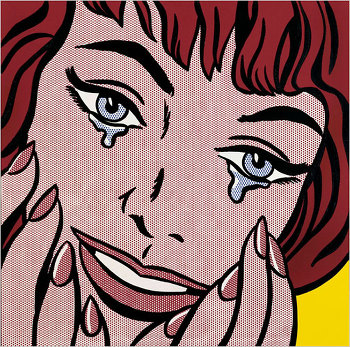
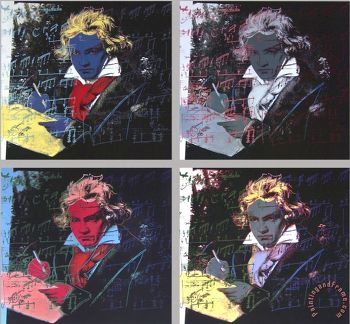
The reason for setting up the ancient era is not because of painting but because of sculpture and architecture. For example, there's a sculptural work like the 'Discobolus.' The medieval era needs to be set up separately in that both painting and sculpture were for the sake of religion. There's also a recent trend of opinions emerging that, breaking away from the notion of this period as merely a 'Dark Age,' it could rather have been a golden age. The Renaissance was a period of the beginning of change in that Italy was its center, and in that its beginning was connected to religion, leaving the influence of the medieval era, while at the same time beginning to place humans back at the center. Modern art covers most of the European painters we know. The Impressionist painters we crammed in middle and high school art class all fall here. The contemporary era is a period where diversity also greatly increased, making it hard to define artists, but broadly there is postmodernist art, which emerges starting with avant-garde and pop art. It's the era when materials and forms became most diverse.
2) Eastern art
- Korean art: Goryeo, Joseon, late Joseon~Japanese colonial era, contemporary
Works from the Silla, Goguryeo, and Baekje periods are few in number, and I've had almost no chance to see them. The Heavenly Horse Tomb, the Seven-Branched Sword, the three-legged crow in tombs, and the pictures of the Black Tortoise and White Tiger would all belong to art too, but this isn't yet organized in my head, so I'll write about it in the long term but it's not a priority right now. But the Buddhist 'temple paintings' connected to Buddhism in the Goryeo period have a distinctiveness in that they are temple paintings with unprecedented and unparalleled splendor. Perhaps because it's fascinating that a religion pursuing the Way, like Buddhism, mixed with splendor, almost none of the paintings from this period remain in Korea. It's a sad reality that they're scattered around the world. This is also why a Goryeo Buddhist painting exhibition is hard to hold.
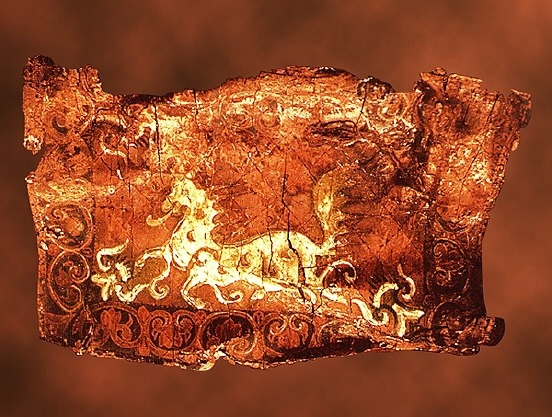
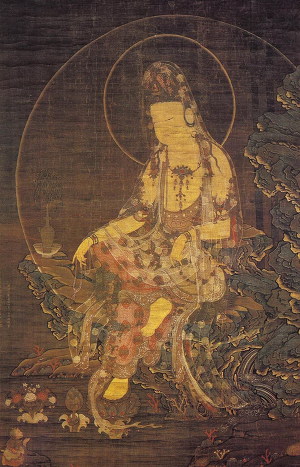
Joseon-era art was a tool of record and a tool to express royal authority. Works like the 'Irworobongdo (Sun, Moon, and Five Peaks)' belong to the most basic works that reveal royal authority. In the later period, you can know the worlds depicted through genre paintings and landscape paintings. There are figures you'd already know well, like Kim Hong-do, Shin Yun-bok, and Jeong Seon. Also, the 'uigwe (royal protocols)' are themselves both a record and an artwork.
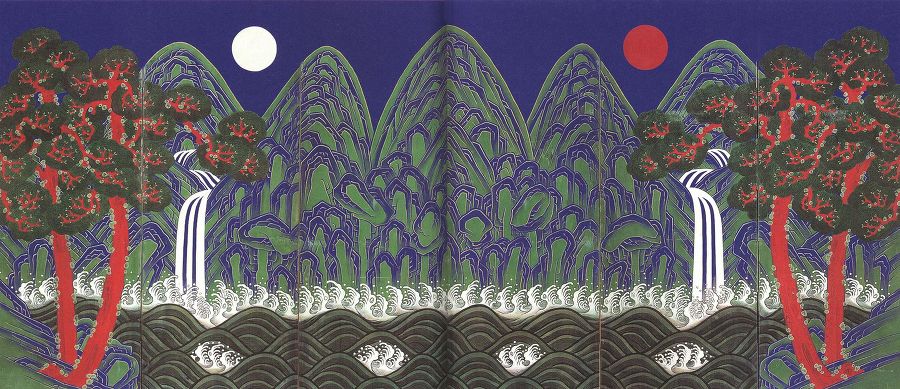
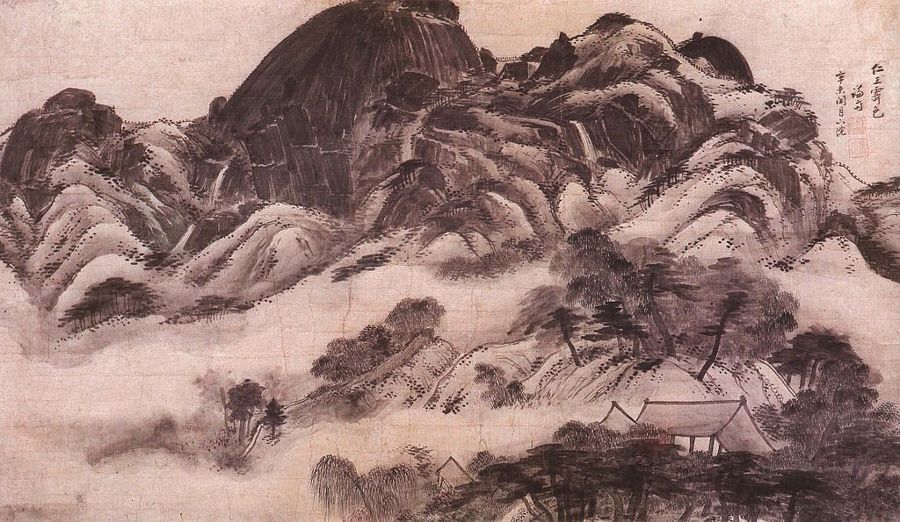
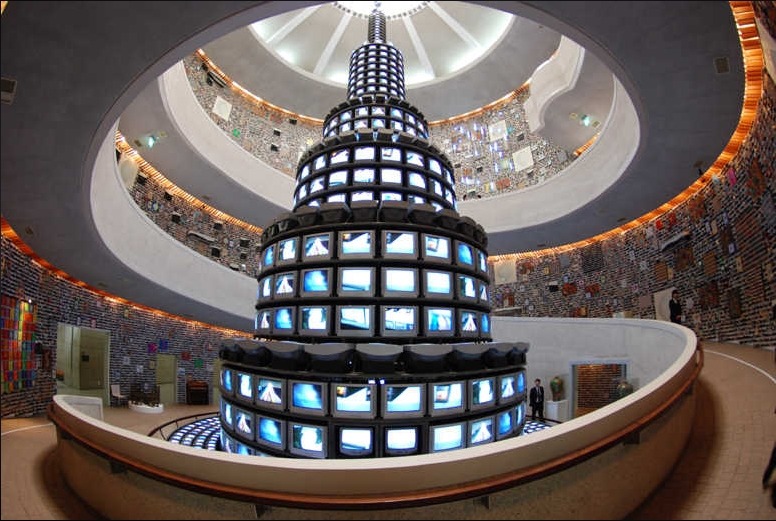
The reason I separately inserted late Joseon~Japanese colonial era is because of Kim Gwan-ho and Kim Chan-yeong, who came up while I was reading A Study of Kim Dong-in (Minumsa, by Kim Yun-sik). The pictures appearing in the coterie magazines were all meaningful pictures. So I think I do need to mention them briefly, and for contemporary, well, if I had to choose a contemporary Korean artist in Korea, I could choose Nam June Paik. The 'The More the Better,' made of countless TVs that you see when you enter the National Museum of Modern and Contemporary Art in Gwacheon, is Nam June Paik's representative work. Nam June Paik's influence was so great that you can't discuss video art without leaving out Nam June Paik.
- Chinese (Han ethnicity) art: art by country; but I don't know much. Styles generally known, like flower-and-insect paintings, are works drawn across all eras. I think I'll explain just a few works, mainly figure paintings. Since China greatly influenced Korean painting, I'm not sure whether to explain it separately. Chinese-related art exhibitions don't get held well either, so I haven't had much chance to go see them. Since they're stylistically similar, when explaining Korean art I plan to just mention something like 'in China there's this kind of work' and move on.
- Indian art: For this one I've heard only a little about the early side, and I haven't taken a precise interest. The volume is vast. But Indian art is truly valuable art. The country of India has influenced the world in many ways since ancient civilization. Examples are in aspects concerning mythology and aspects concerning religion. But unfortunately I've never properly studied this country. I'll write about this only once I'm in my thirties. After I get a job and build up a bit more knowledge.
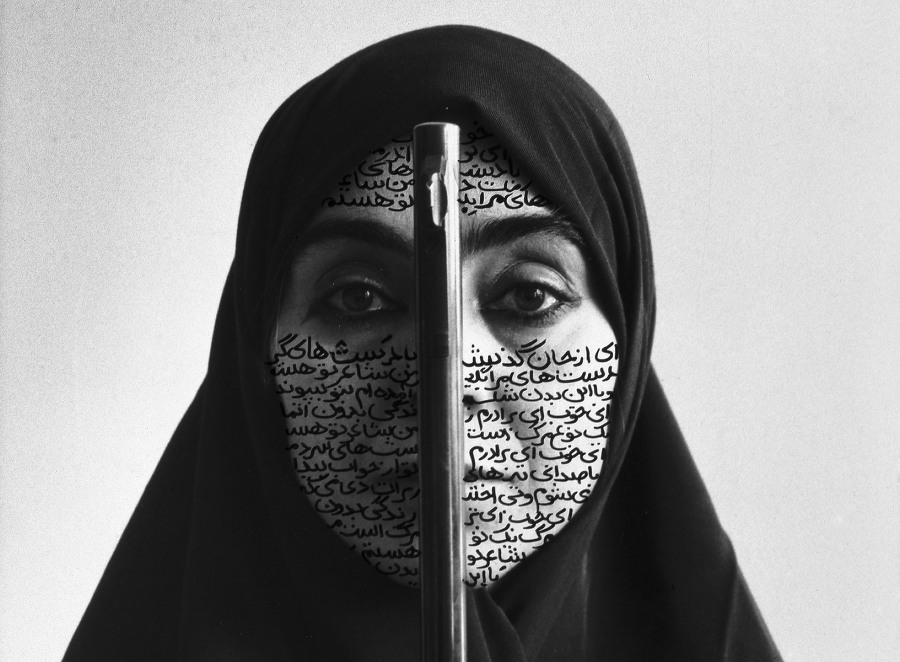
- The Middle East; this is a part where I only know the contemporary art side, but actually the part with more volume is the religious art from the 8th century onward, connected with Islam. Nevertheless, Shirin Neshat, one of the contemporary artists I most respect, shows art containing a narrative of resistance. This is interesting in that it appears as an issue related to the liberation of women living in Iran.
- There's also Southeast Asia, and the Tibetan lineage, but I don't know those well either. Tibetan-lineage art including the Dalai Lama is quite meaningful, and Thai Buddhist art is meaningful in that it differs from East Asian Buddhist art, yet I know nothing about it. I haven't been able to read the books. The limits of a hobby..
3) Others; calling it the Third World is awkward, but these too are important arts. You might wonder or get annoyed at why there's so much that's important by this point, and the reason is precisely 'diversity.'
- Inca, Maya civilizations: These civilizations are probably among the most important. Even though they've disappeared.
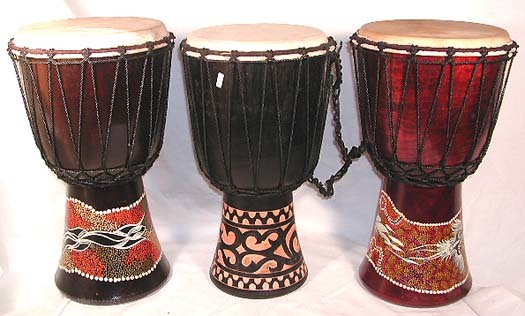
- Australian Aboriginals: The place where I first encountered the instrument called 'percussion' was in this area. I knew about it even before people brought it onto a TV program to play it, saying they make music with it; anyway, this area's art also has a strong shamanistic character. I thought people would take more interest these days, as the value placed on preservation has risen, but that's not the case.
- Native Americans: The art of the people called Indians. It'd be easy to picture if you recall the movie 'Dances with Wolves.'
- Egypt ; Egypt, ancient civilization itself, is probably one of the countries that, along with Indian art, most influenced European artistic styles overall. It needs to be dealt with, but the volume is too much. Won't it be hard? Most of what I know concerns architecture and lifestyle. There's a part about mythology too, but it looks like it'll take some time to write tying this in with art.
- Indigenous arts in Africa; I've watched many documentaries, but again, I don't know anything in particular beyond art's shamanistic function.
4) Contemporary art
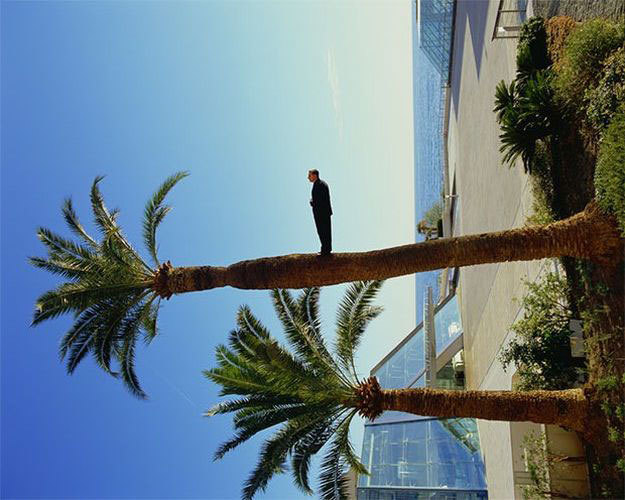
- Honestly I don't feel the need to divide it separately... since the distinctiveness differs by artist, not by region. Still, it's a work that has often stayed in my memory over the years.
2. The parts where exhibitions are usually held in Korea
1) Modern European painting; the Seoul Museum of Art used to bring in modern art often, but these days it doesn't seem to. It's gone to pieces. Still, the Seoul Arts Center and the War Memorial of Korea still carry out that function. But whether the quality is high is questionable. Honestly questionable.... Even though the National Museum of Korea has the highest quality, the breadth of its special exhibitions is really diverse here; since it doesn't bring in only contemporary works regardless of East/West and era, it brings in modern paintings too, but it's just one part. So since modern painting isn't the main focus, modern painting isn't always there. Still, if you get the chance, seeing the National Museum of Korea's modern art exhibition is best. The exhibition hall is large too..
2) Contemporary painting, installation art, video art, sculpture; just go to the National Museum of Modern and Contemporary Art. They're in Gyeongbokgung, Gwacheon, and Deoksugung, and I think Gyeongbokgung and Gwacheon are well focused on contemporary painting and installation art. Deoksugung also exhibits contemporary art, but this one is a special-exhibition hall, so the theme is clear and it's relatively easy to focus.
3) Korean art; it's spread across various national museums in Korea, and if you want to go to a place that has it all gathered, go to the National Museum of Korea. Oh, and if you go to the DDP (Dongdaemun Design Plaza), the Kansong Cultural Exhibition will probably be on; the Korean paintings exhibited here include quite famous and meaningful Korean paintings. There's also a Knowledge Channel e video about Kansong Jeon Hyeong-pil, so it's good to watch that alongside as you look at the Korean works. As an aside, the DDP sometimes has photography exhibitions and contemporary art? design-related exhibitions.
4) Others; there are many museums but I don't have the capacity to explain them all, so I made one item for others. Sejong Center, Daelim Museum, Art Sonje, Leeum, well there are an enormous number of them, it's just that I don't have the capacity to go to them all. If I'd majored in something related to this field I probably would have gone, but since I didn't, making it that much a part of my life was hard. If you're curious about what kind of art other museums exhibit, search 'exhibition schedule' on Daum or Naver and countless exhibition schedules come up. From there, set your region, find what you want to go to, and go. They're kinder than I am, so you can get more help.
3. The parts I enjoy looking at
1) Contemporary art: This is a part where my thinking changed recently. Before, I thought modern art was the most valuable, but actually nothing seems as aristocratic as modern art, so my thinking changed. Among modern art, a representative work revealing the lives of common people is Goya's painting related to the French Revolution. But most center on the lives of aristocrats and kings. (Let's set works like 'The Potato Eaters' aside as exceptions.) But in contemporary art that very concept has almost disappeared, perhaps because being rich doesn't make you an aristocrat. Also, I like the way that diversity manifests. Of course, the form of contemporary art is incomparably more unique than the art before it, so it might cause some resistance, but painting doesn't necessarily have to be the only art; you need at least that much tolerance to reduce the resistance to encountering contemporary art.
2) Modern European art: There are many works, really many, and the advantage is that you can view them according to your taste, and the pictures we usually think of as 'pretty' are probably all here. I can't say much. Since there's so much volume, there's so much to talk about... I won't talk at length. There are really many chances to encounter it. Something is probably going on in Seoul right now.
3) Goryeo Buddhist painting: Goryeo Buddhist painting is worth seeing once. If you get the chance, that is. It's hard to see precisely because there's no chance, and that's exactly why it's worth seeing. It's also a chance to be amazed that Korean painting has pictures like this too. So if there's a chance, it's my number-one recommendation. But whether a chance will arise is questionable. Going around the world seeing one work at a time might be meaningful too.
4) Western antiquity: You have to see the sculptures based on the stories from Greek and Roman mythology at least once. Even if you're not interested in sculptures related to the Dangun myth, for this one you're likely to know the stories too, so wouldn't it be nice to see? I found it fascinating to directly see things I'd read in books or seen once, things my teacher talked about, things I heard from someone. Some gave me a feeling of being incredibly great and some didn't, but the emotion of fascination came up in almost every case.
4. To conclude, I'm thinking about the writing to follow.
The reason I didn't mention earlier the reason or necessity for dividing the eras of works is that there is none. There's no reason or necessity. It seems to be just an organizing method that arose from steadily looking at art. Just as our skill at organizing clothes grows when we fold clothes often, this too is something I structured in my own way. Since it arose as I did self-exploration, you can build your own structure. It's fine to look at someone's structure diagram and borrow it to make it your own, or it's fine to make a new one; that's your part. Someone can help, but connecting it, separating it, and stacking it up neatly yourself is something you'll gradually do as you take an interest in art. Unconsciously, of course. The time I broadly divided art exhibitions into 4 types was in my junior year of university. In the year that was becoming my 5th year of viewing exhibitions. The first division I made then was into 'sculpture, painting, video art, installation art,' and now it's become much more complex. It seems it became complex because it's the result of a lot of thinking.
Since it's the first piece, I put in a few more images, and on the other hand, worried that if it's too long people would get bored scrolling down, so I wrote concisely and trimmed it; I'm a bit more anxious about how it turned out, but probably when I talk about 'the kinds of art' I'll go more work-centered. I'll have to think for a while about what story to start with.
I wish you a pleasant end of June.
Comments 0
No comments yet. Be the first.