Before getting into it, I'll briefly explain why I'm bothering to mention Stockholm's subway 'separately.' Hmm, one of the things that comes to mind when we think 'Northern Europe' is precisely 'design.' Nordic design, Nordic-style curtains, dishes, spoons — there's actually a fantasy about things that come from 'Northern Europe.' I think this is because Northern Europe's overall welfare level is very high, and because the impression remains of 'advanced countries' with outstanding civic awareness. Among those aspects, I'm especially interested in education and design, and as it happened I'd heard that Stockholm's train stations have quite beautiful designs, so I made a separate stop.
First, the inside of the subway. There were hardly any people - that's because I'd come almost all the way to the last stop. Normally the seats aren't this completely empty, but who's going to ride the subway all the way to the terminus on a weekday afternoon? I was only able to wander around precisely because I was a devoted traveler..
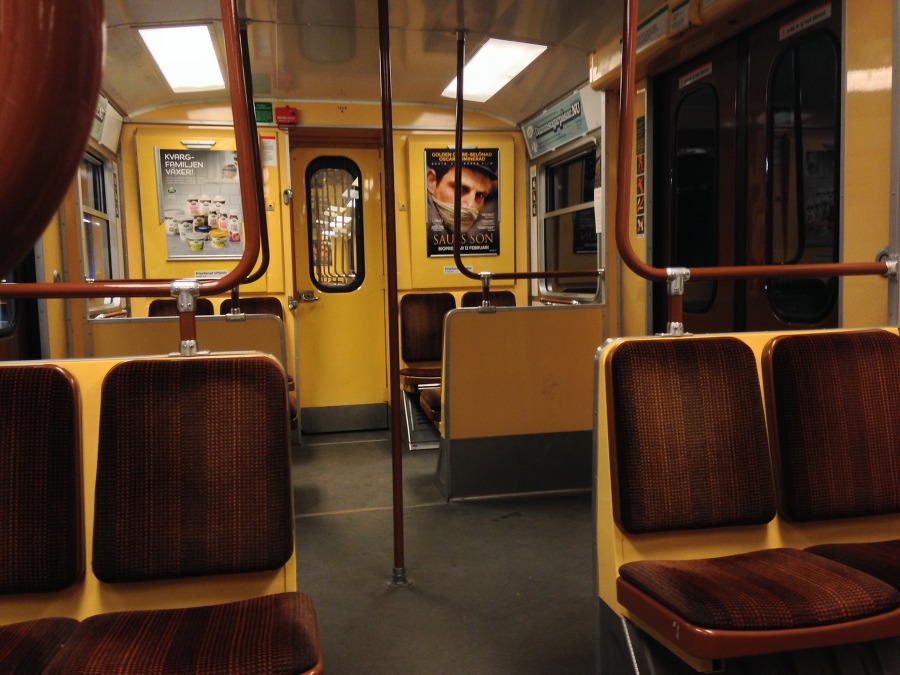
The interior is quite classic. Personally, what I like about European subways is that the seats are arranged in that 'front-and-back' configuration. A design like Korea's, where seats are attached along the left and right, makes it a structure where people can easily get into the train, but on the other hand it also means there's less space to sit.
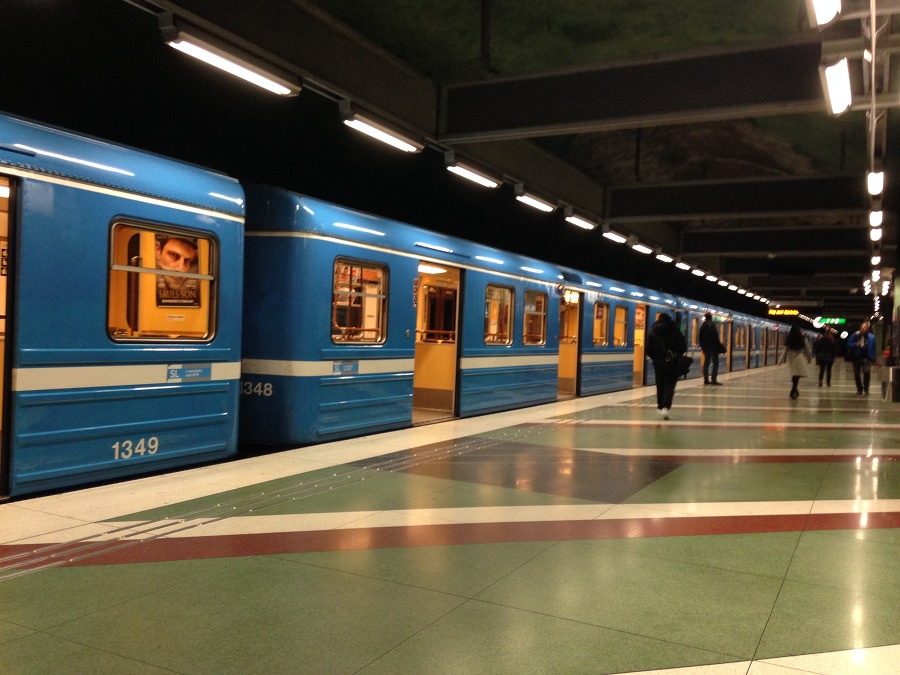
I tend to like the color blue, and the yellow strangely went well with that kind of blue train interior design. From the photo below on are interior shots of various stations.
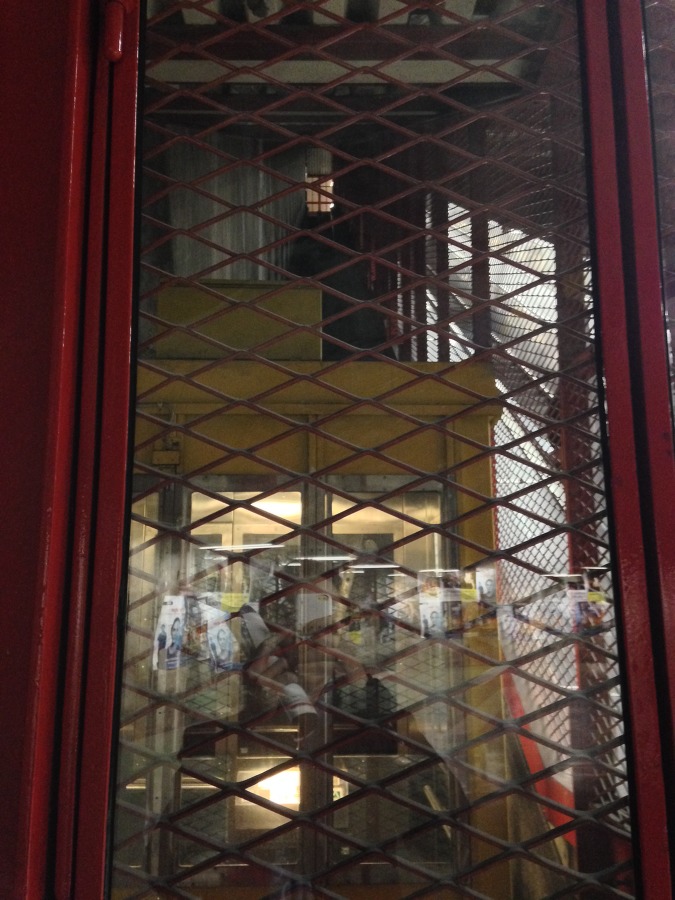
A classically designed elevator..
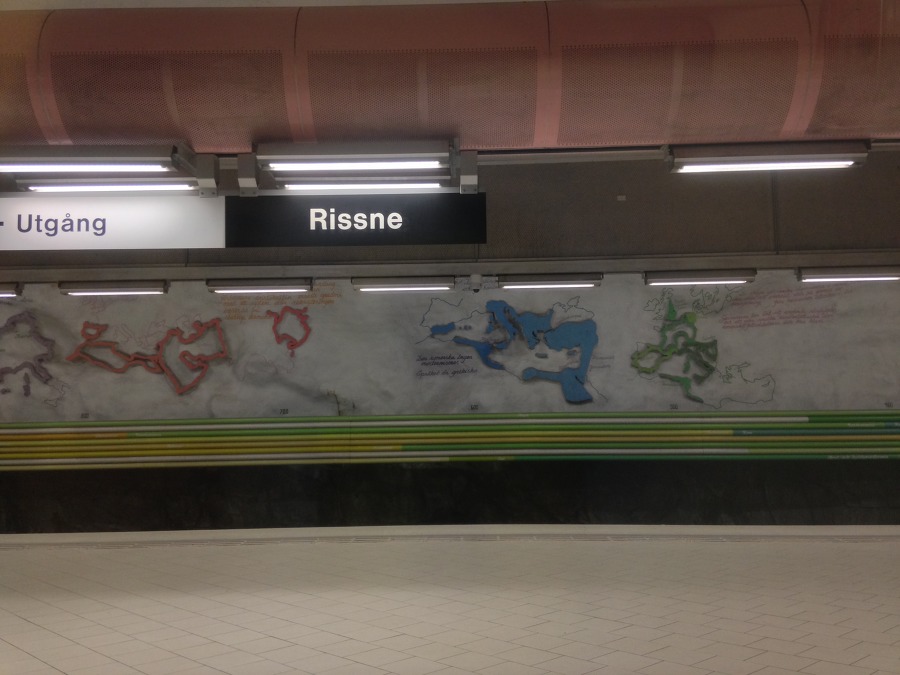
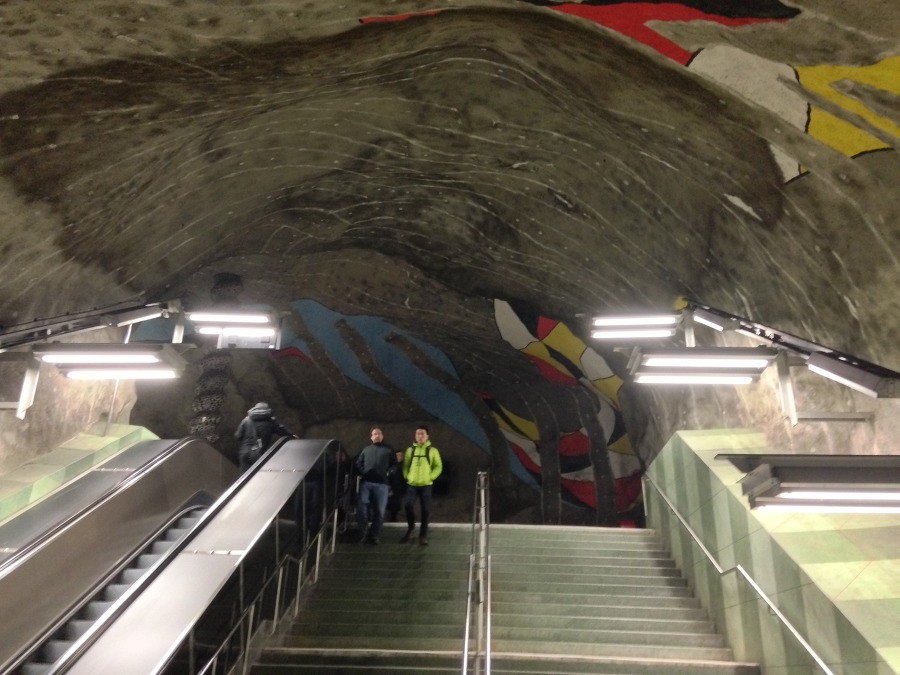
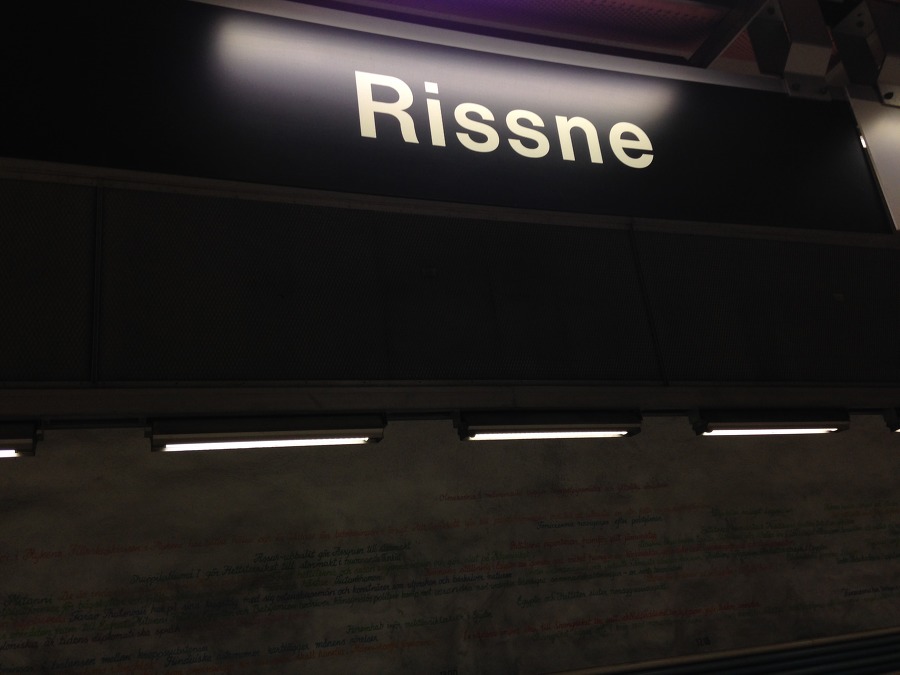
I liked this station the most. The station name, as shown above, is 'Rissen.' The things visible below are pictures of Europe. They've drawn world history in miniature through maps. Across the entire station, that is. I'd never seen this kind of station interior design, and it's truly wonderful. Everyday education must be taking place. Since I can't read Finnish I can't know exactly what's written, but since I knew European history roughly, I understood the pictures. Starting from the Roman Empire — the Turks, the Holy Roman Empire, the Frankish Kingdom, and so on — all of European history was in there. Later, Eastern history came up alongside it too.
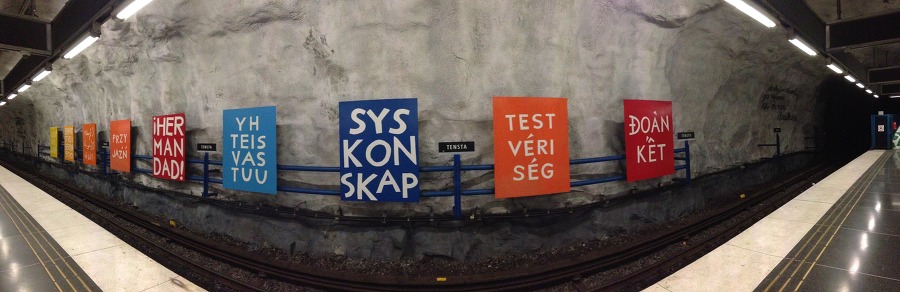
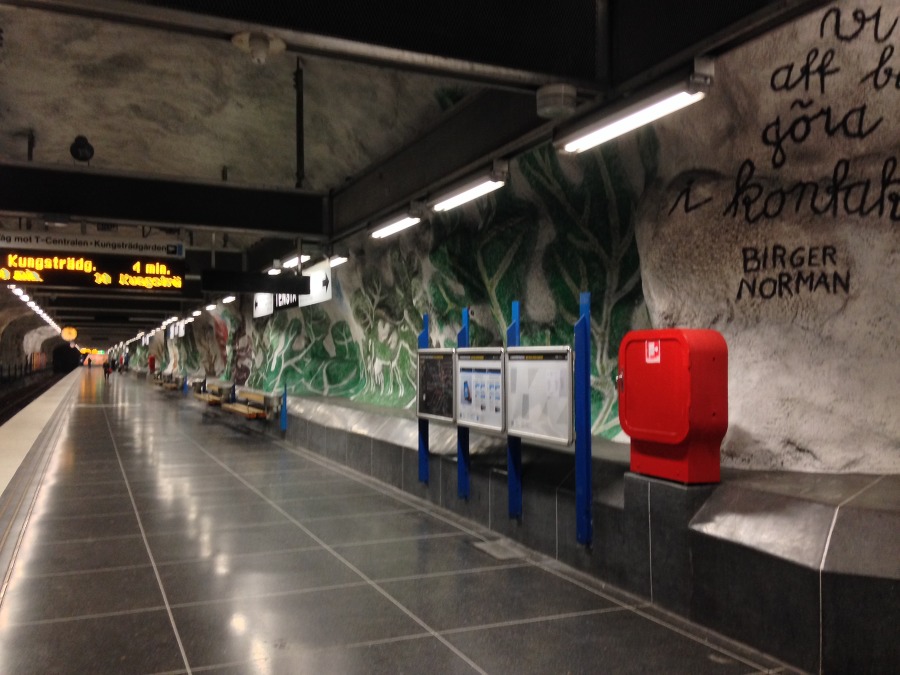
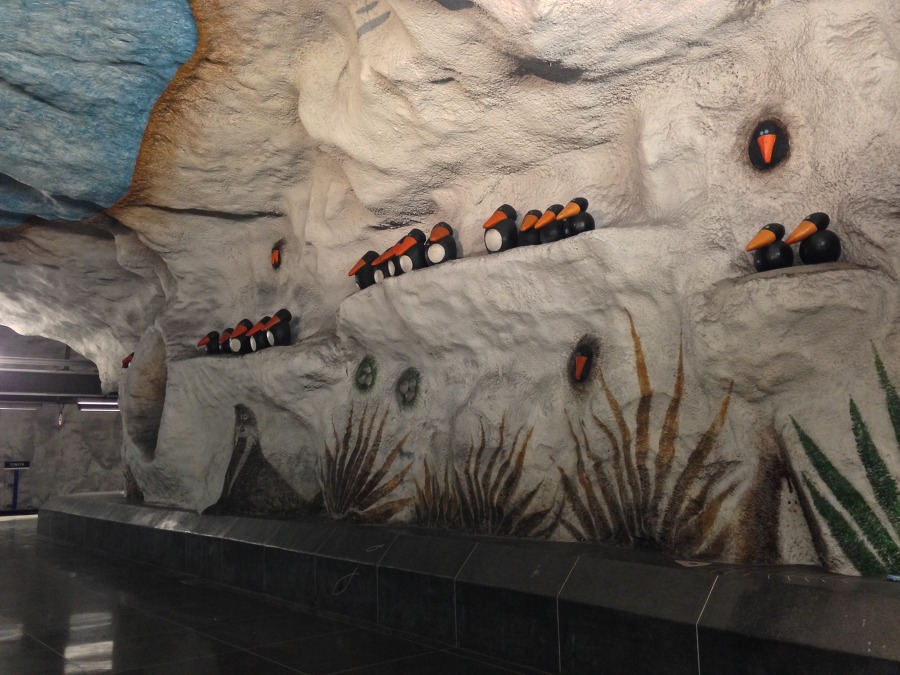
I feel like I saw that penguin in some movie, but I can't remember. Well, I can't remember, but it's truly an aesthetic sensibility.
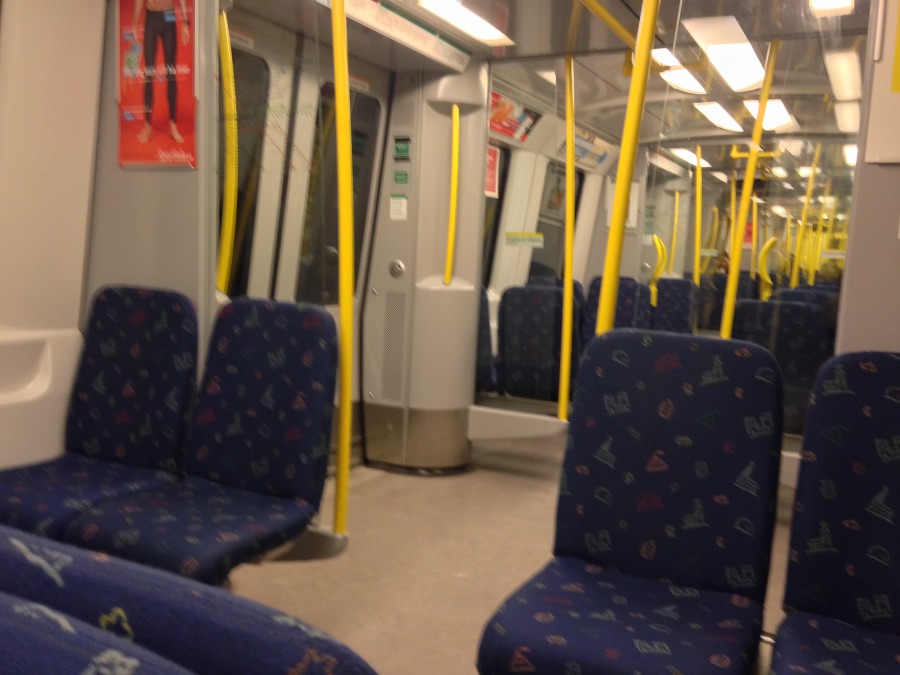
A photo of the train interior. It came out blurry because the focus was off, but at any rate I liked those seat covers.
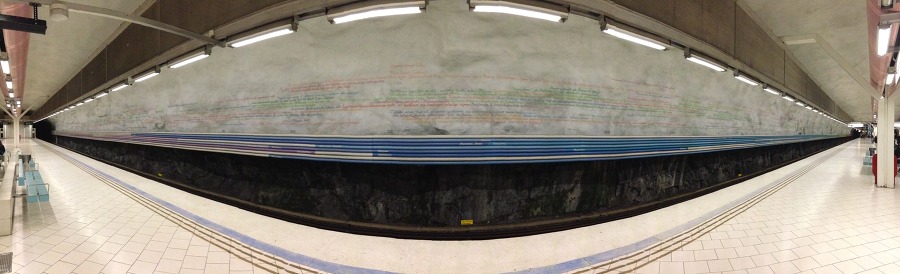
This is another side of the Rissen station I saw earlier. On one side a map, on the other side lettering like this.. I thought the way the colors were arranged like that was wonderful too. The pipes in the middle are surely electrical wires, but they used the spectrum to make the colors change gradually like a rainbow from left to right.
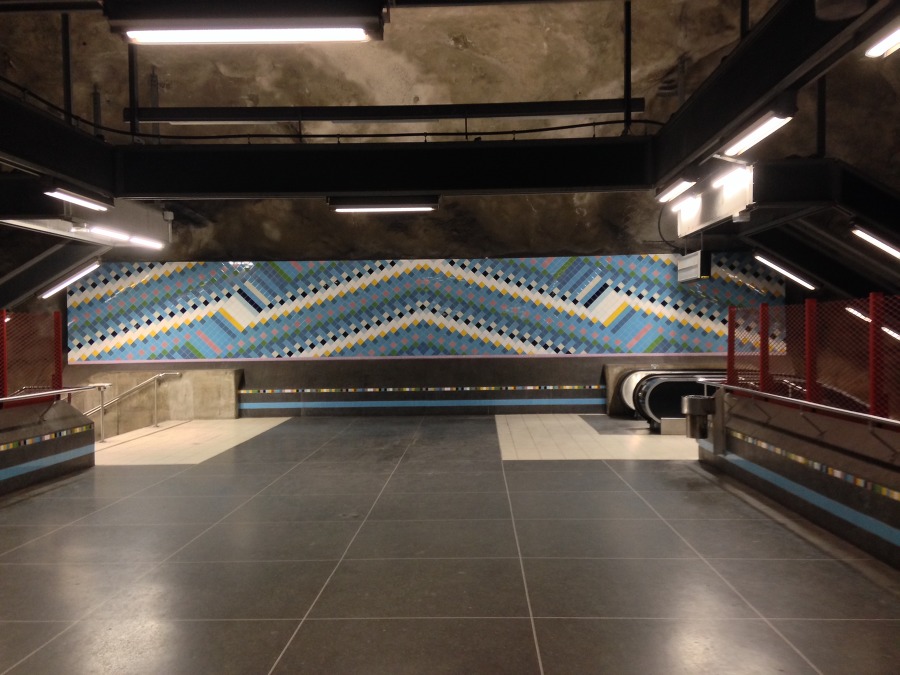
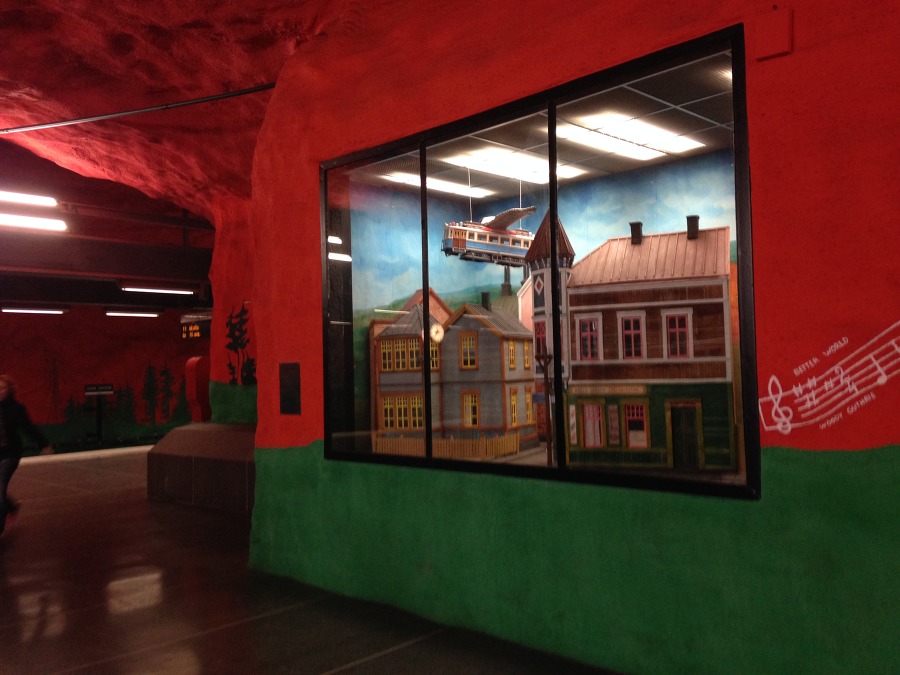
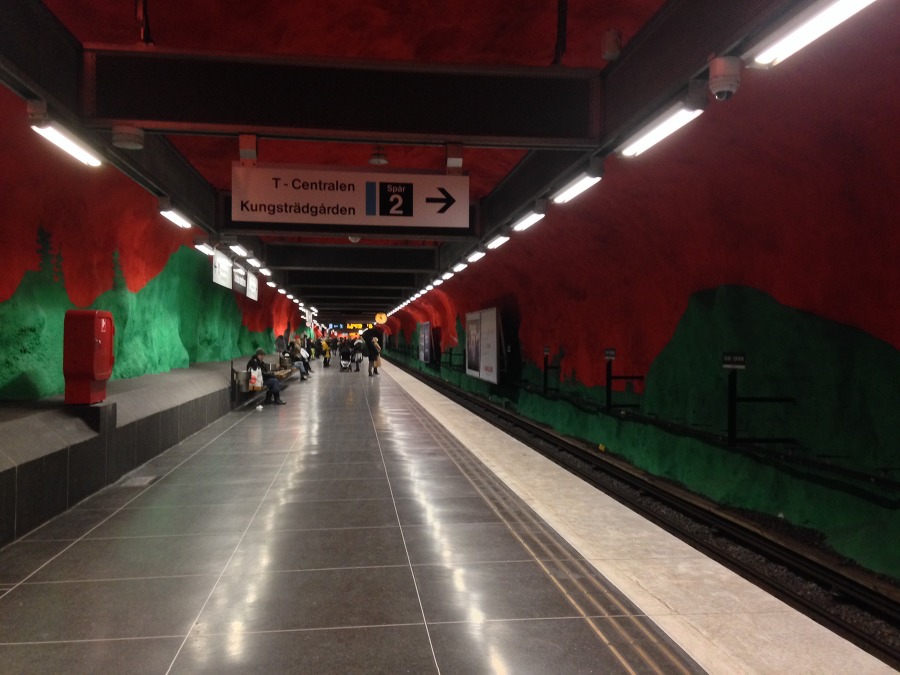
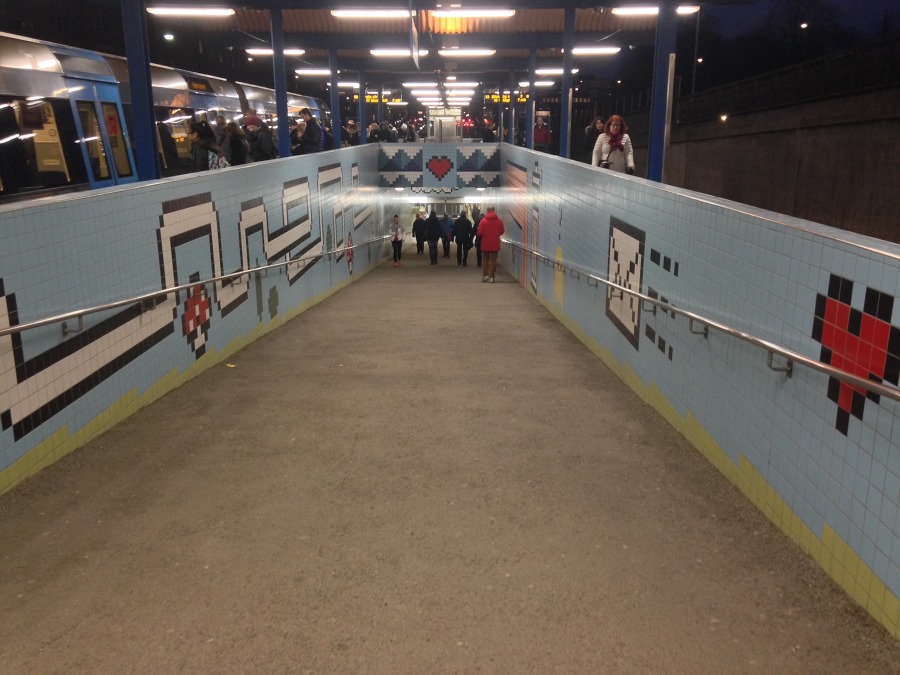
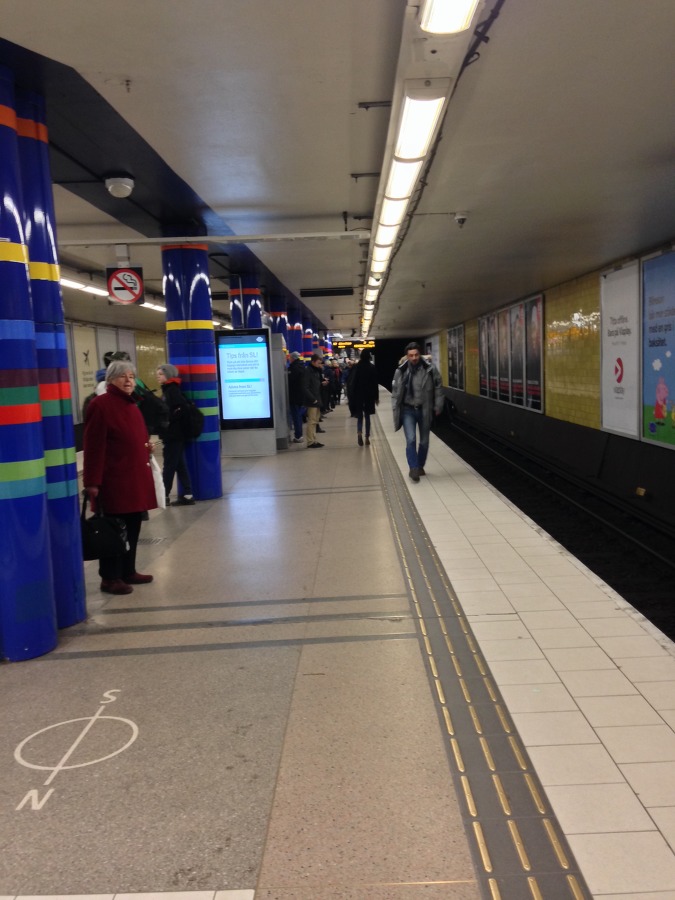
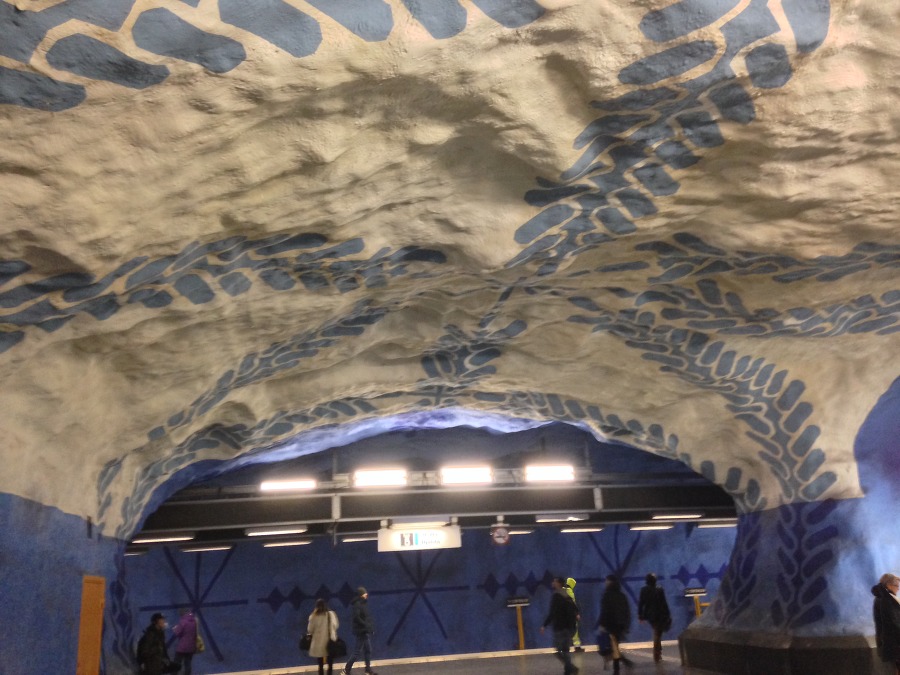
Here I had a question about Stockholm's everyday life. Just how far is creativity possible, the creativity that comes from people for whom 'different design' and 'different thinking' are everyday? Our imagination depends greatly on what we see and encounter. Because that's experience, we think up creative and new things based on experience, but the scope can't stray too far from it; thinking that way, I could conclude that perhaps because these Stockholm people's everyday life is a little different, slightly different design or thinking is always possible — since the 'spectrum' they usually see differs from ours, I got the feeling that their spectrum of thought would also be larger. This is the kind of thing you can feel while traveling, I suppose; as someone who believes in the 'micro power' of modern sociology — that small changes in everyday life can change big changes in thought — the Stockholm subway trip was a very interesting subject.
As for how they came to design it that way, they say it's the result of having done excavation work and then, rather than covering it up, painting it; this seems like a pretty good idea. If the cost of painting is lower than the cost of covering with other materials, the economic side can be solved too, and at the same time, by providing 'space' to artists, it gives them the opportunity to spread their abilities. I wish Korea had places like this too. Doing a remodel where you leave it well alone without covering it with marble or the like...
Comments 0
No comments yet. Be the first.