Dreams are dreams
0.
As part of my 'Be Kinder to Myself Project,' today I watched a movie. Some of you might wonder what on earth 'being kind to myself' has to do with 'movies,' but the thing is, for the past few months I hadn't gone to the theater on the grounds that 'there's nothing worth watching,' and also because, being someone who's supposedly preparing for an exam, I had doubts about whether I should be heading off to the theater to watch films. However, after hearing the words of someone with a very warm heart, I made up my mind to try being kinder to myself, and one of those things was 'watching a movie,' and the other was buying cosmetics. I'm always the type who pursues a 'distinctiveness' different from others, and the desire not to be ordinary tends to dominate my whole daily life, but this time I figured it would be fine not to be that way, so I went to see a film. You know how it is. I'd avoided films that everyone watches, like B-train (Train to Busan) or whatever, because watching them felt like it moved me away from being different. Well, since this film still falls into the category of movies people rarely watch, I suppose it can still be seen as continuing to pursue difference.
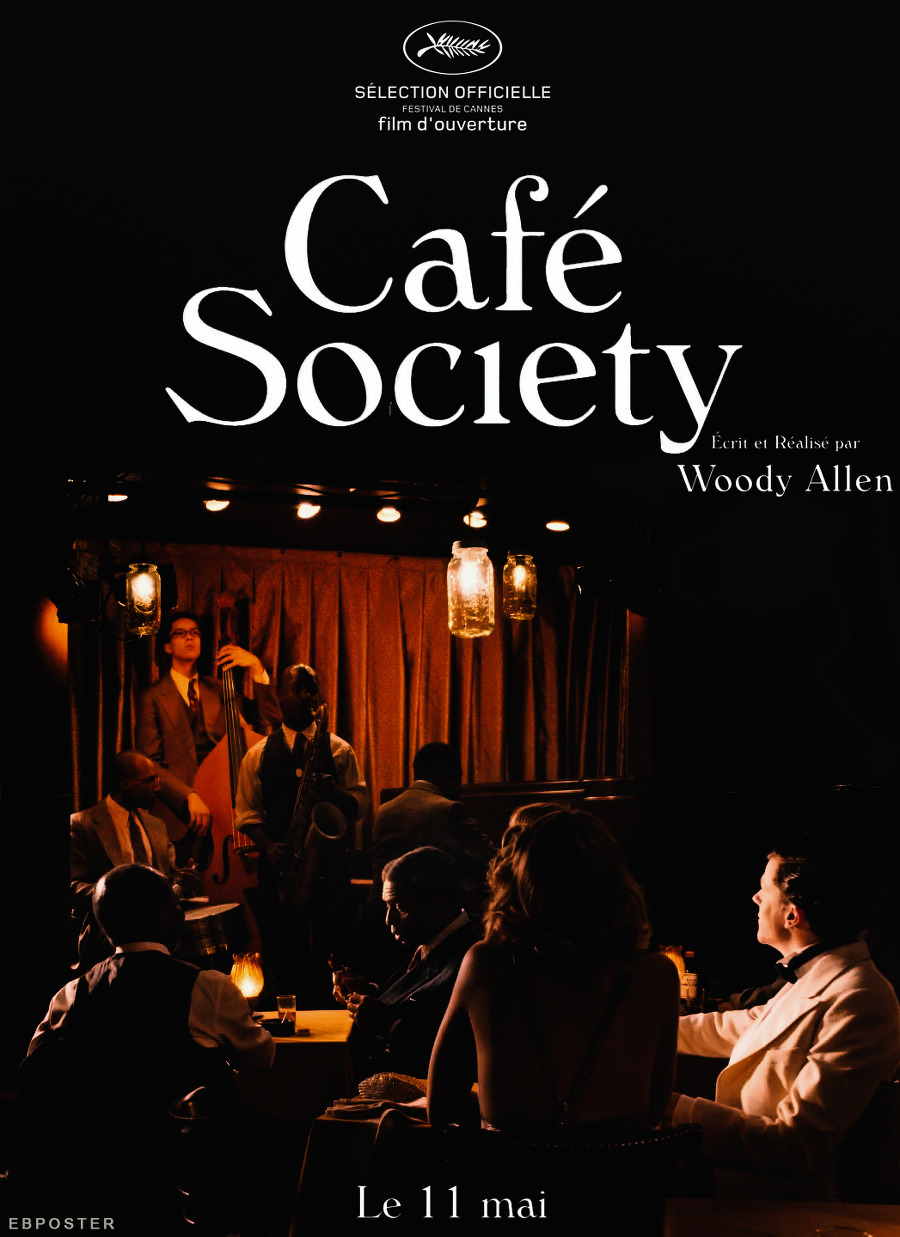
The director of 'Café Society,' which I watched today, is 'Woody Allen.' Personally I have a 'fondness' for the director Woody Allen, and the reason for that lies precisely in his 'diligence.' That's because he takes charge of both writing and directing and steadily puts out about one film a year. I hold a sense of 'wonder' toward this director, to the point that I can name several memorable films among the ones he's made. Works like 'Midnight in Paris' and 'Rome with Love' are precisely Woody Allen's films. He's generally known for putting out 'romantic comedies,' and the two works I just mentioned also fall under romantic comedy. This film, 'Café Society,' can also be called a romantic comedy, but it's certainly far from melodrama. Still, I'm not even sure whether it's a romantic comedy. The truth is that there's no 'powerful plot' in the content dealing with the love between the two protagonists, and when I think about it, I got the same feeling from 'Midnight in Paris,' so I just take it to be one of the director's distinctive traits.
This film was also the opening film at this year's Cannes Film Festival, and in this piece I intend to talk about the film's subject matter and plot, as well as the characteristics unique to the director Woody Allen that appear in this film. I also plan to add my own thoughts on what the director might have intended through this film, and I want to write together about what kind of feeling the protagonists were able to bring to their roles. Since it's been a while since I wrote anything, I'm worried because this piece will be written in a state where my writing skill is quite lacking, but whether you read this having seen the film or without seeing it, I'll try my best to write something as understandable as possible.
1. The Film's Plot
At first I thought about splitting 'subject matter' and 'plot' into separate sections and writing one part each, but writing them separately felt like it would leave the story a bit unanchored, so I combined them into one. The film's plot can be summarized as: 'A New York man went to Hollywood and dated a certain woman but was dumped by her, returned to New York and became successful, and afterward met another woman, started a family, and lived happily. Meanwhile the woman in Hollywood also married another man and lived a happy life.' Unpacking this a bit, it goes like this. 'Bobby,' a New York man, thought life in Hollywood would be interesting and went to Hollywood, but he became disillusioned there and returned to New York, where he settled down revitalizing his brother's nightclub; and Vonnie, who had majored in drama and literature, came to Hollywood with the dream of becoming an actress, but failed in that goal, and after meeting two men (Phil and Bobby) she married 'Phil' (Bobby's uncle), who had everything. The protagonists who form another axis alongside these two can be said to be Bobby's parents and the lives of Bobby's siblings. The parents are very ordinary Jewish believers. In them you can find the 'everyday life' that Bobby once felt was boring. Meanwhile, Bobby's older brother 'Ben' was a gangster. Though he grew up in a Jewish household, Ben chose the life of the streets rather than study, and went so far as to run a nightclub by killing people. In the end he is sentenced to death in the electric chair and leaves the world early. Bobby's older sister 'Evelyn' marries a college professor and lives alongside a man who talks the way her own mother says one should. Evelyn's life is accompanied by reason, rationality, and the famous sayings of philosophers.
Spatially, meanwhile, the film moves back and forth between New York and Hollywood. 'New York' ultimately became Bobby's space, and Hollywood became Vonnie's space. Bobby felt life in New York was boring and expected a lively life in Hollywood, but the Hollywood life full of gossip, falsehood, bluster, and vanity didn't suit him, so he ended up returning to New York. Vonnie, meanwhile, despite being disillusioned with that kind of Hollywood life, felt drawn to 'Phil,' who exuded the gravitas of having everything, and ended up marrying him. Bobby, back in New York, succeeds in the life he had envisioned and ends up marrying a second woman, 'Veronica,' whose virtue is that she can boast of not doing drugs. One reason his business in New York could succeed was his growing closeness with someone who ran a 'modeling agency' whom he had met in Hollywood. And so, in the New York he had thought of as a place of poetry and novels, Bobby achieves economic success, and his nightclub 'Le Titre' becomes home to a social gathering called 'Café Society.'
Simply laying it out this way, New York seems like a space of poetry and novels and Hollywood seems like a space of vanity, but in reality that's not the case. That's because in this film a considerable variety of 'characters' appear.
2. The Characters
Let's look at them one by one. How much did they achieve of what they pursued at the start?
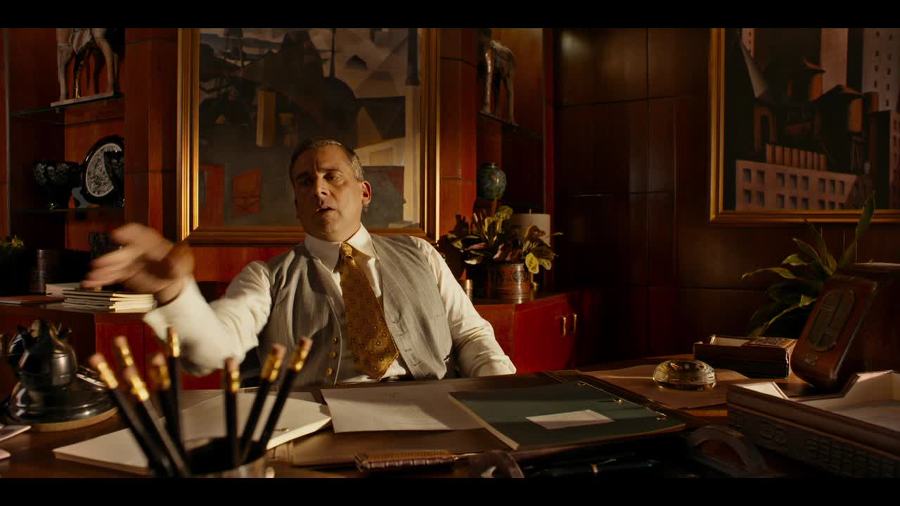
1) Phil
Phil seems to have thought about success in Hollywood. And he succeeded. In what respect did he succeed? He succeeded in finding, in his own way, a compromise within a life surrounded by Hollywood's falsehood and pretense. That compromise is precisely 'Vonnie.' It was absolutely not that his relationship with his ex-wife was bad. Even in the film he says with his own mouth that for 25 years she looked only at him, the bedroom side was good, and there was nothing wrong at all. In a word, there was no reason to divorce. And yet, lo and behold, 'Vonnie' appears and shakes up his life. Among the things Phil said to Bobby, what struck me was the scene where he makes the remark that he dislikes 'Hollywood's vanity and pretense,' and considering that, I think the different charm of Vonnie, who had majored in drama and theater, could have come across as impressive to him. In the end he even divorced and remarried, so he can be said to have found, in his own way, what he was pursuing.
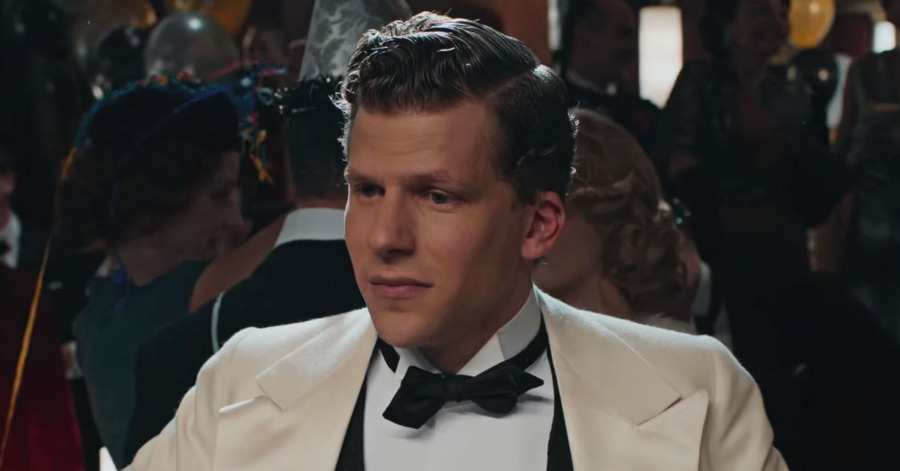
2) Bobby
Bobby had abandoned his boring life in New York and expected a thrilling life in Hollywood. At first he thought he wanted to live, like others, in a huge mansion with a swimming pool, but disillusioned with the Hollywood life, he returns to New York and runs a nightclub. Just what kind of life did Bobby want? What helped him most in running the nightclub was his Hollywood connections. What he gained as he developed the nightclub, building on his acquaintance with the person running the modeling agency, was 'glamour' by another name. 'Café Society' was the very social gathering born from that glamour, so we can't really know whether Bobby truly achieved the interesting life he had imagined, there in New York. Within the film he never says that what he pursues has changed. He told 'Vonnie' that he disliked 'disillusionment' and 'gossip,' and although he criticizes her for having become every bit the gossiping Hollywood wife, he says nothing about himself. He only says that his feelings still remain, that they won't be erased. In other words, I think there's no way to know whether Bobby truly achieved what he pursued. Of course, he says with his own mouth that he's become a good father too, but that's a different matter from whether he pursued what he himself was pursuing.
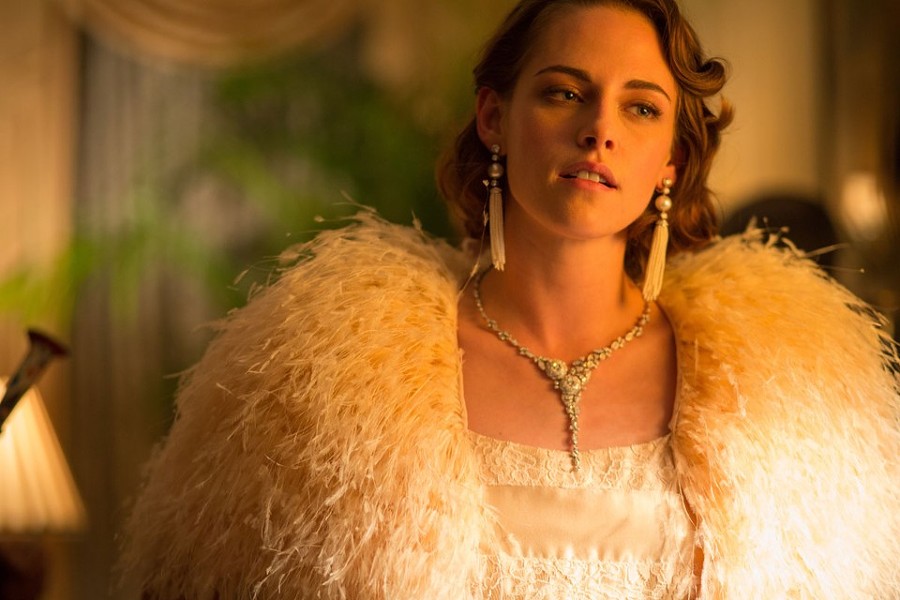
3) Vonnie
Vonnie said it herself. That she had decided to live comfortably. That she had decided to stop making things hard on herself. And living comfortably meant precisely choosing a life with 'Phil.' What Vonnie chose was a life living as the woman of a famous Hollywood husband and being a woman who 'gossips' in high society. The feelings Bobby has when he sees a Vonnie like that are bound to be pitying. But setting aside the pity, Vonnie chose Phil, and that choice needs to be respected. Still, her line that she 'still dreams of Bobby' was a line that gave me a strange feeling I'm not sure how to put into words. In the film at least a year, no, several years even, seem to have passed. If Vonnie tells Bobby 'I still dream of you,' then from Bobby's standpoint he'd think, she didn't choose me yet she still dreams. That's surely why the two of them even kissed in the middle of a New York park at dawn against the backdrop of the breaking day. Vonnie, who no longer wanted to go through the confusion she experiences from meeting Bobby again after marrying Phil, told Bobby they should stop seeing each other, and inferring from this, it seems Vonnie wanted to choose between the feelings she had thought about while seeing Bobby and the sense of stability she got from being with Phil. The choice that appeared realistically was 'Phil,' and the choice that remained as a 'dream' was Bobby.
4) Ben
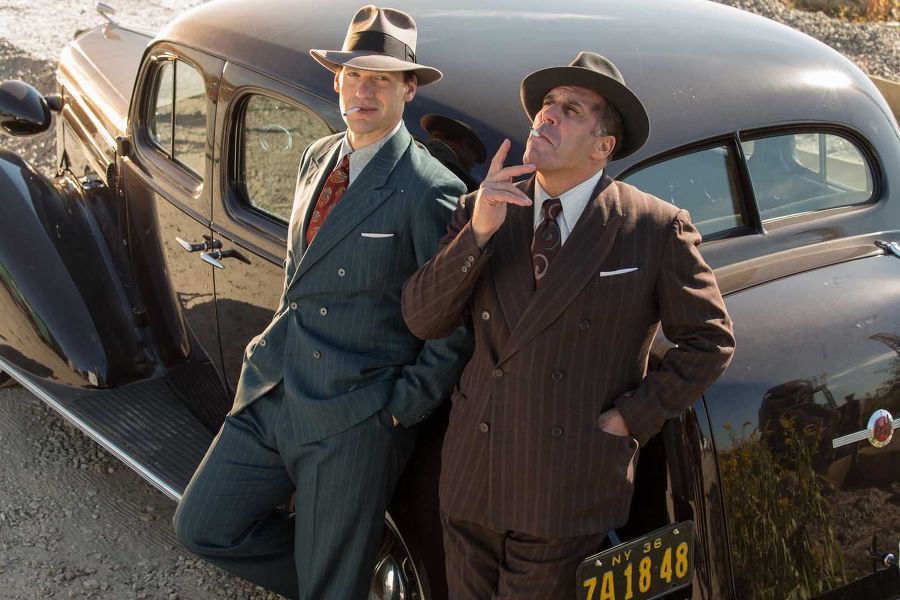
He's a gangster. He's the character drawn most 'lightly' in the film. In fact, in the parts where contract killings, body burials, embezzlement, gambling, taking over the nightclub, money laundering, and so on appear, Ben's figure is shown so briefly that you could glimpse the director's intention not to spoil the film's mood. But that doesn't mean these events aren't important events, I think. That's because in order to show that a gangster's killings were everyday occurrences, they were shown that many times in a seemingly indifferent way. In reality, the United States still hasn't resolved its gangster problem to this day, and since even the police can't stop the gun killings that openly take place. The 'conversion to Catholicism' scene that appears after the scene where he, having committed crimes his whole life and continually earning money as a 'man of the streets' to run a nightclub, is finally given a death sentence in the electric chair showed the possibility that Ben may have changed in his own way. Because Judaism has no afterlife, the Catholic gospel verses about the afterlife that he spoke gave the feeling of showing one human type who repents before death after all. Because 'Ben' was a Jew who chose not to become a lawyer through good studies but to become a 'man of the streets,' we can understand Ben's character as one determined not to walk the path of other Jews. He's a figure who succeeded even as the 'Jew of the streets' he had envisioned, and after the death sentence set out to find yet another life.
5) Evelyn and Bobby's Parents
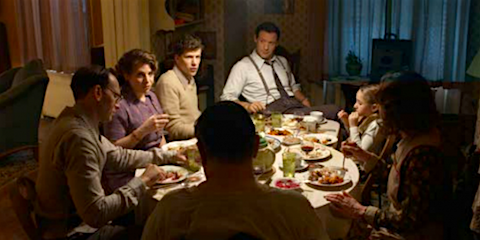
You might not quite understand why Evelyn came up in this piece, but I included her because Evelyn's husband appears most frequently as nearly the only person in the film who does 'rational thinking.' He tries to resolve everything through dialogue. In line with Evelyn's complaint that the radio noise drives her crazy with irritation, he protested a few times, but even after seeing that nothing changed, he leaves open the possibility of dialogue. Evelyn likes the professor's remarks, but on a few actual problems she tried to show resolution through force. That's the difference. She can be seen as a protagonist who endlessly wants, no matter what, the things she doesn't have. Marrying the professor — even I think she succeeded that far. As for who on earth around you would say 'A life not savored is a meaningless life. But a life already savored is also meaningless,' I think it was possible precisely because he was Evelyn's husband. The incident where this Evelyn asks her brother 'Ben' to have the man next door killed shows Evelyn's limits. She merely made a request, but a request should really be a 'request.' Well, setting all this aside, I thought that Evelyn, in the life Evelyn had imagined, is living well. Another memorable line of the professor's, if there is one, would be 'Love is not rational.'
I agonized a bit at first over whether to include Bobby's parents, but these two also seem quite important. Bobby's parents are people who pursue not 'rational' values but 'traditional values.' The scene where Bobby's father says that because Judaism has no concept of an 'afterlife,' if God comes to kill him he'll fight, and the mother's line answering 'Not responding is itself a response' — these can be understood as valuing 'family,' which can be seen as a more traditional value. From the dazed, stunned figures that appear after they lose Ben to the death sentence, we can see that the 'family stability' the parents had pursued has collapsed. In the part celebrating the 'New Year,' Bobby's parents don't appear. There, there are only Bobby's wife Veronica, Evelyn, and Evelyn's husband. Bobby's parents lived their whole lives only in New York. Even though New York appears early on as if it's a space of 'poetry and novels,' the truth is that it has vanity and pretense too, and it's no different even if you think of it as a lawless gangster territory.
Laying it all out, from the standpoint of 'Catholicism,' Ben succeeded the most — because he's a repented being — the parents sadly lost one child (in the scene where everyone gathered at the meal and says how truly nice it was to all be together, you can feel the Jewish family love, somewhat closed-off as it is), and the rest live their lives in their own ways. Just as in literary works, the characters in the film also symbolize things, but generally I don't think the characters in Woody Allen's films show truly strong characterization. The things he generally 'mainly tries to depict' in his films seem to lie not in the characters but in the atmosphere. The atmosphere these characters create seems to be seen again precisely in the spaces of Hollywood and New York.
3. The Film's Atmosphere, the Images of the Spaces
Hollywood and New York are physically different spaces. At first they appeared as emotionally different spaces too. The village of poets and novelists gathered in Greenwich Village and the grand mansions of movie actors are quite far apart. But somehow, the further the film progressed, the harder it became to feel that they were enormously different spaces. He returns from Hollywood and runs a nightclub, but what upgrades that nightclub is thanks to the 'modeling agency boss,' a Hollywood connection. And so the nightclub called 'Le Titre' gradually changes into a place like the 'parties' Bobby used to attend in Hollywood. Just as various notable figures gathered in Hollywood, various notable figures gathered at the nightclub too. In fact, the Hollywood celebrities appear as 'Phil' introduces them to 'Bobby,' but the difference is that the New York people are conveyed to us by narration, and you can see that the spectrum of people the narration tells us about was more diverse.
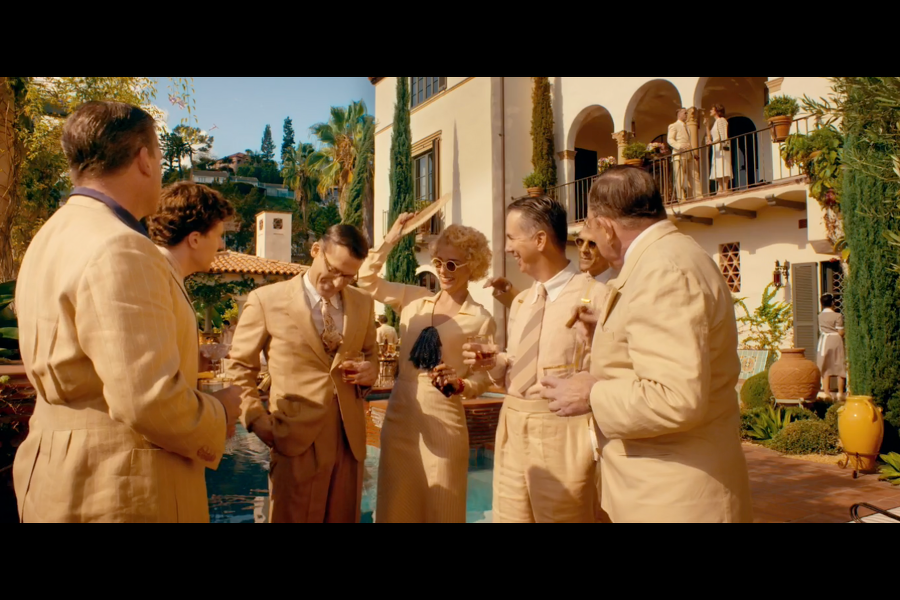
The figures in Hollywood are mostly people from the film world anyway. Someone who won two Oscars for screenwriting, or some film-world agency, or generally people gathered around the common ground of film. 'Phil' was an agent too. But New York is utterly different.
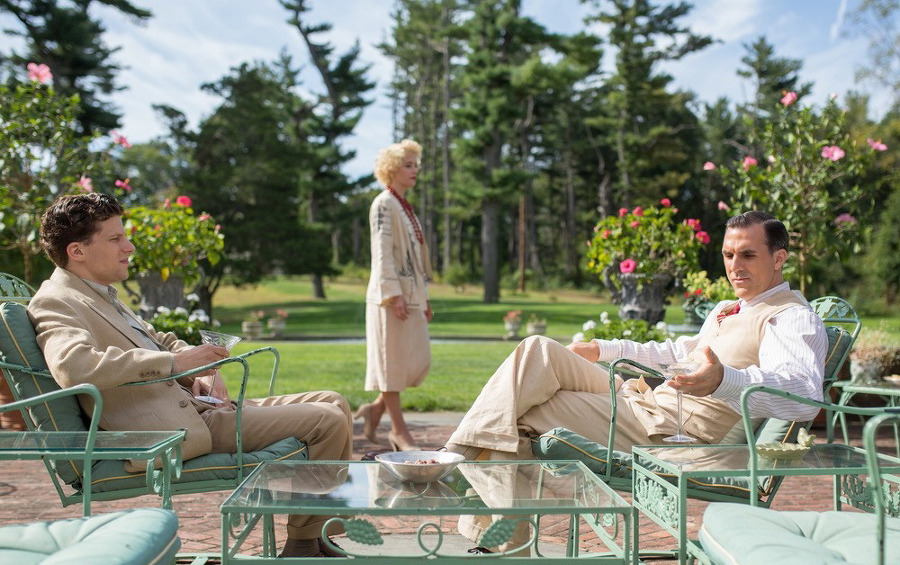
He also meets the writer and head of a modeling agency whom he had met in Hollywood,
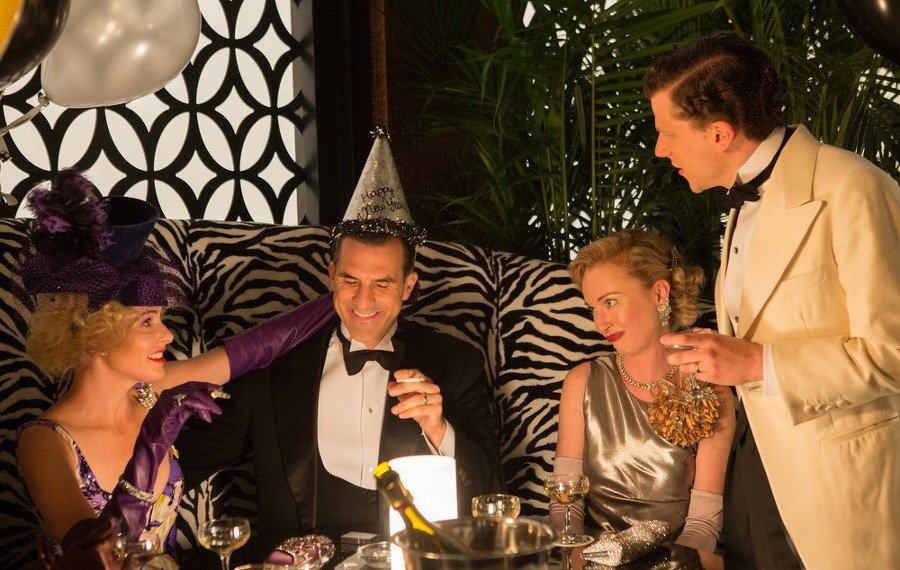
and among those who come to the nightclub there are also people who appear to live perfectly with their 'wife' but are in fact secretly having sex with the woman on the right, that is, the wife's sister, their sister-in-law.
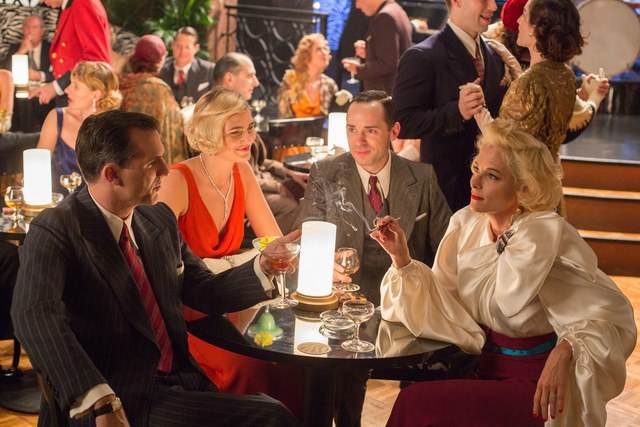
Ordinary rich people show up like this too, and there are times you hear their stories; although I couldn't obtain a photo, there's also a person dating a teenage girl, and big shots who play the stock market appear too. On one side there are dark forces centered on 'Ben,' and political figures gather too. A so-called 'High Society' that is far from 'slum life' appears, and this is what the film refers to as 'Café Society.'
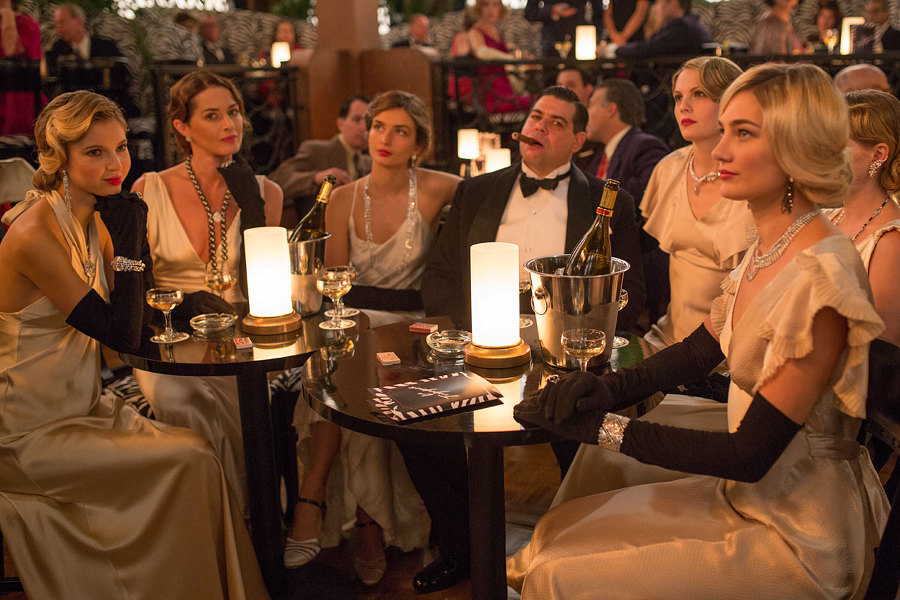
That millionaire man even has six women of similar style sitting beside him, to the point you wonder just what it was that money couldn't buy him. Even just from this, you have to conclude that New York really is, well, overflowing with doubts about whether it's truly a space of 'poetry and novels.' The conclusion being: 'New York' is a space where poetry and novels existed, but it's also a space of even greater luxury and vanity than Hollywood.
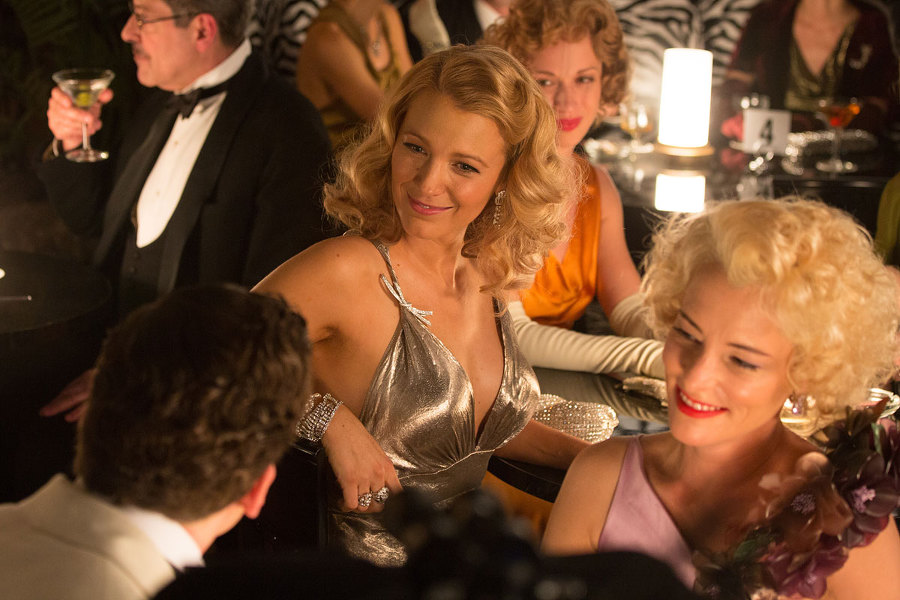
Veronica — the woman who ends up marrying 'Bobby' — is also single, just as the man who was head of the modeling agency said. In the sense that she's an acquaintance of Rad, the agency head in Hollywood, Rad was right. Her words that New York too overflows with incredibly beautiful singles were right. In other words, you can see that New York and Hollywood aren't such different spaces. To the point that it almost feels like, if anything, New York is even more so.
What Woody Allen aimed at seems to lie precisely in how he depicts this New York and Hollywood. He'd been in the film world for quite a long time, and this is a film that contains his thoughts on how he might depict the so-called 'High Society,' including that film world, at the time. There's luxury, there's vanity, there's corruption and murder, and there's disillusionment with all of it, yet there are also people who just live well within it. For them it can be interpreted as everyday life. The everyday life of 'High Society,' that is.
4. The Casting of the Film
The director's intention can be interpreted as depicting the atmosphere of 1930s New York and Hollywood 'high society.' The elements of love and dreams that take place within it are in fact a secondary matter. Yet if the film didn't even talk about love and dreams, the very story to carry the film forward would become insufficient. In that sense, the role of Bobby, who goes to and returns from Hollywood, is very important. He's the protagonist who leads the narrative. Of course, the people around him are just as important. Personally, I think Steve Carell, the actor who played 'Phil,' was the finest actor, equipped with gravitas. Without this actor the narrative wouldn't have been immersive, and the air of a big shot that emanated from his every single action seems to have been very important in forming the atmosphere of Hollywood early in the film.
As for Vonnie, Kristen Stewart, I personally found it a bit disappointing. Probably because the focus as protagonist leaned more toward Bobby, Vonnie's scenes of inner conflict were a little few — especially in the 'scene deciding on marriage' there's almost no part showing conflict, which made it more disappointing. The 'omission of the conflict process' you can see when Bobby goes to Vonnie and asks her after seeing the letter Phil received — was it for the sake of the film's pacing? Hmm, it would have been fine even to fill it out to two hours, so it's a shame. Really, thinking it over again, it's a shame. When Vonnie stopped by New York after marrying Phil, that conflict isn't enormously resolved, but I'm not sure whether the feeling that the same atmosphere as before didn't come through was because of their acting or because of my own emotions, which is a shame.
I think Corey Stoll, who took on the role of 'Ben,' fit really well. I think he pulled off the gangster acting — not heavy but not light either — very well. Moreover, his consistent facial expressions, gestures, and actions throughout provided an opportunity to think more deeply about the things he said and did.
Jesse Eisenberg, who took on the role of 'Bobby,' was, um.... at first he was fine but became more and more disappointing as it went on. His acting at first as a Jew newly arrived in New York was good. The scenes of meeting Vonnie and falling for Vonnie — I really felt those were good too. But his figure once he begins running the nightclub somehow didn't fit. I don't know the reason. I really don't know the reason, but I felt his distinctive looks didn't fit well. It seemed he strangely didn't match with Blake Lively, who played Veronica — of course, his face that exudes that distinctive 'quirky charm' is a fit, but it was disappointing because the inner figure of a protagonist adapting to and living another life in New York didn't seem to come through well.
5. The Director's Intention, Closing the Piece.
Come to think of it, 'Midnight in Paris,' which Woody Allen made, also depicted 'High Society,' so what he's trying to say through this film, I think, was perhaps not so much the life of any one character but the transience and everydayness of life itself, and the spaces of that era that made up such everydayness. The reason this thought hadn't occurred to me until now, I suspect, is because I'd been trying to interpret films centered on characters or events. Moreover, with Bobby and Vonnie's love folded in, it gives the feeling of depicting love even while seeming to depict atmosphere, and considering that there's been this kind of structure in his other films too, I think I can understand why people's opinions are divided. Some say he talks about the transience of life, the irony of life, the reality of love; others say he depicted a society that beautifies even gangsters; but probably the director didn't intend the various thoughts that emerge within it. It's always felt like this. He never talked about just one thing. However, because he puts in too many things, the feeling that the story is perfectly woven together is somewhat less, but I think that too is one of Woody Allen's methods. I'm glad because it feels like my view of the director 'Woody Allen' is changing from this point on.
Seeing it constantly slapped with the subtitle 'diversity film' is personally disheartening. Is this really related to 'diversity'? No, it's just the economic logic of a distributor figuring it won't make money even if they screen it, so they don't — and I just find it frustrating whether the word diversity really suits this. There also seems to be a structural problem with theaters where only big-corporation box office remains. The situation where the very act of watching a film has just become 'everyday,' increasing the number of viewers who don't care whether a film is meaningful or not, also seems to make up part of the reason. Personally I wish people would watch with at least a little thought about the film itself, but looking at the flow of the film market, the power of the consumer is too weak and it seems to revolve only around the supplier, which is a great disappointment.
Comments 0
No comments yet. Be the first.