0. Before we begin.
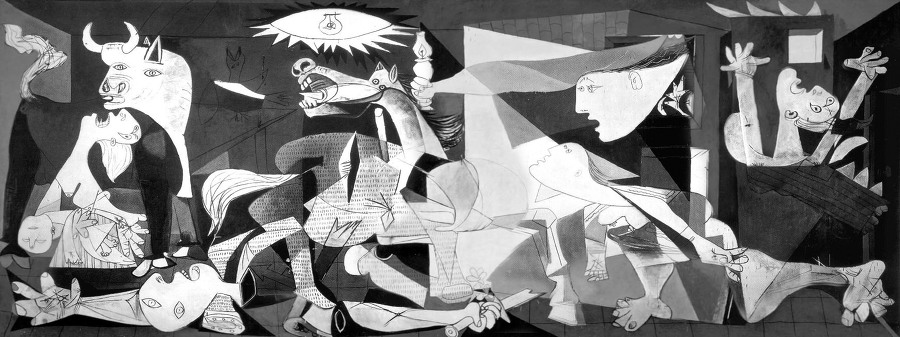
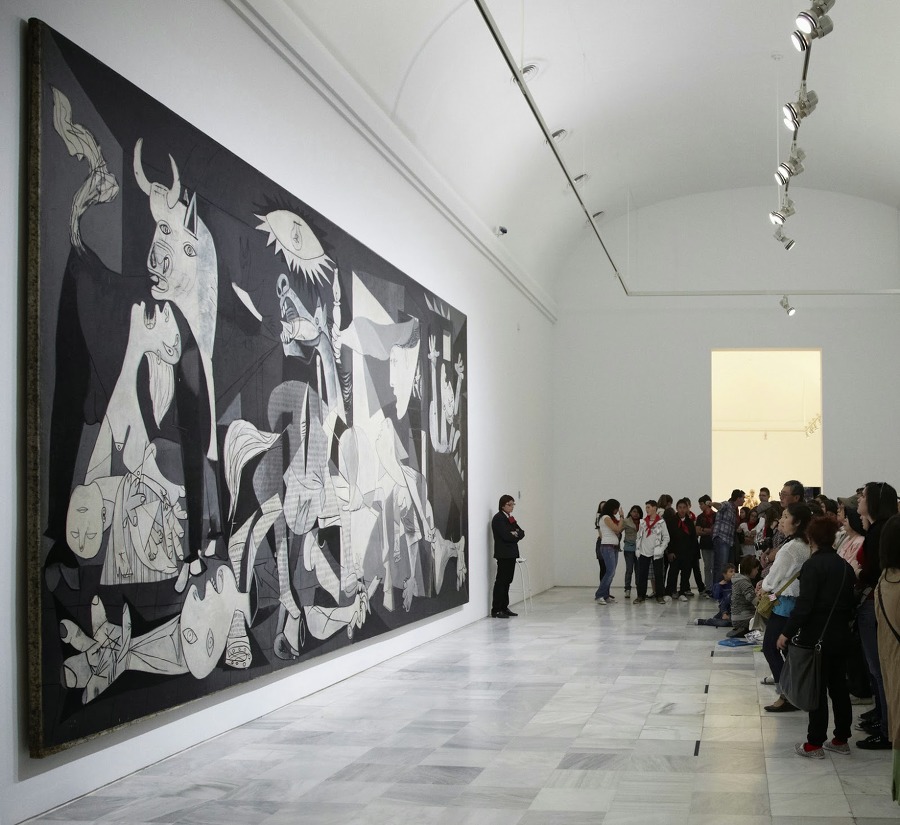
I've brought a somewhat famous work. Today it's Picasso's 'Guernica.' Actually, this piece wasn't in the plan, but a few days ago, after seeing a truly awful Picasso exhibition (in Gwangju), I thought, ah, Picasso was after all a painter with quite a philosophy, and this painting, which can be called a masterpiece among his paintings, came to mind, so I hurriedly came to write this piece. As you can see, 'Guernica' too is as large a painting as the Gauguin painting I showed you before. It's probably even larger than the Gauguin painting. I'll tell you below why I chose Guernica among Picasso's countless paintings.
1. Picasso's Painting Philosophy
Picasso's painting philosophy can largely be divided into two.
1) Imitation
Picasso imitated the paintings of painters of previous generations. For him, who showed extremely outstanding painting skill from childhood, 'imitation' was the first learning method. He imitated the paintings of various painters—imitating Edgar Degas's paintings, imitating Velázquez's paintings, imitating Goya's paintings. Because he was a painter of Spanish birth, he was one of the painters who held Velázquez's and Goya's paintings in very high regard, and while also imitating Van Gogh's paintings, he tried for the time being to take in the paintings of painters who had been famous in 'his own style.' And so, in his so-called Blue Period, the paintings he had imitated appear.
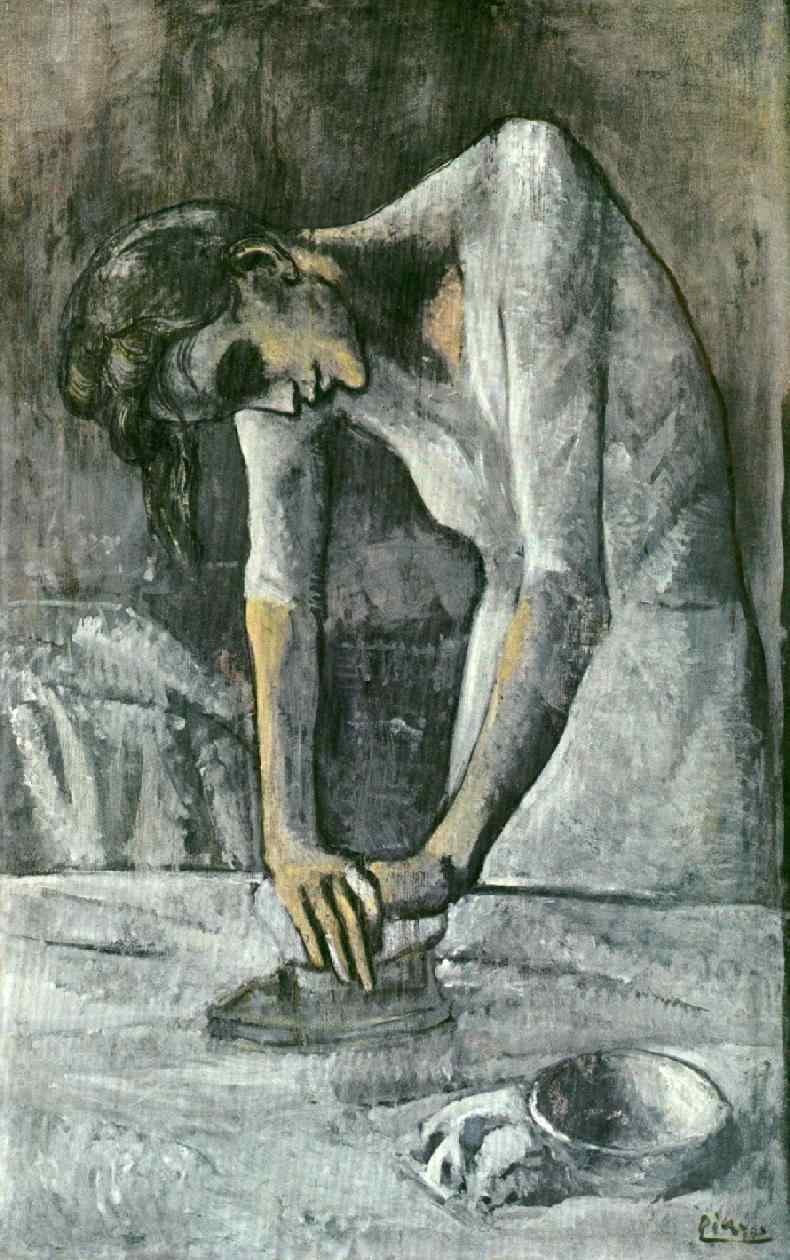
This painting is an example. It's a painting Picasso drew while imitating Degas's painting.
2) Change / New Painting
The painting Picasso newly created after finishing imitation is a painting like 'Les Demoiselles d'Avignon.' He begins to set out in search of his own style. His style lies in expressing all the visible faces. Front, side, back. All the parts are simultaneously contained within a single painting. On top of that, ordinary perspective is ignored. Completing a series of maturation processes, Picasso makes up his mind to pioneer a 'new world.' As he begins to pioneer a new world, at first no one even looked at him, but soon he was reborn as one of the most famous painters in the world.
2. Guernica
For such a man, this 'Guernica' is based on the actual Guernica bombing incident during the Spanish Civil War. Since it's necessary to briefly look into the Spanish Civil War, let's talk for a moment about the Spanish Civil War. The Spanish Civil War is historically also the backdrop in which various literary works appear. Works like George Orwell's Homage to Catalonia and Ernest Hemingway's For Whom the Bell Tolls are set against this Spanish Civil War. The Franco government based on fascism and the Spanish Republic faction based on Catalonia were the core forces. This civil war is recorded as the largest civil war in Spain's history, and within it the 'Guernica' bombing represents an atrocity in which countless casualties were recorded through the bombing of the town by the German army under the command of the Nationalist army centered on the fascist government's Franco.
You can see that for Picasso 'painting' was accepted as a political means, and his other painting, Massacre in Korea, can be seen as being in a similar context. Most of his earlier paintings too can be seen as rooting their basis in the expression of 'individual thought,' but for Picasso it seems painting became one means of expressing one's views. Because he was famous, lived long, and had drawn almost all the paintings he needed to, I think it might be that through this kind of 'Guernica' he conveys his views through painting rather than words, gains empathy, and awakens people to the fact that the historical tragedy of massacre must not be committed.
3. Wrapping up
It's such a famous painting that everyone probably knows it, so I wonder if people won't even read the writing. Let's do a 3-line summary.
1) Picasso thought of his painting as a tool for 'political expression of views.'
2) Through imitation and change, he built his own world.
Two lines and it's done.
Comments 0
No comments yet. Be the first.