#writingstagram #writing
Studying Korean-language education, you learn about 'composition' (writing). In English it's called composition, whose other meaning is 'composing music.' Comparing them, I too think composition (writing) and composing are similar. Because they're done through thoroughly logical thinking. If it's not literary writing (poetry, fiction, screenplays, etc.) but logical writing, I thought they were truly similar. As a method of improving writing ability, ancient scholars thought it was enough to imitate the model writings of those who wrote well. But imitating writing couldn't teach you how to generate the content of writing or how to realize its structure. So writing came to be seen as a process of solving the problem of 'writing' through 'thinking' — this is cognitivist composition theory. They held that you could write well by practicing the needed writing strategies while considering the topic, purpose, and reader. But writing wasn't done alone. Because the moment writing is written, it is read by someone, people like Vygotsky began to grasp it as social communication through language. Writing was the internalization of the rules called the discourse conventions of a discourse community.
I experienced all these kinds of writing. Writing always differed by the day, depending on my condition. Some days it wrote well, but as on today, when I'm writing this, there were many days it didn't write well. On some days content generation and organizing flowed smoothly; on some days there were many days I wrote a lot and then erased it all. As someone who experienced these writing processes, I can't deny that my relentless effort at writing and my interest in it greatly influenced the logical thinking I now have. I know that my logical thinking improved through experiences of cutting front and back, attaching, newly adding, and shifting positions to fit the so-called 'introduction-development-turn-conclusion.'
So I wanted to teach a writing class. Because I had so many memories of having grown through writing. In my military days, I dug through and read world-literature collections I didn't know well, found and read papers, summarized them, and wrote reflections; I organized and wrote down what I felt through my dating experiences. After watching films I organized and transcribed the thoughts that came to me, and that way I was able to record and organize many things — Korean literature, life in England, overseas travel, various social issues, even litigation records. Just as my writing became a part of my life, I wanted to show students that writing is valuable too. But I feel that's not easy. Because many won't think this writing I produced is the result of wringing out my brain. But this writing too was wrung out of my brain. It's writing I labored over to express my feelings about writing in language others can empathize with.
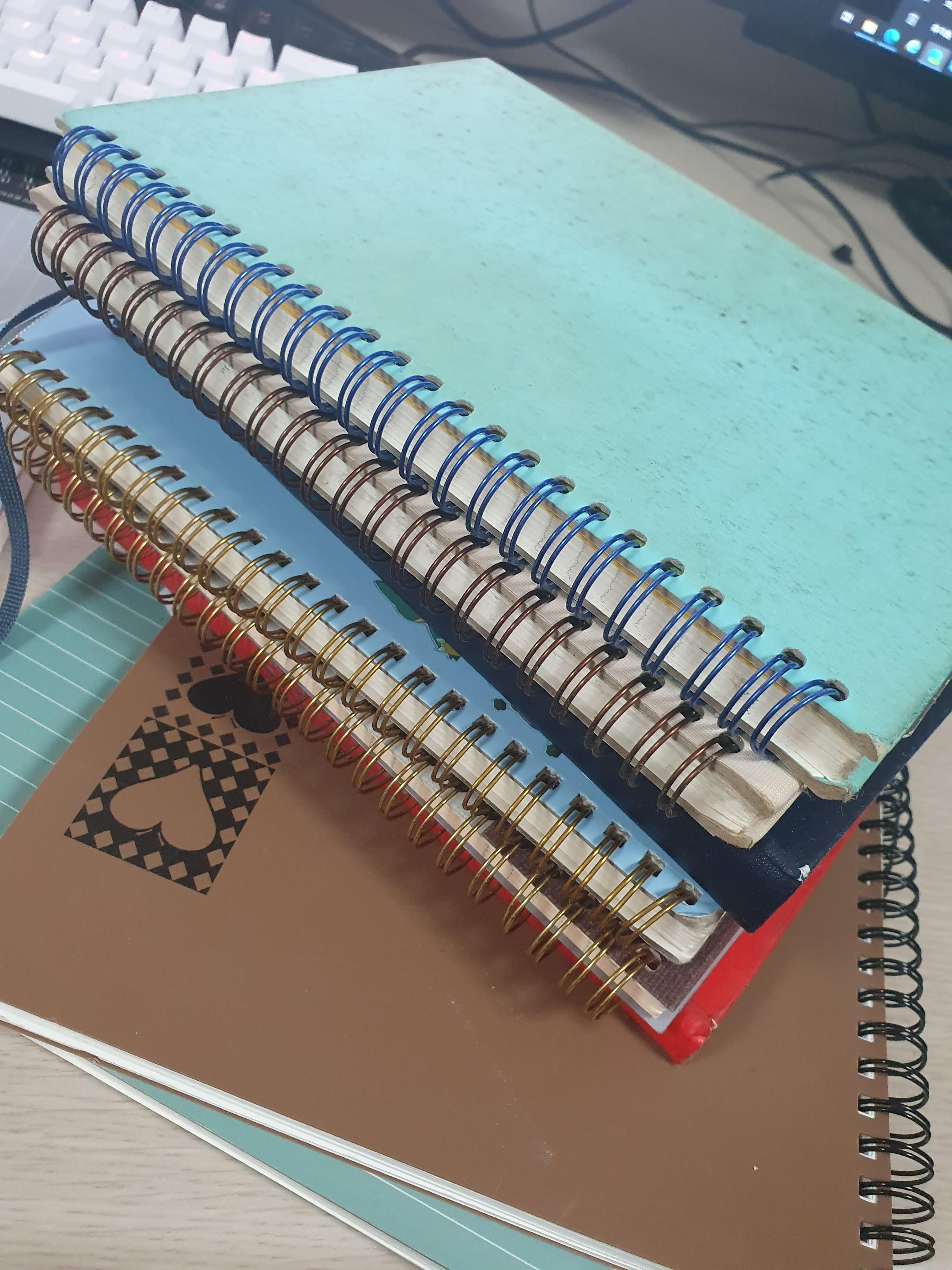
In college there were many people who said let's write together, but these days I don't see them around, which is a pity. There were days when I recorded small everyday moments, but it seems to have become a day hard to find — like the blue moonlight that's hard to glimpse. So for the time being I plan to leave my personal practice notebooks in the photo at the library. I hope they help students interested in writing.
Comments 0
No comments yet. Be the first.