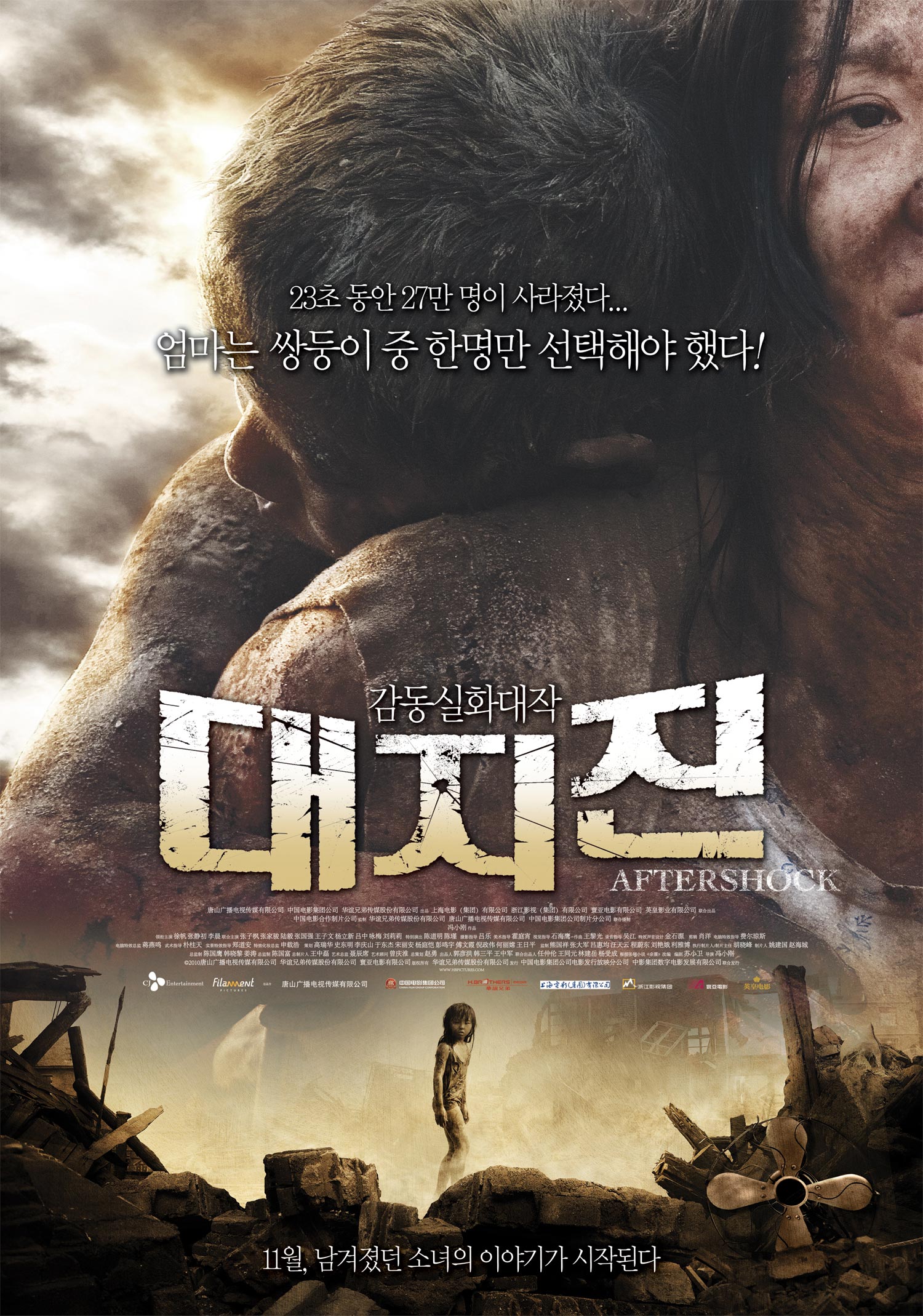
Aftershock (2010)
Aftershock
7.7
- Director
- Feng Xiaogang
- Cast
- Xu Fan, Zhang Guoqiang, Zhang Jingchu, Wang Ziwen, Chen Daoming
- Info
- Drama | China | 128 min | 2010-11-04
I looked up a little about the Tangshan earthquake. The Tangshan earthquake, chosen by Newsweek as the worst earthquake since the 1900s. They say the official death toll alone exceeds 250,000, and the estimated death toll has been put at over 600,000. Honestly, it doesn't quite register, but it surely doesn't change the fact that nearly all the people living in a fair-sized city became refugees and that parts of many families died because of the earthquake. This time I'd like to talk about the film 'Aftershock' that EBS Saturday Cinema aired. Starting from the Tangshan earthquake that occurred in 1976, this film very calmly and serenely unfolds the kind of consequences that an 'earthquake' brings about for an individual, a family, and society. While watching, there were many sad and heartbreaking scenes, but on the other hand a sense of awe and relief also crossed my mind. Perhaps it was because I wanted to send awe and encouragement to the characters in the film who, amid the 'catastrophe' caused by the earthquake, try their utmost to rescue the surviving victims. Living here, I've experienced an earthquake exactly once. I was sleeping, and I think I opened my eyes around 6. That day was a holiday, so I'd woken a bit early, and suddenly the bed swaying back and forth—should I say it was really scary... Fortunately, the shaking stopped soon, so I was able to fall back asleep without fully waking, but that momentary feeling was beyond what I'd imagined. That's because before this I couldn't even imagine that the 'earth' I stand on could shake like that. If that terror appeared as an enormous magnitude, then perhaps, like the image I saw in the film, I might have been crushed under steel structures and concrete.
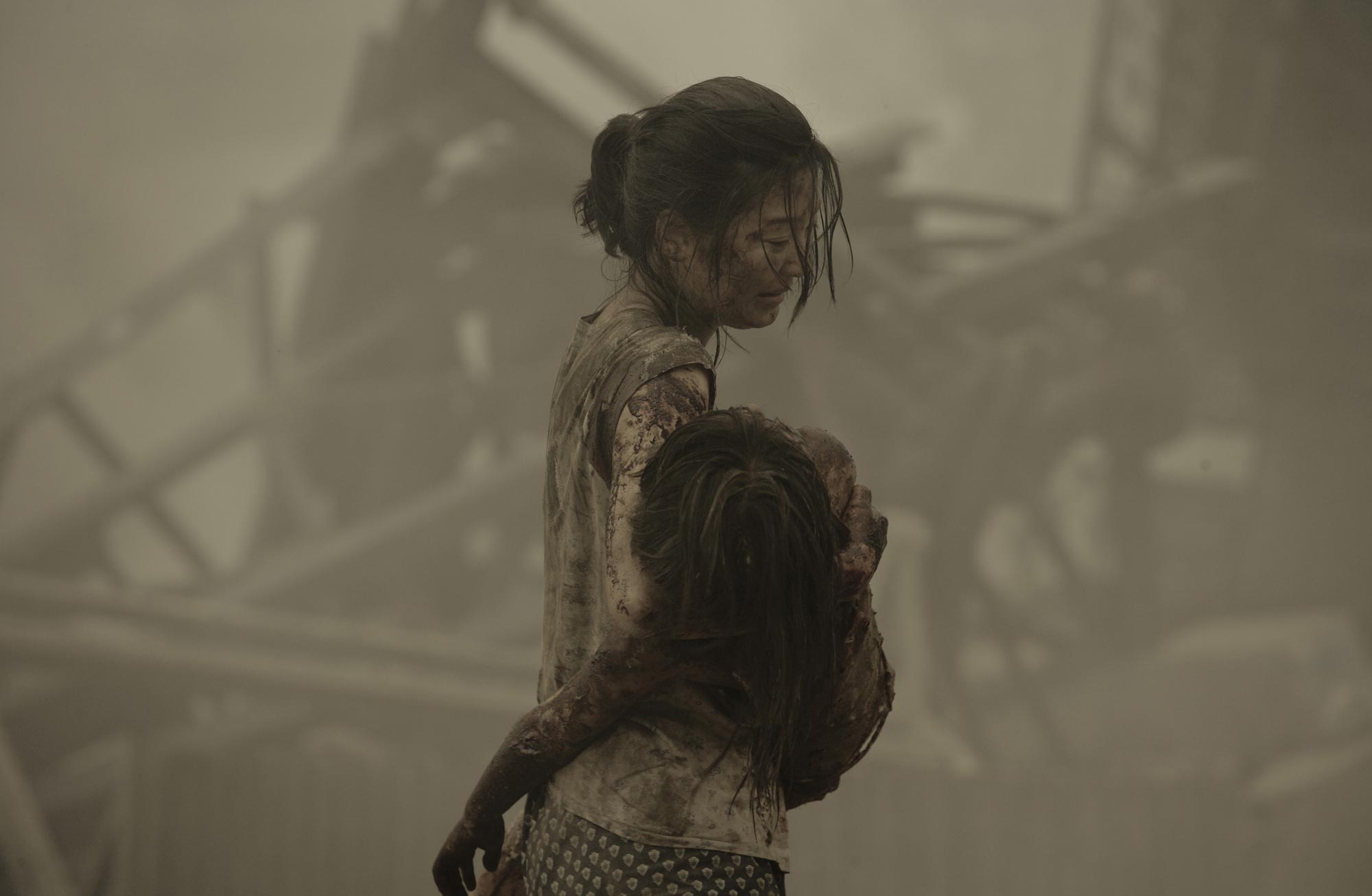
A situation where a mother with twins has both of them buried—the two are buried under the same concrete, so saving one means the other would inevitably be crushed and die, according to the surviving rescuer's words. The mother, Yuan Ni, cries out for a long time that both must be saved, but in the end she cries out to save the son. And the daughter sheds tears as she hears those words, and soon the screen, showing the daughter being held, turns to darkness; the son is rescued, but as the mother holds the daughter who won't open her eyes or respond, she wails. The scene where, having lost her husband and daughter to the earthquake, she carries the son away in order to keep living—without even the leisure to think about the future in which her life will undergo a very great change—was truly heartbreaking. What's truly fortunate is that as the daughter, soaked in rain, comes to her senses among the corpses and begins to walk, a soldier of the People's Liberation Army takes the daughter (Fang Deng) and brings her to a place where orphans are gathered. In a place gathering only orphans, she comes to be raised under adoptive parents who are PLA soldiers.
Fang Da and Fang Deng begin to grow up in different environments. Fang Da, together with his mother, begins to grow up steadily, burning spirit money each year on the day the earthquake struck and hoping the souls of his father and elder sister will return, while Fang Deng begins to grow up hiding her old memories, occasionally having nightmares (dreams of meeting her birth parents and younger brother) under her adoptive parents. Eventually Fang Da becomes a successful businessman, and Fang Deng goes to medical school, but as Fang Deng becomes pregnant in her fourth year, her dream collapses and she ends up cutting off contact even with her adoptive parents. Meanwhile, Fang Da succeeds as a businessman and reunites with his mother, and although he wants to somehow let his mother live in a better environment, hearing her say 'I'm tired now,' he lets her keep living in the place they moved to after the earthquake.
The reasons I felt this film was different from existing disaster and earthquake films were as follows. Disaster films made in Europe or America generally focus on the moment of the 'disaster' scene. In films like The Day After Tomorrow, Armageddon, or 2012, they focus on the terrifying 'oppressiveness' of how the disaster destroys the foundations of life and show it to the audience. This can be said to be a bit of the characteristic of films Hollywood produces having spread. But this Chinese film was a little different. It steadily passes through a period of about 10 years after 1976 while portraying the protagonists. The meaning of this technique lies not in watching the 'disaster' but in trying to see the 'people.' If a 'disaster' film, where it's important to portray how the 'disaster' is shown, is the Hollywood film, then this 'Aftershock' focused on showing how people's lives, thoughts, and values change because of the disaster, and how they go on living. Yuan Ni comes to always hold her husband and daughter in her heart, and this is to think of the husband who saved her life and the daughter who was hurt by her choosing the son. Moreover, Fang Da had a hard time having only one arm, but he steadily works, living his own life in his own way while thinking of his elder sister. Fang Deng, unable to forget the moment she was not chosen, comes, upon seeing the devastation of the Sichuan earthquake, to go again to that disaster site and try her best to give back what she had received. One Tangshan earthquake completely changed the lives of many people. And I understood deep in my heart just how much effort the director made to portray those changed lives. When Fang Da (the son), not listening to Yuan Ni (his birth mother), says, if you're going to be like this, why did you save me instead of saving my sister, Yuan Ni slaps Fang Da's cheek. It's a punishment for not recognizing and not being grateful that he has lived until now at the sacrifice of his sister.
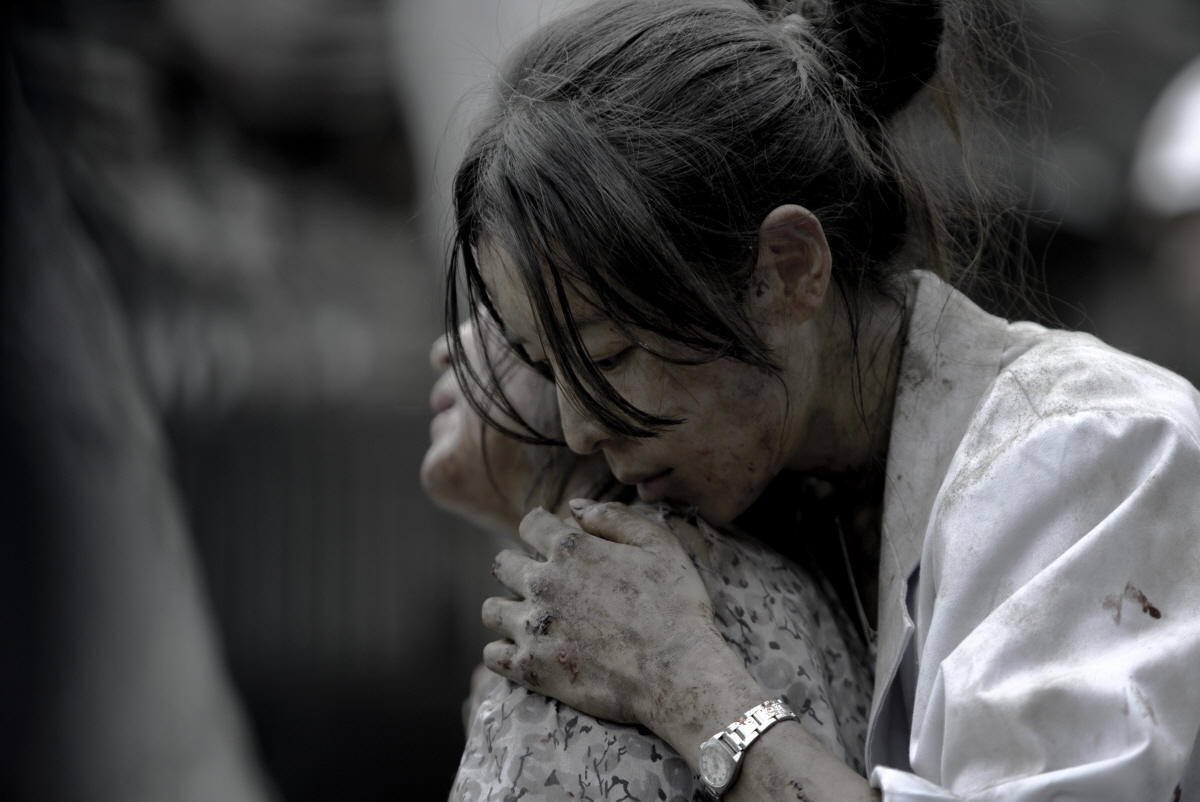
The thoughts that arise as Fang Deng, at the site of the Sichuan earthquake, watches a mother crying out to save her daughter must have been very complex. All those days when she became an orphan in childhood because she wasn't chosen, and grew up under adoptive parents having lost her birth parents, must have all come back to her. In the end, the mother seen in this scene says to save the daughter even if it means cutting off her leg, and the daughter is rescued having lost her right leg, but watching this, the mother wails. Saying she did something she'll regret, and to give her her daughter's leg back quickly. For Fang Deng, who can only embrace the wailing mother from behind and say nothing, the Sichuan earthquake would have been enough to look back on the painful memory of 30 years ago when she fortunately survived. Until now, whenever I watched disaster films I always wondered about the lives afterward and even pictured them in my imagination, but this film gave me much to think about by presenting the parts I'd been curious about.
The reason the word 'aftershock' resonates in my heart more than the word 'great earthquake' is that this film did a very good job of depicting how the shock that follows from a single earthquake spreads through life afterward. The single line that you don't know its meaning until you've lost it stays in my heart. I do think about how precious the people I consider precious are, but as this film says, I probably won't be able to feel that meaning in my own body until I actually lose them.
Comments 0
No comments yet. Be the first.