I wrote a piece a little while ago about a film called 'Aftershock.' After watching this film, my perspective on movies changed a lot. 'Film' is one of the most influential media in modern society. Yet this medium is shown as a commercial means, as a groundbreaking way to make money, and as countless films suited to this purpose pour out, there have even been records of a single film earning the equivalent of several years' worth of car sales revenue. (Jurassic Park) Must the medium of film really be made with a 'commercial' framework and subject matter?
| Rank | Title | Weekend audience | Cumulative audience | Booking |
|---|---|---|---|---|
  |  | 1,160,636 | 1,372,721 |  |
  1 1 |  | 1,003,047 | 3,540,433 | |
 1 1 | 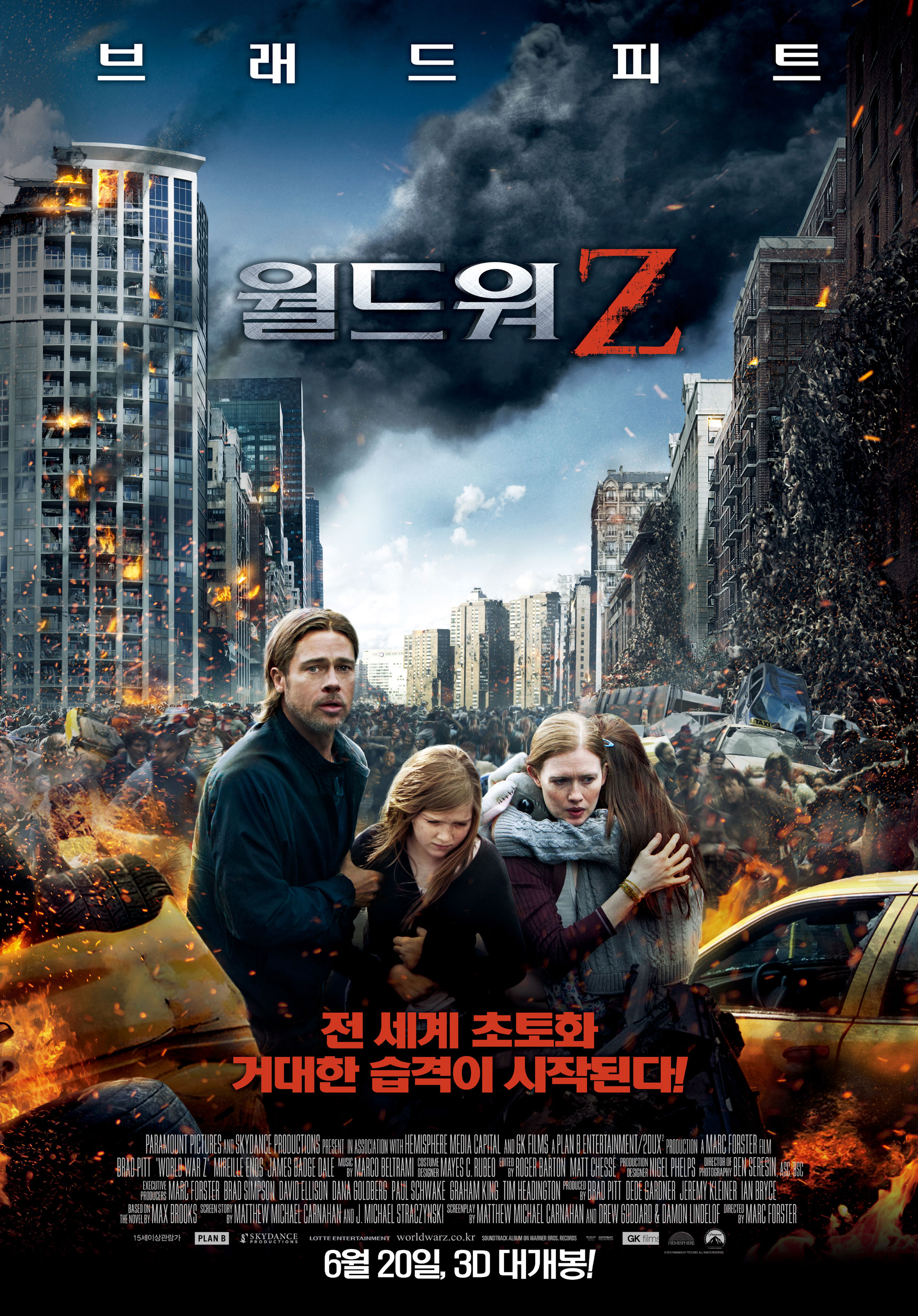 | 345,896 | 4,891,905 | |
  |  | 107,173 | 1,091,116 | |
 2 2 |  | 34,668 | 370,829 | |
Films have to tell human stories.
Blockbusters and action films dominate the box office. At some point, movie theaters have been showing only films about 'human survival.' Of course, it would be no exaggeration to say it's the concerted effort of distributors and production companies rather than something theaters want to show. Production companies mostly start making only films aimed at 'box-office success.' Blockbusters are often films about large-scale survival, and action films could be called small-scale survival films, and here the method of clearly setting up 'good' and 'evil' and developing the story is far too uniform. Almost all films copy this. The framework of such films is nearly all alike. It's hard to find any difference at all. Watching such films, we watch the conclusion of a story that followed the framework, without needing to do any 'thinking,' and feel a sense of 'familiarity' under the name of 'fun.'
Pacific Rim is a representative robot blockbuster, and Cold Eyes is an 'interest'-centered film like a detective novel or thriller. World War Z tells a story where zombies appear and the whole world seems about to fall into danger, but fortunately they find the solution and save the world. 'The Webtoon' was made into a film with a scenario woven from a relatively rare story, so I think its 'artistic merit' is decent in its own way, and as for The Lone Ranger, since there are many films with a similar framework, I won't explain it.
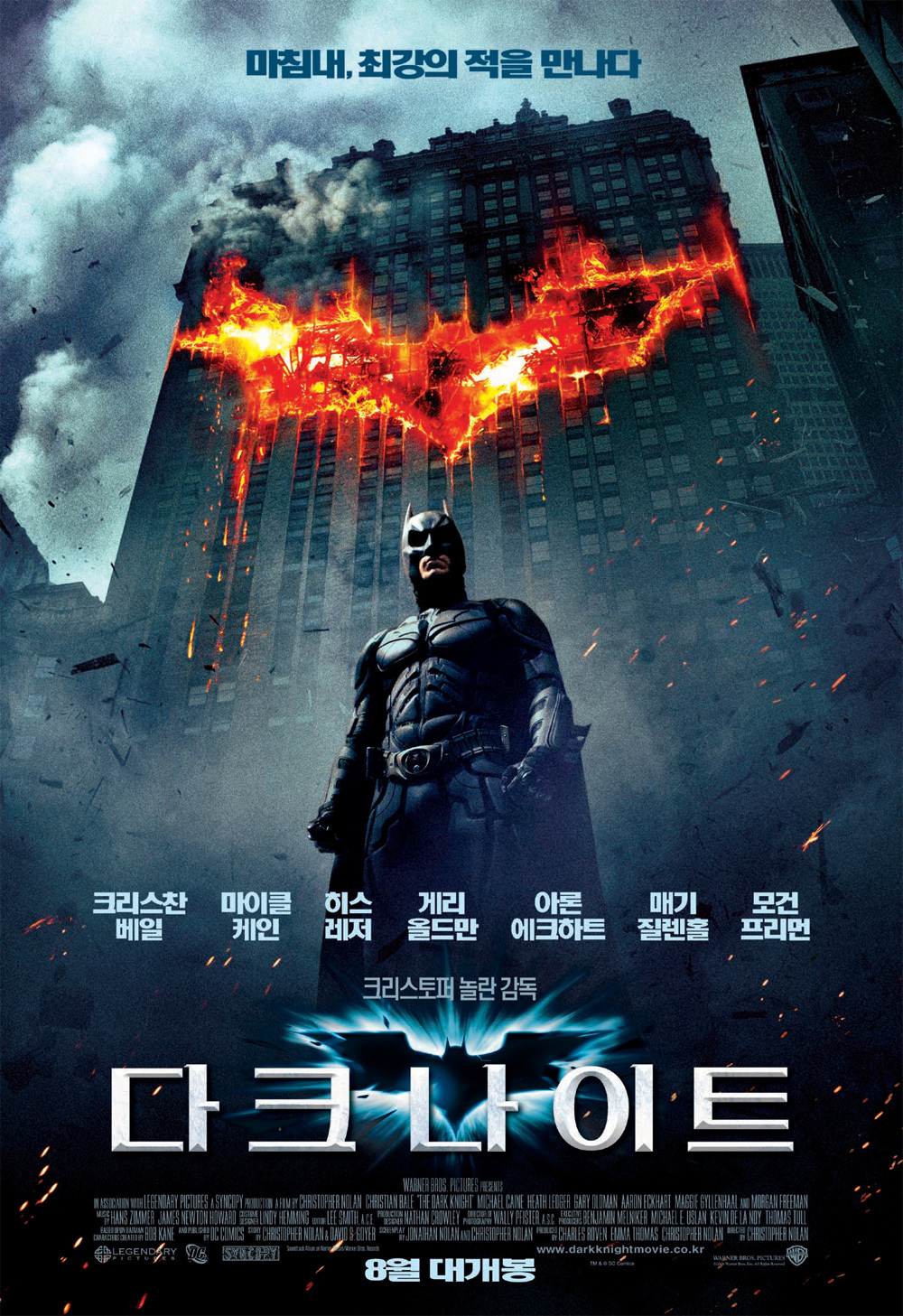
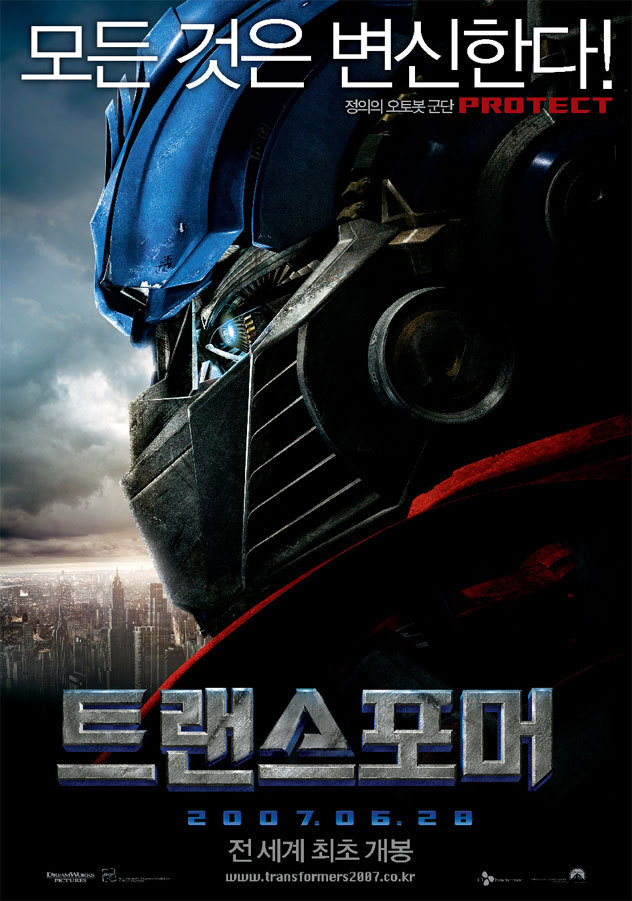
The recent box office is as above. But to give a concrete example of 'setup,' let's compare The Dark Knight and Transformers. In The Dark Knight, Batman wages a life-or-death struggle with the 'Joker' and in the end defeats the Joker and brings peace to Gotham City. Meanwhile, in Transformers, Sam and Optimus defeat the Decepticons and bring peace to Earth. Both may have a slight difference in scale, but it doesn't change that the side set up as 'good' defeats 'evil.' Here, 'evil' is portrayed as a group that twists the foundations of society. The Decepticons try to rule Earth, and the Joker tries to destroy Gotham City. Because this is the act of a very small minority, there's no problem in portraying it right away as 'evil.' That's because harming people who've done nothing wrong is 'evil.'
Is such consumption behavior truly proper consumption? Is purchasing and consuming a product that requires no thought, rather than pondering 'social phenomena' or humanity, a moral act and consumption that can contribute socially? And can it be called a film that can contribute?

It's undoubtedly socially contributing consumption. It may not have much influence on society's ideas, but it would be hard for it to contribute to society moving in the right direction. Usually, the box-office success of films distributed by CJ is generally 'guaranteed.' If I were to pick a representative recent example, it would be a film like 'Masquerade (Gwanghae),' which received favorable reviews because the subject was fresh and the actors' performances were outstanding. On top of that, perhaps because the distributor's power is the most dominant of the dominant, it 'occupied' most theaters nationwide. It did tell a human story too. But I think this film fell a bit short of erasing the image of a 'commercial film' for me. Rather than pondering how to live, it skillfully crafted an 'interesting story.' It provided 'profit' to quite a lot of people, and many who watched the film came out satisfied. It certainly 'contributed.'
Let me briefly talk about 'literary' works. In his essay collection 'The Curtain,' Milan Kundera has a part where he says that a work like George Orwell's '1984' is not a novel but a 'collection of ideas,' which is Kundera's value that a 'novel' should end as a 'novel' and is not a space for indirectly expressing one's own thoughts about society. Likewise, one could say that 'film,' too, as a genre of art like 'literature,' should not excessively reveal social ideology. But I think that even if literature can do so, film must be different. Film's social ripple effect is enormous. Unlike other media, and especially unlike 'literature,' its influence is incredibly strong.

The work 'Silenced (Dogani / The Crucible)' had been on the bestseller list as a book for several years. When this work called Dogani existed only as a 'book,' no ripple appeared in society at all. But this book was made into a film, and soon appeared in the world. To the film that appeared under the same title, countless people expressed anger and called for 'truth-finding' and 'legal punishment.' Soon the relevant parties began to be arrested, the teachers of this school took the stand to testify, the victims were reconsidered, and punishment was handed down to the perpetrators and the 'school.' The 'book' brought no effect to society for several years, but the film overturned all of this within a few months and brought a great ripple to society. To that extent, the medium of the 'book' can be seen as definitely not as 'effective' a medium now as it was for previous generations, and in contrast, one could see that film has risen as a quite influential medium. If such an influential medium is used 90 percent as a 'commercial' entity, I can only think it's such a shame. Russia even used film as a means of enlightening the masses—I'm not saying we should do that. I'm just questioning whether the works occupying theaters must be only blockbusters and thrillers. It's a shame that, while more films telling 'human' stories could be made, that's not happening. A film telling a past story about 'first love,' like 'Architecture 101,' would be good; a film that earnestly depicts people's lives after an earthquake, like 'Aftershock,' would be good. A film that draws attention to an incident the world overlooks, like 'Silenced,' would be good. Because they're all human stories. And because they're films worth feeling are socially valuable.
Comments 0
No comments yet. Be the first.