Pygmalion
- Author
- George Bernard Shaw
- Publisher
- Open Books | Published 2011-06-01
- Category
- Arts/Popular Culture
- Synopsis
- A flower-selling girl from the slums enters London's high society! Shakespeare ...
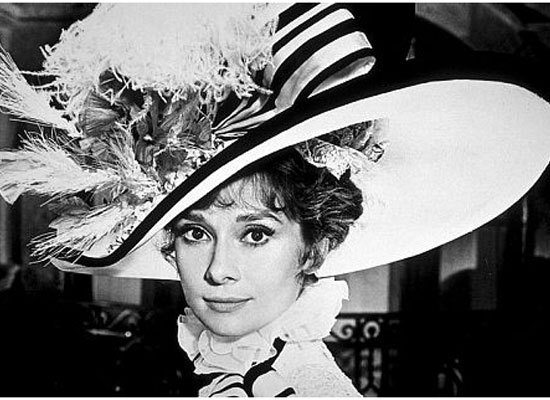
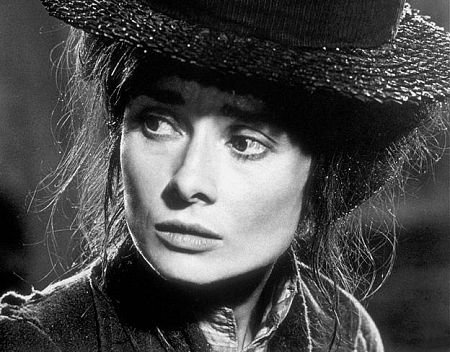
Bernard Shaw is very famous as a writer who embodied various 'images of women.' The 'Joan' of Saint Joan was a woman so sacred that her words meant the will of heaven itself, and this book is a work showing how the linguist 'Higgins' raises 'Eliza,' where again the subject is precisely 'Eliza' (a woman). To make 'Pygmalion' more concrete, it can be described as taking a 'street flower-selling girl' and educating her into 'a refined woman like a duchess.'
The fact that Professor Higgins makes a bet with Colonel Pickering is not in itself enormously interesting. But I received one shock from the way Professor Higgins treats the 'lowly woman (Eliza),' and a sympathy I can't quite name formed in me as Eliza, over time, hears that she's like Hungarian royalty and instead laments that she can no longer return to who she was before being educated. Education always seems to be like that. There are good things about receiving it, but once received, what becomes embodied in you without your realizing is very hard to shake off again. So it becomes a 'self' you must carry for life. Eliza, being reborn as an educated lady, no longer has only her own femininity; she acquires a 'femininity' obtained through her own will and, at the same time, one that men to some degree have in mind.
Showing women's volition through Eliza is also a noteworthy point. What changed Eliza is also Higgins's education and will, but the most central thing is precisely 'her own will.' Had she not wanted it, she could not have changed. Because she wanted to and tried to change, she ultimately changed. Things that would not have come to pass without her own will came to pass through her making up her mind. In a society dominated by masculinity, the manifestation of Eliza's femininity appeared in this way.
The fact that Shaw was, even by today's standards, a tremendous feminist can be found precisely in the image of women he embodies in his work, as here; I think it is only natural that he is seen as a pioneer, in that he makes claims not greatly different from those today's feminists make (for example, that women's alternative is not simply something different from men's proposals, but something created by 'women' themselves).
Beyond the 'definition of femininity,' another point of significance is precisely the perspective on the 'class system.' First, in the class society of Britain at the time, women were still in an ambiguous position for participating in economic activity. Even women who did participate found it hard to be confident in themselves, and the gazes around them were not kind either. So it was an era when depending on men's economic power was the usual case. But the protagonist Eliza tried to earn her own money through selling flowers. This point can be interpreted as a 'new woman' or 'courageous woman' acting against the social perception of the time.
Another part is the critical awareness that the class system is mere 'pretense.' Eliza was a penniless beggar girl, but through Higgins's education she was called 'Hungarian royalty' and returned to Higgins's home. Judging her status by Eliza's manner of speech, accent, and behavior is a criticism of Britain's atmosphere at the time, which focused not on seeing her actual life but on the immediately visible 'external things.' This is also shown in the pretense of the Freddy and Clara family; the way they, though not particularly wealthy, meet wealthy relatives and acquaintances and strive to maintain ties with them shows that the upper class of the time had a mindset not of working hard to earn money, but of spending well the money they had received.
What can be considered here is that society was depicted through a female protagonist rather than a male one. (It is not that Higgins and Colonel Pickering were useless, but that the central figure was a woman.) In Bernard Shaw's childhood, his mother was a woman who did not give love. The mother was a very cold presence not only to him but to Shaw's older sisters as well. Because Shaw was a 'man' who more resembled his father, Shaw's mother, who disliked her husband, seems to have particularly disliked him.
The deprivation of maternal love in childhood became the driving force that made 'George Bernard Shaw' depict various images of women, but at the same time made him a man with severe womanizing tendencies. People unconsciously seek out the 'familiar person' more. That is why 'parents,' the first people one meets, are extremely important; in his growth, the image of his 'mother' came to Shaw very negatively, but because people are not strong enough to erase that, it remained in his memory in various forms, and this seems to have appeared in discord with his wife and in his loves with the actress Campbell and Ellen Terry. I understand this aspect of Shaw to some degree. Even when I reflect on myself, I feel I am very greatly influenced by my mother. I seem to have inherited almost exactly my mother's two-sided character (her erratic side), and I unconsciously want to talk about books, as I often did with my mother. Only, Bernard Shaw unfortunately could not think of his mother as a very good person, and this ironically had a profound influence on his artistic world and seems to have contributed to making him a great playwright.
Until now I was an egalitarian who advocated so-called 'gender equality.' The egalitarianism I advocated was the thought that women and men are equal and that the power or authority they can wield, their mental influence, and the value of the things they assert are equal-but here I had an error. Men and women are 'different beings,' yet I was advocating equality without acknowledging that difference. But the equality Shaw advocated was different from this. It was an equality that, on the premise that the two are different, and because almost all existing things were created from the 'male' perspective, the definitions of 'womanly things' or 'feminine things' are also men's definitions-so it paid attention to 'that something' which is neither masculine nor feminine.
By reading this book, I felt the need to change my existing thinking. The 'femininity' of 'Eliza' shown here was certainly something quite different from the image I had previously thought of as 'femininity.' That is because the 'femininity' I had previously acquired, learned, and grown accustomed to hearing was an image divided into male and female, and one that had been defined from a very long time ago at that. Weakness, passivity, and other truly absurd images are what people think of with the word 'woman.' Even at this very moment. Of course, these images are being imprinted as wrong images through the many 'gender equality' educations carried out recently, but that is only a very small minority; people from their thirties up to the very elderly, who still make up the majority of the social strata, understand the image of 'femininity' the way masculinity defined it.
After writing this piece, I probably will no longer advocate 'gender equality' according to my previous thinking. From now on I want to give more concrete shape to the meaning that, because men and women are different beings, pursuing equality does not mean defining it simply as 'the two are the same,' but rather means 'because the two are different beings, they must be equal in the part where each other's value is recognized.' For example, just as one positively evaluates a man's goal-orientation by citing how it becomes an energy source for a group to move dynamically, while citing a woman's relational nature as positive for a group's cohesion.
Finally, I want to recommend this book to 'feminists,' and at the same time to friends who think they want to cast off existing social consciousness and influence society as a forward-looking 'woman.' It was a book that influenced my values in various respects.
Comments 0
No comments yet. Be the first.