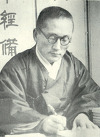
The Heartless
- Author
- Yi Kwang-su written by
- Publisher
- Moonji Publishing | 2005-11-22 published
- Category
- Novel
- Book description
- The book most read by Koreans and most frequently reprinted since the 20th century...
At two a.m. on the twenty-ninth day of the sixth month of the year byeongjin, the sinner Park Yeong-chae bows a hundred times in tears
- A letter Park Yeong-chae sent to Hyeong-sik -
It had been a long time since I'd read a novel, and the writing itself was good enough that, for once, it made me feel I should write a piece based on this single novel. I suppose it's because, compared to other works, there's so much to say about this work's historical-cultural background, the personalities of the protagonists who appear in it, and the thoughts that arise about the work's structure after reading it.
Previously, while reading 'Anna Karenina,' I had thought about how the novel's two axes, 'Levin' and 'Anna Karenina,' appear as protagonists of different narrative structures that overlap little by little. Of course, the root of this thought is a fact I came to realize after reading a thesis on The Heartless, learning that The Heartless was constructed based on 'Yeong-chae's' story. Perhaps because of that, I had the desire to compare the narrative structures of The Heartless and Anna Karenina, and I'd like to talk a bit about the personalities of the characters in The Heartless, what appears in their backgrounds, and the things in this work that I'd like to connect to the society of that time.
This novel is distinguished, depending on the researcher, by a difference of two focal points: whether to view it as an enlightenment novel or as a romance novel. In the former case, it's because Hyeong-sik and Seon-hyeong, Byeong-uk and Yeong-chae all very strongly reveal the intention to civilize/enlighten Joseon, the social backdrop, through 'education' and 'study abroad.' Through this novel, Yi Kwang-su tried to make the best choice among the national choices available under limited circumstances, and that's exactly how it appears in the novel in this way. The view of it as a romance novel can be said to be because the narrative unfolding around the love triangle between Hyeong-sik, Yeong-chae, and Seon-hyeong is the foundation of a romance novel. Of course, the woman who carries more weight in this novel is not Seon-hyeong but Yeong-chae, and it's true that Yeong-chae occupies an amount nearly on par with Hyeong-sik, but the basis, in any case, of viewing it through the love of Yeong-chae and Hyeong-sik—that is precisely the view of it 'as a romance novel.'
Let me introduce the researchers' perspectives only to this extent, and this record concerning 'The Heartless' will largely proceed in the order of looking at the narrative structure and its connection to classical novels, the characters, the modern aspects and limitations, and the background of 'Yi Kwang-su.' First, the narrative structure.
1. Narrative structure and connection to classical novels
What made me recall Anna Karenina, which I'd read over a year ago, while reading The Heartless, which I'd read less than a month ago, was precisely the 'narrative structure.'
Yi Hyeong-sik (heroic novel) | Park Yeong-chae (gisaeng romance novel, tale of female suffering) |
Konstantin Levin | Anna Karenina |
Savior motif: Master Park, Kim Byeong-uk
The astonishing connection between the two novels is precisely that there are two subjects of the 'narrative structure.' I had never once thought about it this way. This kind of thought seems purely the result of accumulating and accumulating. In any case, I think it's a fine thing to occasionally experience, even in this way, what has been broadened through reading various theses and books. In any case, these two figures who are the axes of the narrative did not meet well. Both pairs—Hyeong-sik and Yeong-chae, Levin and Karenina. Of course, as in 'Resurrection,' there was a case from the same author where Maslova and Nekhludov each told their own story, but even that didn't apply, because in 'Resurrection' the narrative development centered on Nekhludov. But 'Anna Karenina' had two completely separate axes, and the number of times the two people met and the driving force that led each of their narrative structures were all too similar.
In 'Anna Karenina,' Anna and Levin each unfold their own story. If Anna speaks of the collapse of the self and the pursuit of realistic love that begins as she starts falling for Vronsky, Levin, after his marriage to Kitty fails to come about because of Vronsky, marries after much agonizing and agonizing, and ponders his religious views and the future of agriculture. In a narrative spanning fully three volumes, Levin and Anna meet only a few times, and unlike Hyeong-sik and Yeong-chae, the two have no great acquaintance. The big point is simply that the two axes build their own narratives and lead their own stories. If Anna concludes her narrative through death, Levin concludes his story while thinking about the things he must do.
Hyeong-sik and Yeong-chae are a bit different from this; from the start the two are depicted as having spent their childhood together. This can be said to be a narrative structure commonly seen in Korean classical novels. The story structure of two characters knowing each other in childhood, then meeting again as adults, is something we've often encountered while reading classical novels. However, one should note that the number of times they meet as adults is only about three, and that, unexpectedly, although the page count is large, the total number of days in the narrative is less than a month—about fourteen days or so.
Like Levin, Hyeong-sik also leads his own narrative story himself. It's slightly different in that most of that narrative structure's story is connected to Yeong-chae, but similar to the heroic-novel structure of classical novels, Hyeong-sik meets Master Park, a rescuer-rearer figure, and meets Kim, the elder, a son-in-law-contesting figure, and walks the narrative structure toward the path of becoming an educator. The difference is that when he first met Yeong-chae as adults, their feelings weren't strong enough to leap over the obstacles, and through this Hyeong-sik comes to be called a 'Hamlet-type figure.'
Yeong-chae has a lot of the form of the classical gisaeng romance novel and the tale of female suffering. After living well without incident in childhood, in a single moment the family declines and she undergoes various sufferings (being sold off, the Pyongyang journey narrative). Then, to save her father (filial piety), she becomes a gisaeng, but this choice instead becomes the occasion for her father to take his own life. This refers to how the realization through the practice of 'filial piety' that occurred in existing pre-modern narratives does not come about, and the narrative structure collapses. What was meant to realize 'filial piety' ends up realizing un-filial piety. Having become a gisaeng that way, Yeong-chae lives life as a 'gisaeng' while keeping in her heart Hyeong-sik, whom her father had connected her to. But as time passes and Yeong-chae meets Hyeong-sik, Hyeong-sik shows a very ambiguous reaction, and she too realizes she cannot live with Hyeong-sik because of the constraints of social status; in that the obstacles are not overcome, it can be said to differ from existing romance novels and tales of suffering. Also, the point that Yeong-chae was embodied as the very type of human in whom 'old-era values' transform into 'new-era values' is a part that must not be forgotten.
I spoke of it simply above, but to put it in more detail, Hyeong-sik's story largely follows a heroic-novel structure. In a heroic novel, the protagonist suffers hardship, then meets a savior, and through that savior undergoes 'rescue, rearing, and marriage,' and through cultivating his abilities 'heroically' saves the group or nation he belongs to. Hyeong-sik too meets Master Park, a rescuer-rearer, receives education, then with someone's help goes to study abroad in Japan, and upon returning to Joseon meets 'Kim the elder,' a son-in-law-contesting figure, and marries Seon-hyeong. Afterward, amid the rapidly changing development of the Samnyangjin flood, he shows a prophetic side and steps forward in a gathering movement.
Yeong-chae first has aspects of the gisaeng romance novel. In that she possesses a 'vernacular-script paper' that can be interpreted as having the same meaning as the 'jade ring' that appears in The Tale of Chunhyang, Yi Kwang-su appropriately placed elements that could draw the readership's interest. Also, the 'suffering' that Park Yeong-chae undergoes is very similar to the process by which Suk-hyang undergoes hardship in The Tale of Suk-hyang. The difference here is that, whereas existing classical novels usually develop, after such suffering and the pain of love, toward positive results—liberation from suffering, the conclusion of marriage—in 'The Heartless' Yi Kwang-su recognized this and overturned the narrative structure. The fact that Yi Kwang-su, in the process of developing the story after Yeong-chae goes off to die, did not kill Yeong-chae, in a tone of 'I already know everything,' can be seen as further supporting this.
Byeong-uk is a 'savior'-type figure; in classical novels a savior commonly appears as a figure who gives great help in overcoming the protagonist's crisis. She is a New Woman who shows no femininity at all, and the fact that Yeong-chae's thinking changes at once through Byeong-uk is a limitation of the creative work called 'The Heartless,' but in any case she seems to be an unavoidably necessary figure for Yeong-chae to transform into a 'New Woman.' Such figures still exist in classical novels too, appearing as characters who help the protagonist. Master Park and Kim the elder can also be called savior-type figures from Hyeong-sik's standpoint.
2. Characters
Since I talked about Hyeong-sik and Yeong-chae earlier, I'll omit these two figures and instead talk about Shin U-seon, Dean Bae and Kim Hyeon-su, Kim the elder, Kim Byeong-uk, and Kim Seon-hyeong. First, starting with Shin U-seon. Shin U-seon can be called a 'Sinitic-learning intellectual' who received a Chinese-style education. He himself walks a different path from Yi Hyeong-sik and is depicted as a very dashing man; the difference is that, although he also studied in Japan, he roots his foundations in the thought of the feudal era. Dean Bae and Kim Hyeon-su can be interpreted as the underside of modernity, represented by 'violence,' and Kim the elder is a man who has plenty of money but doesn't properly know Western knowledge. Kim Byeong-uk appears in the work as the very embodiment of the 'New Woman'; Kim Byeong-uk's existence is both a savior and someone who makes change possible in Yeong-chae. However, she is depicted as if her femininity has been removed, and she's a figure who shows limitations in that she gives no thought at all to anything other than 'enlightenment.' Lastly, Seon-hyeong—I thought Seon-hyeong was a truly ambiguous yet most definite figure. Seon-hyeong's family itself is modern, but her own character is not modern. She doesn't grasp and approach marriage as a matter of her own agency, but entrusts herself to the pre-modern value that she must follow her father's will. One more—the 'wobbling old man' has no weight worth calling a character, but this old man's symbolic value can be said to be very great. That old man functions as a narrator's tool that indirectly suggests, as the very thing in which 'pre-modernity' remains, that pre-modern people, acts, and values still remain in Joseon society.
The characters who appear in 'The Heartless' each have meaning. These characters each represent a stratum of Joseon. Yi Hyeong-sik shows the intellectual among Koreans, a Tokyo study-abroad student; Byeong-uk belongs to the 'New Woman' who accepted the new values of the time; a guy like Kim Hyeon-su, who learned but doesn't act as he learned, symbolizes 'violence'; and Park Yeong-chae represents people who try to pursue modern values but face difficulty in doing so. Yi Kwang-su seems to have thought a great deal about how to appropriately mix pre-modern and modern elements. His ability to construct a story based on characters in quite important positions is truly highly commendable.
The second is precisely the expression of 'jeong (feeling).' In defining what literature is to him, Yi Kwang-su did not want literature to be bound any longer by feudal values. The existing pre-modern 'writing (mun)' was a tool for expressing thought and values. It was a vessel. It was a tool for expressing the ethics of Neo-Confucianism. But Yi Kwang-su sought to break this, and partially succeeded. He tried to project the ideal world he conceived in his own way here. Although its narrativity was not perfect, it was a quite valuable attempt.
3. Modern aspects and the novel's limitations
The modern aspect of 'The Heartless' is precisely that a conflict structure shown through inner-psychological description was revealed. Its starting point is precisely Hyeong-sik. Hyeong-sik agonizes endlessly. He agonizes over whether to choose Seon-hyeong or to choose Yeong-chae, up until he judges Yeong-chae to be dead. Hyeong-sik, who agonizes and agonizes again, is evaluated as a typical 'Hamlet-type' human. If Hyeong-sik hadn't agonized like this and, the moment he saw Yeong-chae again, had said 'Yeong-chae, let's get married!', he could not be evaluated as a modern figure at all. But Hyeong-sik agonized. He was conflicted, measuring Yeong-chae against the value of chastity. He agonized over whether or not Yeong-chae had had relations. That's why he is a modern figure. The figures who appear in classical novels think of feudal ethics as the highest value and try to follow them. Yu Chung-ryeol of The Tale of Yu Chung-ryeol, as you can tell from his very name, tried to follow 'loyalty (chung)' and 'fidelity (yeol),' and Im Gyeong-eop in The Tale of Im Gyeong-eop also shows a heroic side and follows the values of his time—'loyalty,' 'filial piety,' 'fidelity,' 'propriety,' 'righteousness,' 'trust,' and so on. The figure who has internalized the values of the era is precisely the pre-modern figure. But Hyeong-sik is not like that. However, Yeong-chae is a figure who has internalized 'fidelity' and 'filial piety.' Even so, in her case, internalizing the values did not raise her worth. Even though she internalized filial piety and fidelity, her father could not get out of prison and she ended up reduced to the status of a gisaeng. This means that worship of pre-modern values no longer exists and help in reality has disappeared.
Meanwhile, 'The Heartless' also has limitations. First, one can cite 'ideological suturing.' The point where the novel's development changes abruptly in 'The Heartless' appears precisely in the 'Samnyangjin flood.' The 'Samnyangjin flood' existed as a means for Yi Kwang-su to dissolve 'enlightenmentism' into the novel, and it appears very abruptly within the novel's narrative structure. This 'Samnyangjin flood,' which appears suddenly without being given any plausibility, is a scene where the author indirectly suggests the reality of Joseon, which needs 'enlightenmentism'—that is, 'education'—while also being the part where he tries to say that education alone is the answer. What is sutured here is precisely the ideology of 'enlightenmentism,' and this ideology had enough suturing power to smooth over the conflict structure among Yeong-chae, Seon-hyeong, and Hyeong-sik. A proper modern novel wouldn't have eliminated the conflict structure among Yeong-chae, Seon-hyeong, and Hyeong-sik in this way, but Yi Kwang-su, while putting forward the 'enlightenmentism' he conceived, seems to have placed less weight on the narrative-structural side of the novel.
4. The background of 'Yi Kwang-su'
Yi Kwang-su was a person who spent his childhood as an orphan. It's true that he was highly talented—talented enough to single-handedly serialize over a long period in the Maeil Sinbo. But no writer can write a novel while ignoring their own process of growing up. Considering that George Bernard Shaw, who wrote Pygmalion and Man and Superman, also pursued various images of women because of his childhood memories of his 'mother,' Yi Kwang-su too can be seen as having projected the memories of his orphan days onto Yeong-chae and Hyeong-sik. When he turned eleven, his parents lost their lives to cholera and he came to spend his life at a close relative's home, but his discomfort was beyond words, and he felt severe doubt toward the Neo-Confucian values he had learned. Also, afterward, watching a righteous-army general like 'Shin Dol-seok' get captured and taken in by the Japanese army through the informing of people around him, he strongly argued for the necessity of 'education.'
He also actually held a teaching post at Osan School. Because 'The Heartless' was written after he actually carried out the role of a teacher, the Yi Hyeong-sik in 'The Heartless' can also be seen as serving to some degree as Yi Kwang-su's proxy.
5. Personal impressions
I only heard of Yi Kwang-su's 'The Heartless' once I'd become a high schooler. This novel remains in my head even more intensely than at the time I first encountered it back then. Back then it simply remained in my head as the first modern full-length novel. Without any concrete form, it just remained as the word 'The Heartless.' With time passing like that, the 'The Heartless' I read came across as more interesting, more fascinating, and more worth reading than I'd expected. Nobody had ever talked at length about 'The Heartless' being this kind of novel, but as a result, I might have a hard time, for a while, finding another novel with as much material to look up and read as this one. It makes me think I'd like to read more widely, and I also recall my mother's words that you have to read 'Yujeong' and 'Love' to have read all of Yi Kwang-su's novels about 'love.' It was good.
Several books I'll write about next are already decided, and I'd like to read them as soon as possible, read the related theses as soon as possible, and organize my thoughts. I'm glad that reading theses while writing helps more than I'd thought.
Comments 0
No comments yet. Be the first.