0.
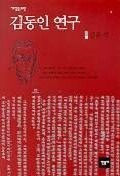
Professor Kim Yun-sik is one of those people in the field of Korean literary studies who can say 'I am the text itself.' His countless studies are research that set the standard, to the point that I too sometimes look at them first when searching for papers. I think the achievements of early researchers are important in that they presented the first direction. Also, even though such research achievements were first attempts, you can see traces of their effort to be equipped with a 'validity' of their own. Maybe because most of them came from elite backgrounds — these days there are so many research papers you could call them 'mass-produced.' Even without saying so, the countless master's theses surely back this up; of course, doctoral dissertations are said to be difficult to write even now, but famous doctoral dissertations like in the past may no longer be heard of. It's no exaggeration to say that most famous scholars' doctoral dissertations are the first organization of their life's research, and that's probably because the researcher's direction, main interests, and so on seen in those famous scholars' first doctoral dissertations could to some degree predict the researcher's future. Well, if they were going to become that well-known a researcher, you'd have recognized them from the seedling stage (is a doctoral dissertation a seedling....), so it's a part there's no need to think about. Anyway, I'll just briefly write down what I organized after reading the book on Kim Dong-in research that follows from last time, and keep this piece short.
1. The Influence of Russian Literature
If asked to pick one of the most important influences among the tendencies of the early-20th-century Korean literary world, I would pick the influence of 'Russian literature.' Strangely overlapping with the period of the Russo-Japanese War, Russian literature influenced Japan, and the many overseas students who were in Japan were also influenced by this Russian literature. Those Russian literary writers can mostly be compressed into writers like Tolstoy, Chekhov, and Dostoevsky. I once wrote, while writing about Yi Gwang-su's 'Soil,' that Yi Gwang-su was greatly influenced by Tolstoy's theory of art (http://milkrevenant.tistory.com/241), and this time I learned for the first time that Kim Dong-in and the overseas students of that time were also influenced by Russian literature. Among them, Yi Gwang-su and Kim Dong-in are the cases most influenced by Tolstoy.
I should explain Tolstoy briefly. People probably think more of War and Peace, but in fact I think Anna Karenina and Resurrection are more important works than War and Peace. Anna Karenina shows one cross-section of the typical Russian novel, and through the protagonists 'Levin' and 'Anna Karenina,' the author revealed the vision of the future and the human type he pursued through 'Levin'; in Resurrection too, the author likewise reveals the human type he pursues. That he tried to reveal 'the human,' and that such a writer must become a god — this is Kim Dong-in's idea, and it seems Kim Dong-in, seeing such aspects of Tolstoy, established a value system that could be called his 'puppeteering technique.' Wasn't the god Kim Dong-in spoke of one where the writer becomes a god and can handle the work with consummate skill? In particular, the ability to wrap up a novel in just a few lines at the ending of 'Potatoes' is one part that representatively shows this.
2. Family Environment
Borrowing Professor Kim Yun-sik's expression, he can be called 'the noble young master of the family,' and given the family's position, that's fitting. Also, maybe because the family environment greatly influenced him too, when he — who could only be positioned as the family's 'superior' — is reflected as an inferior in academic achievement compared to Ju Yo-han, or when you look at the realization he experienced reading Yeom Sang-seop's The Green Frog in the Specimen Room, it seems the moment when you don't want to bow but have no choice but to bow is bound to come. One cannot hold superiority over everyone. As for the family's position: there was an older brother more than 10 years apart in age, the father was at a 'grandfatherly' age, and the mother was the father's second wife. On top of that, he was born into a leading rich family in Pyongyang, so there was nothing lacking. What he said he lacked would be the diverse vocabulary that 'Yeom Sang-seop' commanded, because he hadn't learned diverse vocabulary in childhood. He always said he envied the Seoul dialect..
Because the family environment is already that of a 'noble young master,' there's hardly anyone above him, so the conflict and anguish with 'Ju Yo-han,' who was once a person above him, and with his (Ju's) wife, seem to have acted as a difficulty for Kim Dong-in, given to his life as something that had to be overcome.
3. Fiction That Is Not Enlightenment
He respected Yi Gwang-su during his lifetime, but he did not include Yi Gwang-su's works in the coterie magazine he ran. That's because Yi Gwang-su's literature was a tool for revealing enlightenment, and in his view its literary quality was not outstanding. That statement remains valid even now. However, it's not that he didn't respect Yi Gwang-su as a person. Kim Dong-in respected 'Yi Gwang-su.' To the extent that there were several cases where Yi Gwang-su rescued him professionally. The literary world of the 1920s was, more than I'd thought, somewhat organic, I suppose. Should I say it was really close-knit..
4.
If for the time being I read one book on work-and-author research like this at a time, quite a lot will accumulate. I should do it often.
Comments 0
No comments yet. Be the first.