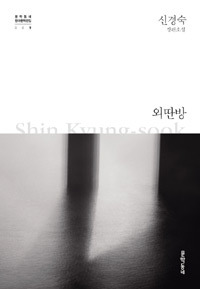
- Before getting started, this is a piece you absolutely cannot understand without reading the book, so I strongly urge you to read it. It's a book worth reading. It contains events you may have encountered if you learned modern Korean history, but those events don't feel all that large. Also, in that the narrative method is distinctive, there are two points that align with modernism. However, in depicting reality, the color of realism appeared. Well then, let's begin.
0.
The narrator (the author) said this work is probably writing positioned somewhere between fact and fiction. And on the first page — that is, in the dedication of the book — the author mentioned Teacher Choi Yi-hong, the industrial special school, and Hee-jae unni, who can never become the past. Long ago, while reading Yi Sang's 'Wings,' an older friend taught me there was an 'aphorism' in it, and I realized this work too had such an aphorism. The phrasing that curiously hints at the work's content drew me into the story while making me confused about whether the whole work is 'fiction' or 'fact.' This work is fact to some degree but at the same time fiction. She wrote it as fiction because she didn't want to write it as fact, but I wonder what the author thought when people asked why she didn't write it as it really was.
The first time I encountered 'The Lone Room' was through a National Assessment mock exam in my third year of high school. The portion of the work included back then was truly impressive. The passage was the part about 'fiction came to me that way,' the part about copying out the novel 'A Little Ball Launched by a Dwarf,' and the story about Teacher Choi Yi-hong, and even now I think that passage is impressive. As an 'author' she has a certain degree of popular appeal, but I actually doubted whether this was the kind of thing that would appear on a mock exam preparing for the CSAT — yet the familiar subject of 'A Dwarf's Ball' brought it closer, giving it a feel that was unfamiliar yet not unfamiliar. And then, going around and around, it appeared again on the teacher-certification exam, making me wonder if it really is an important work. So I read it, and I concluded that this is a truly special and important work.
I won't mention this author's plagiarism controversy. Although the author didn't admit to the work she plagiarized, from my point of view too it looks so much like plagiarism that I have nothing to say. But you can't say all of Shin Kyung-sook's works are like that. Especially this 'The Lone Room' — perhaps because I read it after reading 'Please Look After Mom' and 'Somewhere a Phone Is Ringing for Me,' I got the feeling that the stories integrate (connecting learned content is always a good experience of success), so I want to view it as separate from the work judged to be plagiarized. Regarding 'The Lone Room,' some view it as metafiction, a work in which individual expression remains quite strong. Another researcher critiqued this work as a 1990s realist novel. But setting aside the evaluations of authoritative people, in my subjective opinion too, the value of this work itself is still valid. Because I haven't seen novels that dissolve the story of an era in this way.
In this piece I want to talk about structure, subject matter, and narrative method.
1. Structure
The work has a total of 4 chapters and 'two' time periods. It's easiest to think of it as a parallel structure. There exist two: the viewpoint of the 'me who became an author' who is writing, and the 'past me' starting from age sixteen. It looks like reminiscence, but the two stories go back and forth too much to connect it as reminiscence. Of course, the story of the sixteen- and seventeen-year-old me appears far more, and since that story also includes Hee-jae unni's story, you could call it a frame-narrative structure, but I don't think there's another novel for which the term 'frame structure' is so unnecessary. Because both the past story and the present story appear as important. Also, since the two stories are connected through a single protagonist, even if you distinguish them, complete separation isn't easy.
Hee-jae unni's story barely appears in chapter 1 and gradually starts to appear from chapter 2. The narrator pulls into the past the sixteen-year-old 'me' who came to the city from the countryside to find my life. This is the work's most basic characteristic. Amid the crossing between past and present, the sixteen-year-old me lives in Garibong-dong and briefly visits the countryside home. The story of attending a factory, then enrolling in an industrial school and meeting Teacher Choi Yi-hong and starting to write, the story of 'me' who will become an 'author,' and the countless records that occur within it are all contained here. There's the May 18 Uprising, and the YH female workers' incident. Korea's truly eventful modern history is depicted from the standpoint of the 'petty bourgeois.' That's why this novel is also called a 'workers' novel.' Because the sixteen-year-old me was a 'worker,' and this worker experiences Hee-jae unni's death and then moves out of the lone room in Garibong-dong as one axis, while on the other hand there's the aged 'me' living an 'author's life,' but the start of all this begins from the past 'me' who was a 'worker.'
Because each chapter was serialized separately (4 chapters total), each chapter has a division of content, but in fact that division isn't strong. It's just that the story moves along one by one. If I had to pick memorable works among such serialized novels I've read, I'd pick things like 'Mujeong,' 'Three Generations,' and 'Scenes by the Stream' — but 'Mujeong' and 'Three Generations' had strong narrativity so I read them tensely, and 'Scenes by the Stream' I read comfortably because the scenery changes, whereas 'The Lone Room' was neither this nor that. To just move past it, there's something it still wants to say remaining, yet the narrative connection wasn't very tight. A part like this recalls 'modernism,' which lacks narrative, but if the content the narrator truly intends in this writing called 'The Lone Room' is focused on speaking of 'small stories' — the small joys and sorrows of daily life — then I think the connection of content not being so strong isn't much of a problem. And so even this structure, which I hadn't seen before, made sense as I read the content. I too tend to think it's hard for an emotion to appear strongly 'narrativized' when I talk about or write down some emotion, and I suspect the author agonized over that part. If there's another reason, it's probably the writing-as-it-really-was that the 'narrator' speaks of — being a narrator who knows the difficulty of 'writing as it really is,' as one senior advised, perhaps the method of conveying it became a little different from typical 'story novels,' I thought to myself.
2. Subject matter
Hmm, the protagonists are 'petty bourgeois.' But the petty bourgeois here differ from the petty bourgeois of 'A Dwarf's Ball.' The petty bourgeois of 'A Dwarf's Ball' are largely protagonists who carry social problems within them. The father represents the figure of a 'father' who, in the process of industrialization, has no proper job but has children to support. The younger sister represents the 'runaway youth' amid that process of the family disintegrating. Besides them, the social problems of the time — people who commit suicide, people buying up housing rights, and so on — appear directly, 'indirectized' through the characters bit by bit. But the me of 'The Lone Room' seems more focused on the small joys, daily life, worries, and sorrows within it than on trying to talk about such social problems. Well, depending on the person, they call this work metafiction, so concluding it that way might be convenient. However, this work is not merely the author's story but also the narrator's story. Because the aged 'me' in the novel, who has the job of 'author,' reminisces about the past but, in stating the past, states it as 'present' rather than 'past,' and the 'basic content' such a narrator speaks of lay in the joys, worries, and sorrows of daily life. Also, if someone asks whether this can be completely 'fact,' anyone would say it can't be called fact. Because it's a story reconstructed by someone, that's impossible. Of course, within the novel there's the May 18 in Gwangju, and the YH female workers' incident. There's also the story of attending the industrial special school, and the events of a labor union forming inside the factory. Truly, events that are historically important one by one — but that might also be trivial, that might just be passed over — are contained. So in terms of 'subject matter,' it still hasn't escaped a very strong sense of reality. In any novel, that sense of reality is like one half that makes up the 'novel,' so it can't be discarded. Isn't fiction-that-resembles-fact the goal of the novel — and that's why, even though the author's actual life entered as subject matter, in the end this story is 'fiction.' But regarding whether 'Hee-jae unni's' death is fiction, I somehow get the feeling it isn't. The strong sense that it was probably written as it really happened remained, so the story about Hee-jae unni was a novel yet seemed not a novel.
'Individual experience' — hmm, in the case of 'An Su-gil,' whose material I recently started reading bit by bit, his Manchuria experience was the driving force behind writing the great work 'Bukgando,' and Yi Gwang-su too dissolved into his life the many problems (being an orphan, Donghak) he experienced. Also, since Kim Dong-in's short but real prison life can be interpreted as expressed in a work like 'Flogging,' in terms of 'subject matter' an author can't be completely detached from their own life. As said in Milan Kundera's 'The Unbearable Lightness of Being,' since one can't live two lives, how could one drastically pull in different material — rather, doing so would inevitably produce a novel whose sense of reality easily collapses. That's why an author's life is precious material, and how much 'fictionality' they add to express it is their ability. In that respect, the question and answer about this novel being positioned somewhere between 'fact and fiction' is very impressive. Because the 'narrator' defines the position of this work.
Another piece of subject matter is the life of the aged 'me.' The life of 'me' who has become an author, this curious method of bringing in writing one will send and talking about it, recalls 'The Fool and the Idiot,' which has a work within a work. But it differs slightly from how the two stories there were summarized as the brother's story and the story of brother and me, told by someone other than the 'narrator.' At any rate, the subject of both stories is 'me,' and the one looking at the past is also 'me.' So I think that's why the stories connected even though they go back and forth between eras.
3. Narrative method
This work's narrative method is distinctive. Probably its biggest characteristic lies in the sentence-ending forms. Well, it's also a characteristic of Korean — since a sentence's predicate indicates tense and mood, it feels especially important. Because the author used predicates in various forms. Using past-tense endings, then present-tense endings; the sixteen- and seventeen-year-old story is written in the 'present tense,' while the aged 'me' story is, conversely, written again in the past tense. But this isn't fixed, so present and past tense go back and forth. Sometimes present, sometimes past. The 'aged me' story is the same. Writing this way gives a feeling of writing as it comes to mind and lends a sense of reality, but on the other hand it has the drawback of reduced narrative consistency and a weakened concept of 'time.' Still, I think it's important that through this method she could escape the method of 'universal reminiscence.' The device of reminiscence can be a somewhat clichéd, formulaic method, but the author dissolved the content somewhere in the middle, between talking about 'reminiscence' and reality. A novel like none I'd seen before? — so I thought of this as another 'modernist' experimental novel, but it seems that's not necessarily the only way to see it.
Although it's a matter of outcome, the fact that the sixteen-year-old 'me' was in Garibong-dong is precisely why she could become the present author, and in that this story turns separately but is ultimately one, perhaps the present- and past-tense endings became meaningless. You could also see the narrator's story, which tried to write as it really was, as having appeared that way.
4. Other personal evaluations
I really liked this work. 'The Lone Room' first came to me in a mock exam during my third year of high school, but it was good that even after that moment it wasn't forgotten and stayed in my mind. I still remember being caught up in a strange emotion and feeling while reading this work on exam day. Because I newly experienced that feeling while reading the whole thing this time, it became a meaningful work. The start was like this.
While reading the writing, it was good that many things came to mind. The happiness, joys, and sorrows of daily life are emotions we tend to pass over easily. But just because they're easy to pass over doesn't mean they're light. They take up many parts of my life. That's why books keep coming out telling us to be grateful for the happiness that comes from daily life, and books about how to find happiness in daily life. Realizing this can make life a little happier and more comfortable. These days I tend to try to do that, and since around January last year I've mostly been doing so, but reading the book brought back both my earlier life and my recent life, so with so many crossing memories my emotions were strange. I looked at my heart, located somewhere between joy and sorrow, soothed it, and laughed along with it.
Another thing I can connect is that there were traces, throughout this novel, of Shin Kyung-sook's works that came after 'The Lone Room.' Would it be too much to say that the stories of works like 'Somewhere a Phone Is Ringing for Me' and 'Please Look After Mom' were dissolved into it bit by bit? But I discovered those stories bit by bit in this book. In the narrator's story of pulling out the phone line because the phone kept ringing, in the figure of 'Mom' who came carrying a live chicken to that 'lone room' in Seoul for her son's birthday, and in the figure of 'Dad' who stayed home for a few days after 'me' went up to Seoul.
And in the story, the way you can grasp the reality of the era through the emotion the narrator feels while briefly visiting 'home' comes across very curiously. 'Me' visits the hometown house with a maternal cousin. At this time the hometown the 'narrator' feels is a space that's abundant, wide, and has everything. I felt that the everydayness appeared in the part where she feels whether living isn't that hard in the hometown, but living in the 'lone room' after coming up — for me and my cousin, the third brother, and the first brother — is hard.
I have a lone room too. If you call where I live these days a lone room, then it'd be a lone room; hmm, or not — maybe that room in England could be a lone room. But from that 'room' in England to my recent rooms, even without spatial continuity, a continuity of atmosphere remains. That may be why I could empathize with this novel. Even though it's by no means a bright novel, the reason I could feel joy and sorrow at the same time is that my own 'lone room' was so, and is so. Also, in the narrator's intention to express everydayness, Marcel Proust's 'In Search of Lost Time' comes to mind. In the sense of reviving the past with present sensation, the two works feel similar.
As an aside, I started writing this piece on June 26, and seeing that today, when I'm finishing it, is already a third of the way into July, writing about this book took a long time. Probably because I assigned my own meanings to this work — quite a lot, in my own way — and trying to even organize them required spending time. When I write, I can't immediately hit publish on content I'm not satisfied with; that's my consciousness as a writer. I feel I can only finish a piece once I'm at least somewhat satisfied, but since I really wasn't happy with it, I repeatedly wrote, stopped, erased, rewrote, and stopped. And in the process I agonized too. I kept wondering what on earth writing even is. I'll note that writing is, in the end, a process of self-expression and a process of organizing.
Comments 0
No comments yet. Be the first.