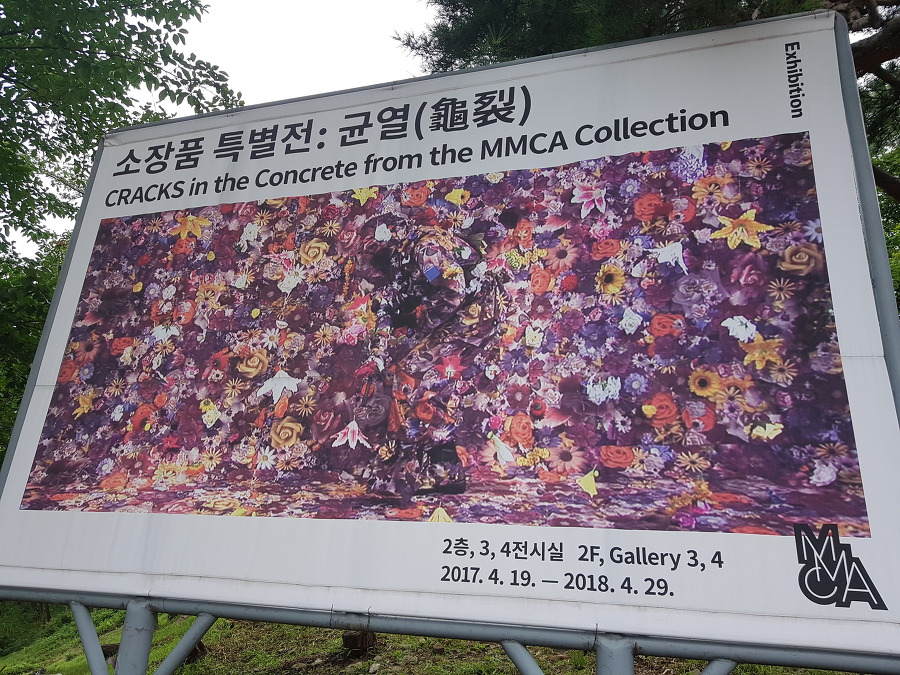
The aim of the 'Cracks' exhibition, drawn from the collection, can be said to lie in symbolically showing the cracks that are appearing, have appeared, and will appear in society. Since modern society has an enormous number of cracks, I thought the messages it shows could also be diverse, but in reality, because the forms of those cracks are mostly similar, they're not all that different. The lonely modern person, repetitive daily life, the uniformity of culture, reality trapped in images, nationalism, war, the problem of language, forgery controversies, the democratization movement, and so on - now that I've actually written it out it's diverse, but you can see that social problems caused by the 'absence of communication' take up the biggest piece of the pie, and apart from that I gathered that problems of expression made up the main part. For reference, the English title grasped it as the crack that occurs in concrete. Concrete is certainly a gray material that can symbolize the inhumanity of the modern age.
Well, there were quite a lot of works, but I'll mention only a few that left an impression and summarize my exhibition review.
1. Works
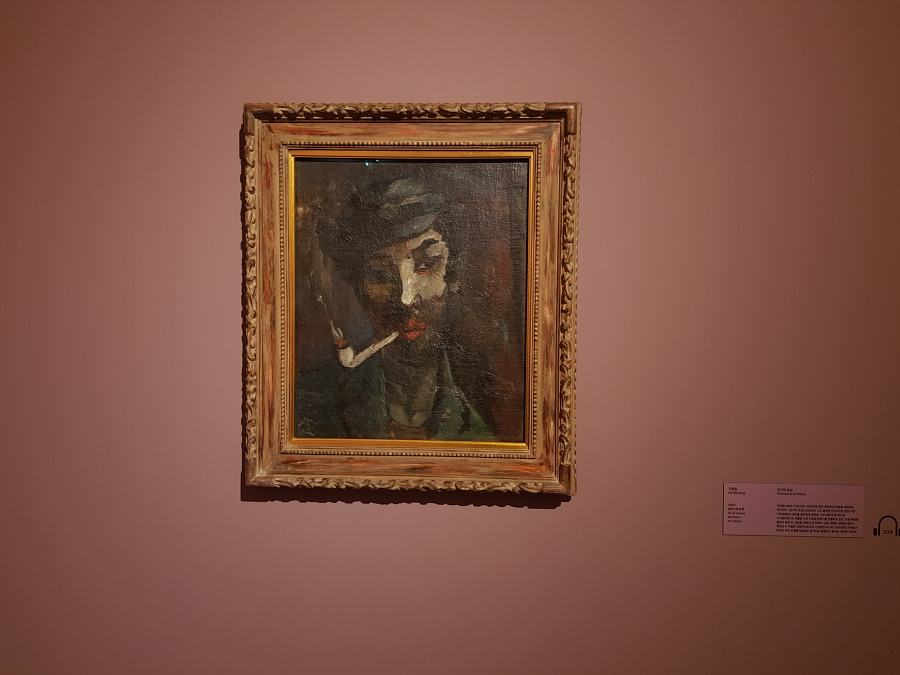
1) Portrait of a Friend, Gu Bon-ung
There were 2 works I'd intended to see at this exhibition, and one of them is exactly this work, 'Portrait of a Friend.' It's a painting known to have been painted using as its model Yi Sang (real name Kim Hae-gyeong), who stood at the center of 1930s modernist literature. It's a work in which the distinctive brushwork and color combination appear impressively, and you can see a modern boy holding a cigarette in his mouth. This painting is one of the works that lets you confirm the exchanges that took place within the art world of the time, and the subject of the portrait, 'Yi Sang,' can be seen as a crack itself, one rarely seen in society.
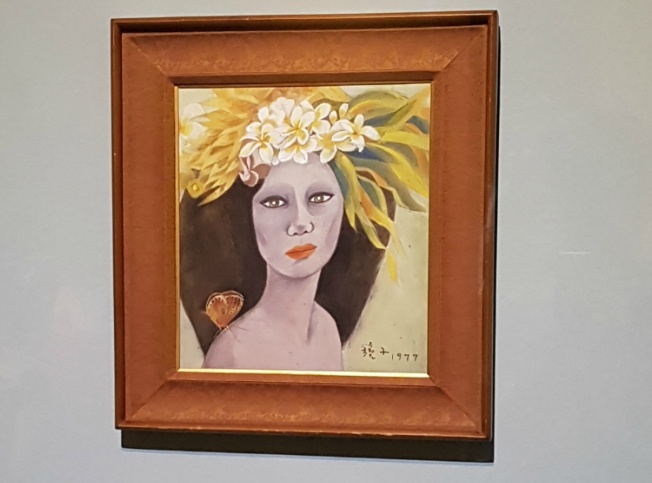
2) Portrait of a Beauty
The National Museum of Modern and Contemporary Art (hereafter MMCA) invested quite a lot in the exhibition space for this painting. They even changed the floor material to carpet only in the place where this painting was, so it's true that it drew the eye especially. The MMCA described in the exhibition-space explanation that they wanted to objectively present the controversies related to this painting. The materials presented there displayed the various storage certificates made when this painting was first acquired, and they'd scrapped together the newspaper articles where the forgery issue was first raised. They also wrote down the notarized document regarding Chun Kyung-ja saying this painting was a 'forgery,' as well as the remarks of the artist who reversed her testimony during the recent prosecution investigation. Of course, they also placed alongside the X-ray and infrared examinations that were done at first. Among the recent records, the materials from the Lumiere Optical Lab unfortunately couldn't be seen. Well, however you look at it, the part where the testimony of the artist who first testified 'I painted it' was reversed into saying something like 'ah, this painting is real' is a part that doesn't sit well with me at all. On top of that, that forgery artist didn't make a 'genuine' judgment based on any figures or data, but judged with their own eyes, so it's harder to secure reliability. But the Lumiere Lab, in their case, made the judgment of 'forgery' while even planning to publish their verification results in a journal. Since the reliability of Korean institutions (the prosecution and the connoisseurship appraisal panel) has generally fallen to the floor, it's true that weight gets placed on the Lumiere Lab's remarks. In other words, this too could be seen as one crack.
There's an article where the Lumiere Lab did an interview with some media outlet, so I'll attach it.
(http://pub.chosun.com/client/news/viw.asp?cate=C01&mcate=M1003&nNewsNumb=20170223326&nidx=23327)
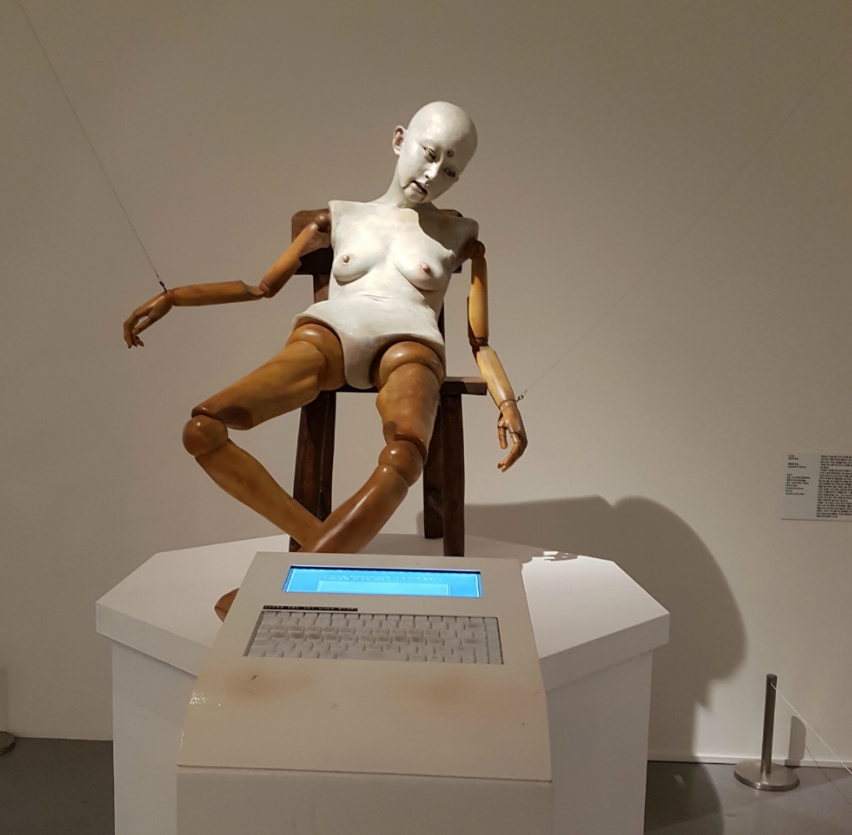
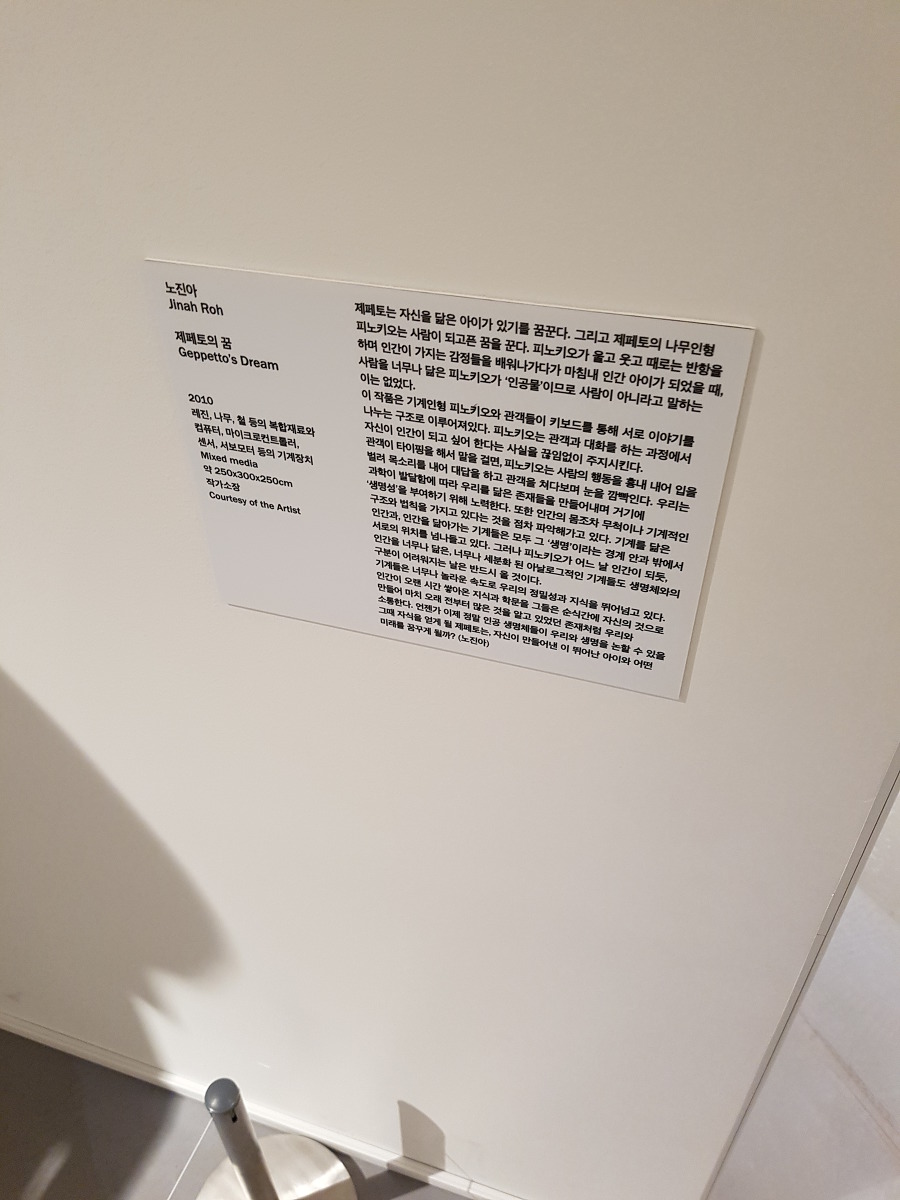
3) Geppetto's Dream, Roh Jin-ah
It's a work expressing Pinocchio, in other words Geppetto, and in the work commentary it was defined as a robot sending the message 'I want to become human.' That is, it corresponds to a kind of prophecy about the AI era. For now, it's an age that imagines robots that 'want to become human.' For example, films like 'Bicentennial Man' represent this. Only, in my view, in the future there might also come a point when, on the contrary, 'humans' come to think they want to become robots. Even now people sometimes want to become 'robot'-like. About being able to do repetitive work tirelessly, or doing work mindlessly.
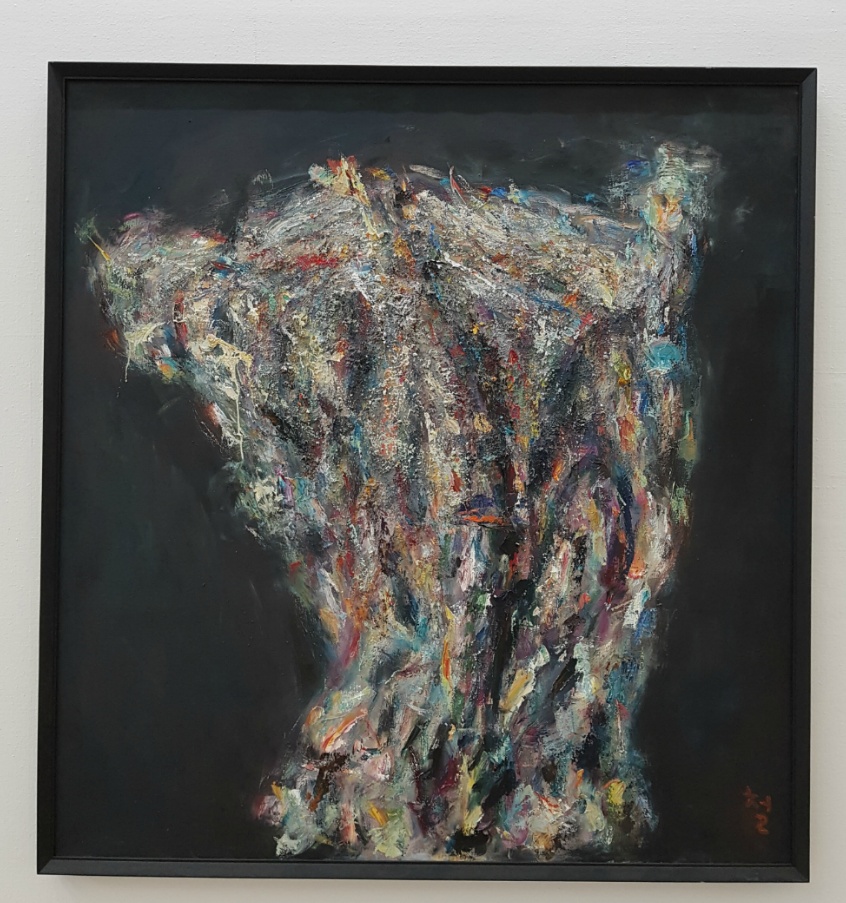
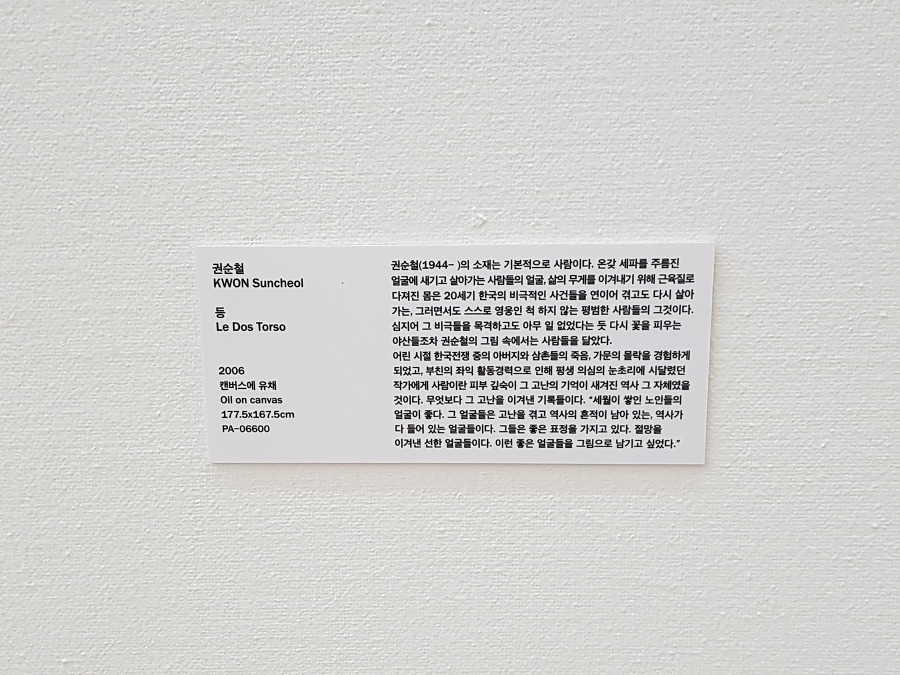
4) Back, Kwon Soon-cheol
It was written that it's a back expressing human suffering. Where on earth is the crack - I'm not sure.
2. Wrapping up the review.
Going to an exhibition after a long time, I ended up walking around slowly, so it took more time than I'd thought. Well, even so, the aims of this exhibition were largely 2, so I've achieved both of those two. They were to look at the paintings and, if I could take photos, to take photos. As for the difficult part, I'd like to first say that, since I don't know much about Korean artists, my knowledge of artist studies - of what flow these works were created in - is lacking. But well, there's no way I can find their materials right this instant, so I figure I'll just have to look at them and that's that.
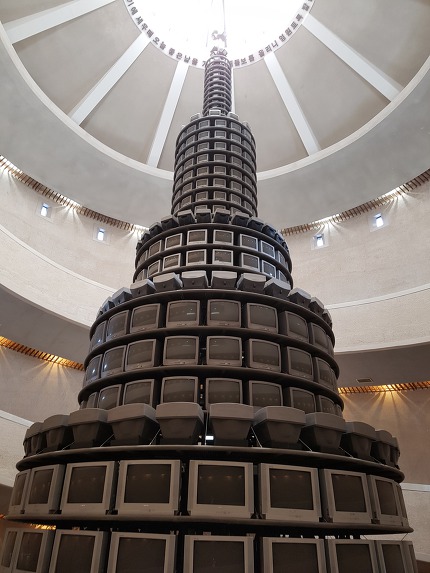
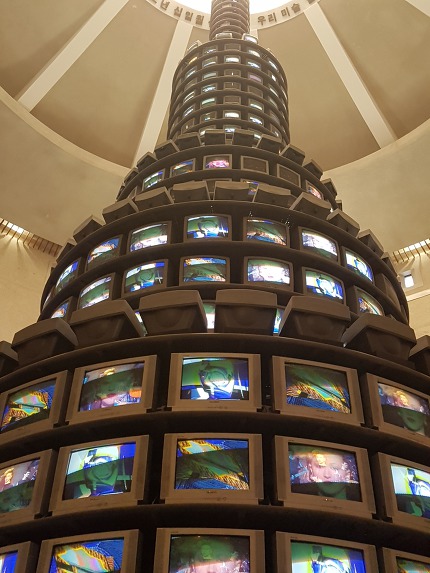
P.S. I'm attaching the exhibition texts for 'Back' and 'Geppetto's Dream.'
Comments 0
No comments yet. Be the first.