Today they showed it on the good movie, and I enjoyed it immensely. During what could have been a truly boring morning work shift, no less. Somehow I just had to watch the good movie during that time, and fortunately I was able to. It wasn't a film I'd been anticipating that much, but after hearing the description of the film, I suddenly started to get interested. As expected, was reporter Lee Dong-jin truly a god??^^
This film filled out its narrative structure based on the stories of two real-life figures, 'Julia Child' and 'Julie.' Julia Child was a legendary chef of France, and Julie was a famous cooking blogger in New York. Neither of them lived a life devoted to cooking from the start, but from a certain point on, cooking began to serve as a very precious source of vitality for the two of them.
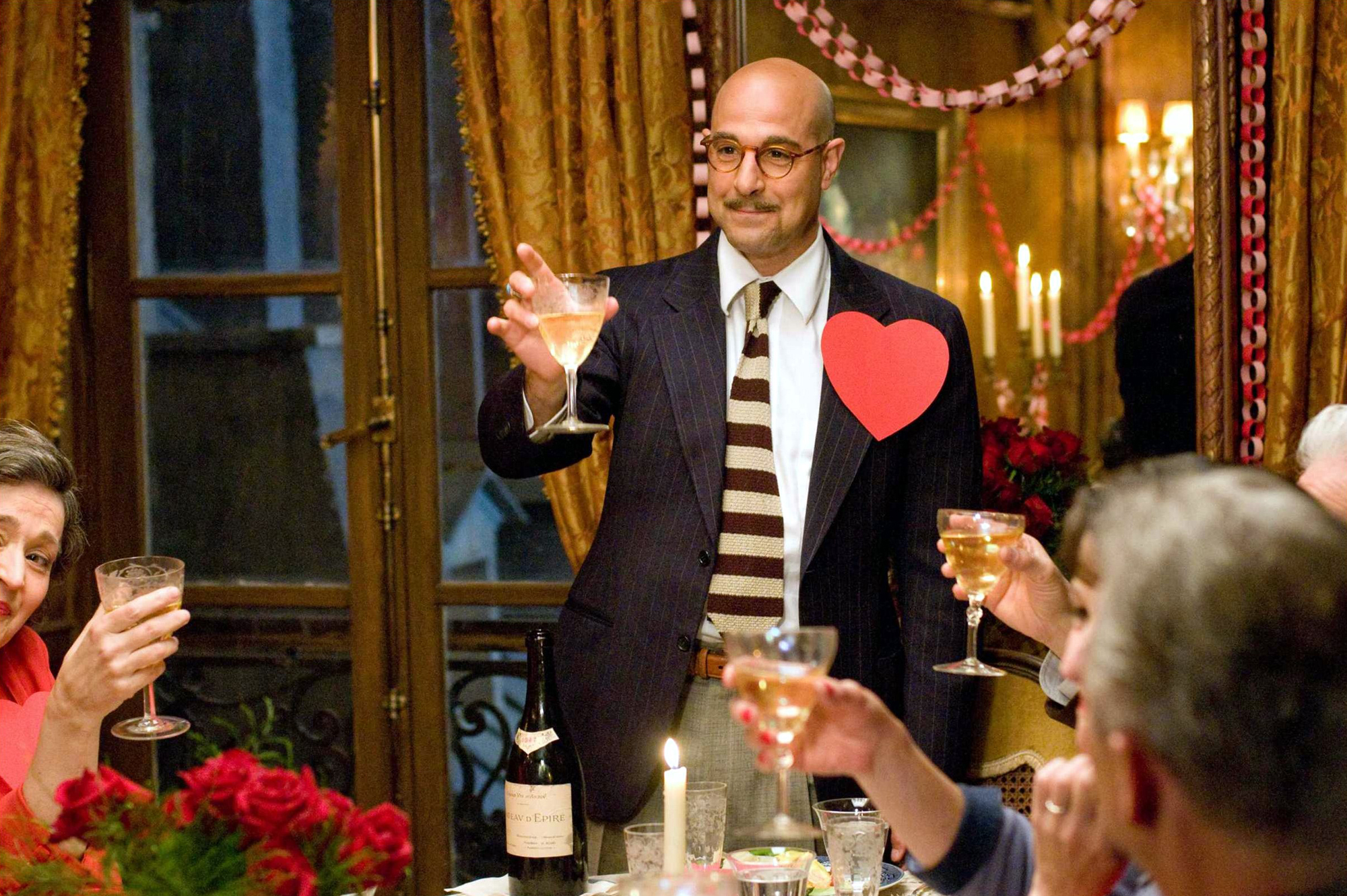
When her husband, a diplomat, was dispatched to Paris for an embassy posting, his wife Julia Child begins to look for what she wants to do as an 'American.' At first she takes up hat-making, but in the end she resolves to cook and enrolls at Le Cordon Bleu. Julia Child enrolls at Le Cordon Bleu (Le Cordon Bleu is France's historic culinary school. It was originally a cooking school for soldiers and chefs.), and after being humiliated in her first class on chopping onions, she makes relentless efforts to chop onions well. Chopping a pile of onions almost as big as her own body, so much that her husband came in and his eyes stung enough to avoid the spot, Julia, through effort and action aimed at doing well, shows in the film a version of herself as an 'American' doing some kind of work to develop herself further. Even though it's spicy enough to bring tears, because she wants to show others that she's not to be underestimated, she begins, through daily practice, to steadily keep up with the class.
Julie, living in 21st-century New York, reads the cookbook written by Julia Child and gradually begins to make each dish one by one. Setting a deadline of one year (recognizing that she has attention deficit, she sets a one-year deadline), she resolves to make all the dishes in this book and post about it on her blog. Unlike Julia, she's not so wealthy, so the cooking she does is shown as a 'stress-relief tool' that can sweep away in one go the stress she's brought home from work, but gradually it comes to be something Julie absolutely needs, and approaches her as the very first example that she can show herself and accomplish something by devoting her passion and abilities.
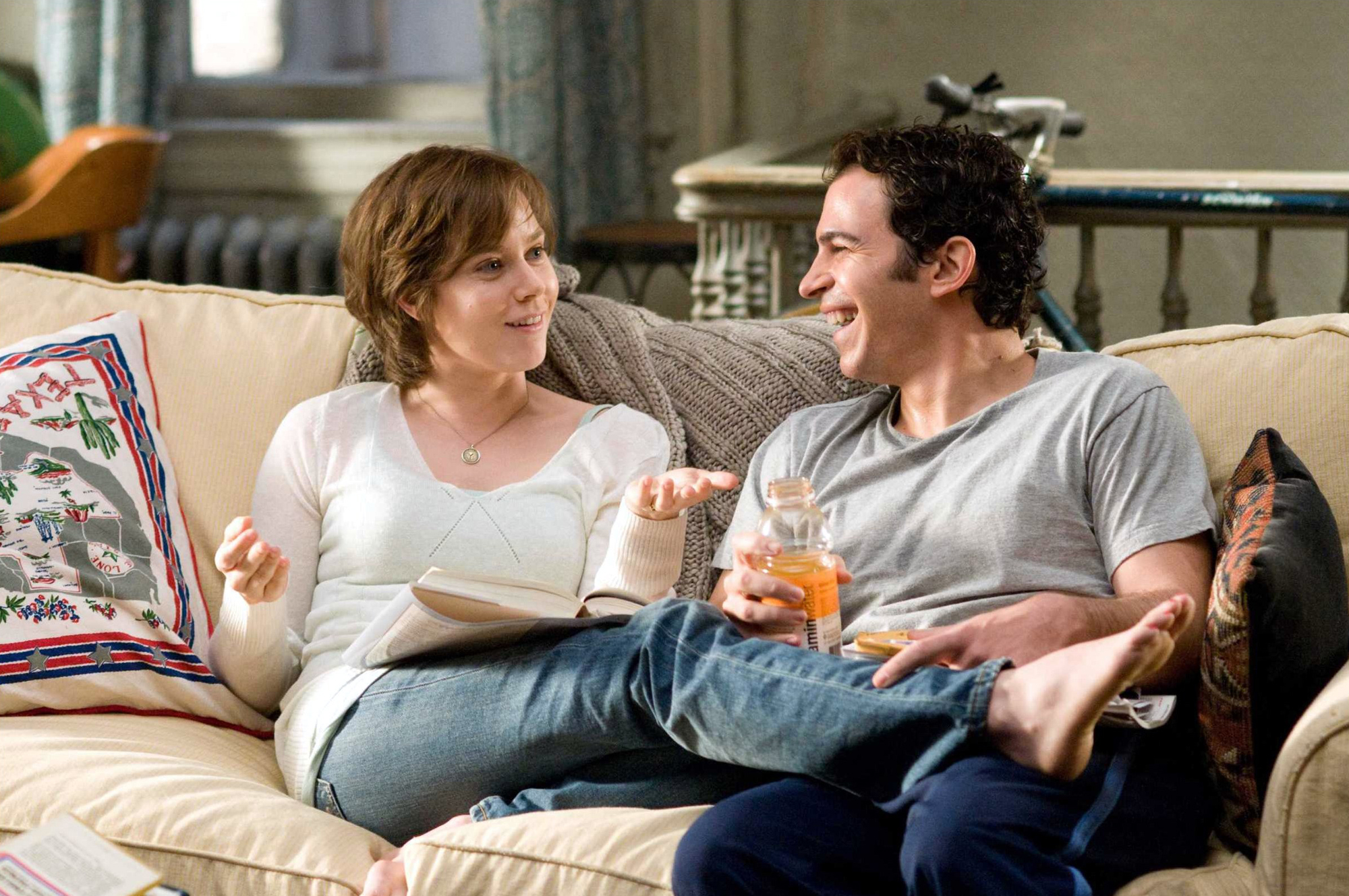
In this film, Nora Ephron progresses the stories of Julie and Julia simultaneously in a very, very natural way, without using any special effects, by running them in parallel. While Julia, as the wife of a diplomat, calmly learned to cook in a luxurious environment, Julie works as a counselor and, with her journalist husband, cooks each dish one by one in a small 84-square-meter home. As she writes on her blog, people come to take interest in the blog that seemed like no one would ever read, and before she knows it she feels the joy of cooking. Even within the methods each of them enjoys cooking and the detailed expressions they use, Julie and Julia use the same expressions, and Nora Ephron shows that the film is proceeding as 'one.'
Meryl Streep, who constructs a character based on voice and tone, and Amy Adams, who calmly builds Julie through delicate and rich facial acting, contrast with each other, yet the two of them are depicted looking so very alike in their joy. The way both of their sex lives get slightly thrown off due to cooking appears the same too, and although they gradually grow neglectful toward their husbands, they hold just that much passion for their own work. Julie, while quarreling with her husband, comes to feel that it's thanks to her husband that she's been able to cook happily all this time, and Julia begins to worry over the fact that her husband might leave.
As the film draws to its end, both Julia and Julie choose their 'husbands' as the greatest backdrop behind all that they've been able to 'achieve' through cooking, and in the part where they say they were grateful and that they love them, I felt deeply moved. It's not that this film has any kind of 'philosophy' that says 'the world is ultimately like this,' but in the 'Bon Appétit' (enjoy your meal) that Julia always says after making a dish, I discovered the possibility that 'cooking' can become material for happiness, going beyond merely 'filling one's stomach.'
Without Eric and Paul, could Julia and Julie really have achieved what they wanted? There's no film in which time flows by as quickly as this one, but to that very degree this film showed that it was something achieved in the end not through a 'short time' but through a 'long time,' and that the happiness felt within it is very important. Through this film, to the point of drawing the lesson that perhaps I too have ultimately gotten along well until now thanks to Lee Yoon-a, Julia and Julie, who are so grateful to their husbands, are very impressive yet honest and lovable.
Since it's winter, you'd think romantic comedy films would especially be coming out, but so far only 'My P.S. Partner' has been released; even so, this film is reason enough for me to be fully satisfied just from having watched it now. I'm already excited at the thought of definitely meeting up and watching it with my girlfriend next time. It feels like there'd be no end to telling her I'm sorry and grateful, no matter how many times I said it.
Comments 0
No comments yet. Be the first.