0.
There's something that comes to mind as I write this. It's a story I heard from people long ago. The story was that 'you should travel Europe even if you have to go into debt.' Having gone and come back, I'm doubtful whether it's really worth going even by going into debt. There are various reasons, but having wandered around, it's because I think it's good to 'recommend' but falls a bit short of being a 'must.' However, even among those thoughts of falling short, 'Copenhagen' was the city and space I liked the most during my travels. The prices, of course, while not as much as I'd heard, should be called fairly expensive. Well, it was similar to England. But the biggest reason I fell for this city is 'bicycles.' But honestly this piece doesn't have much content. I'm just posting it to reminisce about a beautiful place. I strongly recommend Northern Europe. There are hardly any people around me who've been to Northern Europe, but I strongly recommend it. You get a feast for the eyes, and the streets have their own charm. It's much calmer, and public safety is on the good side too. I hope you go without worrying about prices. It's a place where, if you cook for yourself, you don't even need to worry about prices. Because grocery prices are the same as Korea.
1.
The road to Copenhagen was rather difficult. Honestly, getting to Hamburg's bus terminal was no trouble at all, but I still remember the difficulty I had at the place crossing the border. I'd thought that within the 'Schengen area' checks on passports or visas were a bit easier, but here all of that fell apart, should I say..
- Let me briefly explain the 'Schengen area.' It's called the
There are three ways to go from Hamburg to Copenhagen. The plane you'd readily think of, then the train, and lastly the bus. Originally I tried to use the 'train,' but the price was a bit steep. So I chose the 'bus.' For the airport, once you add the time and cost to get to the airport plus the baggage-checking fee, it costs more than the cheap train. So I dropped that, and in the end the 'bus' became the final choice. The company was Eurolines. The price was about 22 euros, I think. And so, off I went.
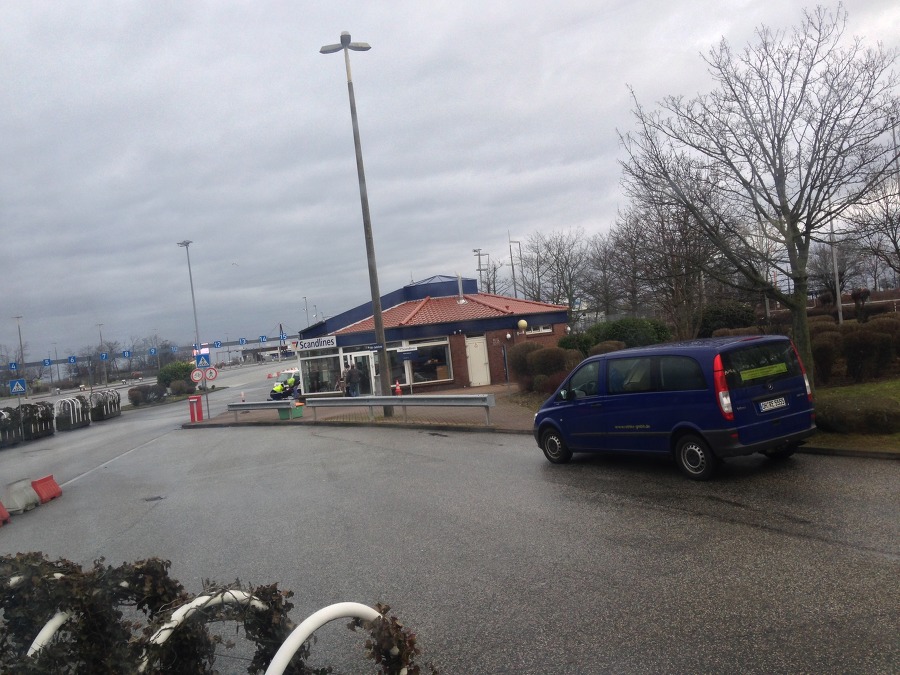
It was a method of crossing over by sea. This is both the seaside and the border, so to speak. Because if you pass through here and board the ship, you get off in Denmark. But here I got caught up in a problem and waited an extra hour. They even did X-ray inspection of all the passengers' baggage in the bus... well, the result was a cool pass-through. If that's how it'd be, why even inspect ㅜㅜ
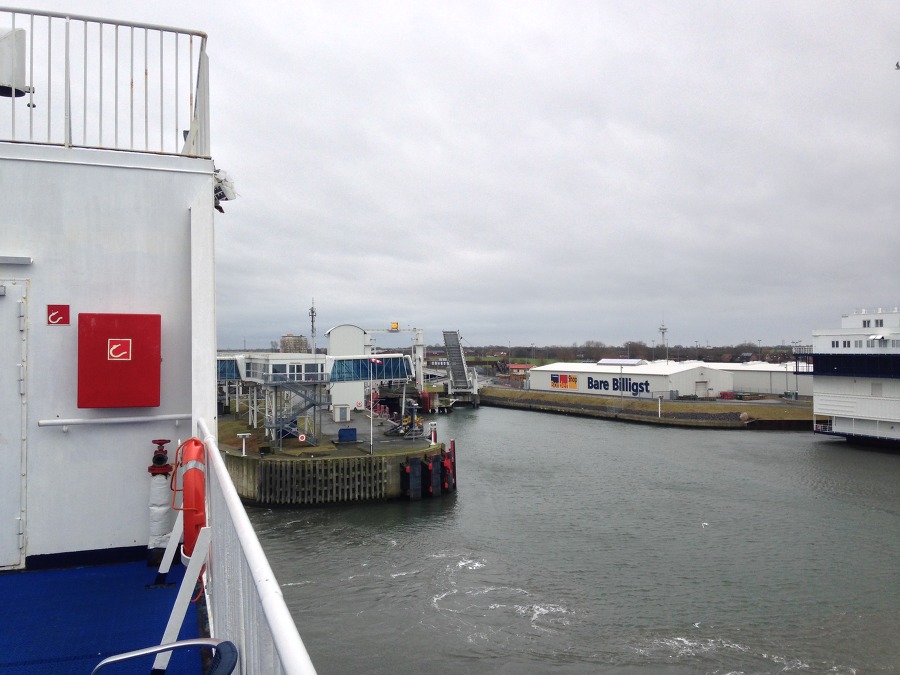
They load the bus onto the ship to go. What surprised me was the ICE (German high-speed train) running Hamburg–Copenhagen coming out of the ship.. there were tracks inside the ship, it was so amazing.. If you take that it's a 4-hour trip, but my booking was late so there was nothing to be done. By bus it was a total 6-hour itinerary.
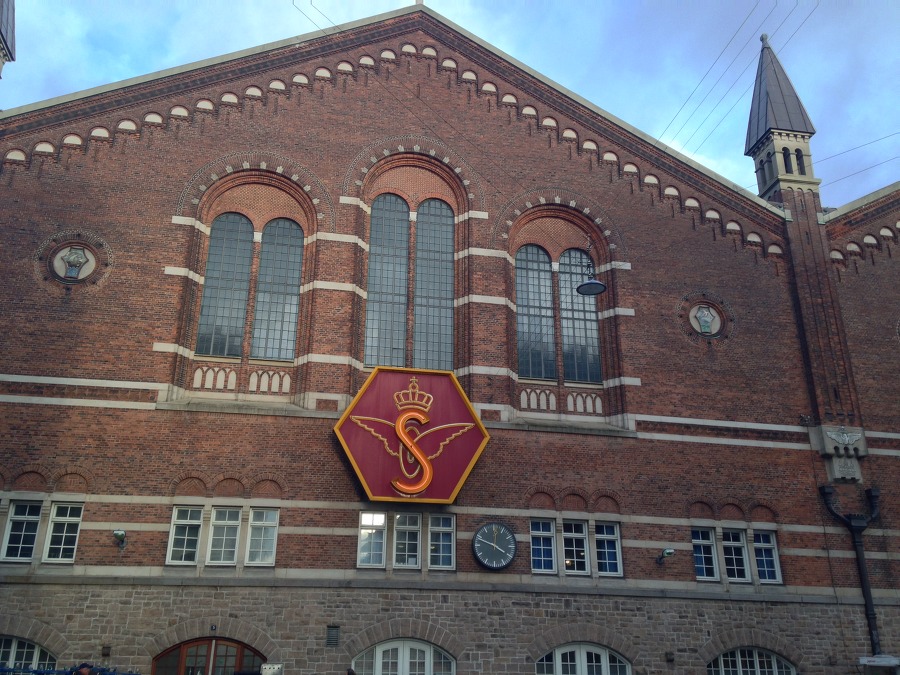
Denmark's Copenhagen Central Station, which I met after walking a bit upon arriving; that emblem probably gives the feeling of symbolizing the Danish royal family.. since there's a crown drawn on it.
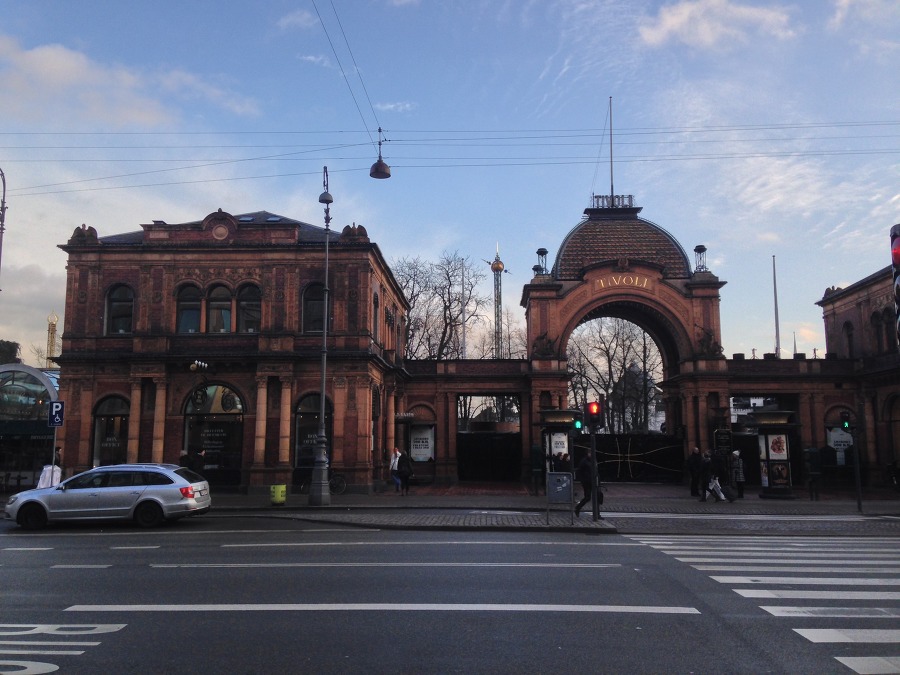
People tell you that when you go to Copenhagen you should visit Tivoli Gardens. It's nothing other than a small amusement park, and it doesn't operate in winter. It's a place open only in summer. They say this place became the motif for countless amusement parks, but I have no hobby in amusement parks, so amusement parks were always an afterthought wherever I went, and since I didn't even know to begin with that it was summer-only, I just took photos and moved on. But the architectural style of the entrance is really stylish. Probably in a neighborhood like this such a style is common, but it's still stylish.
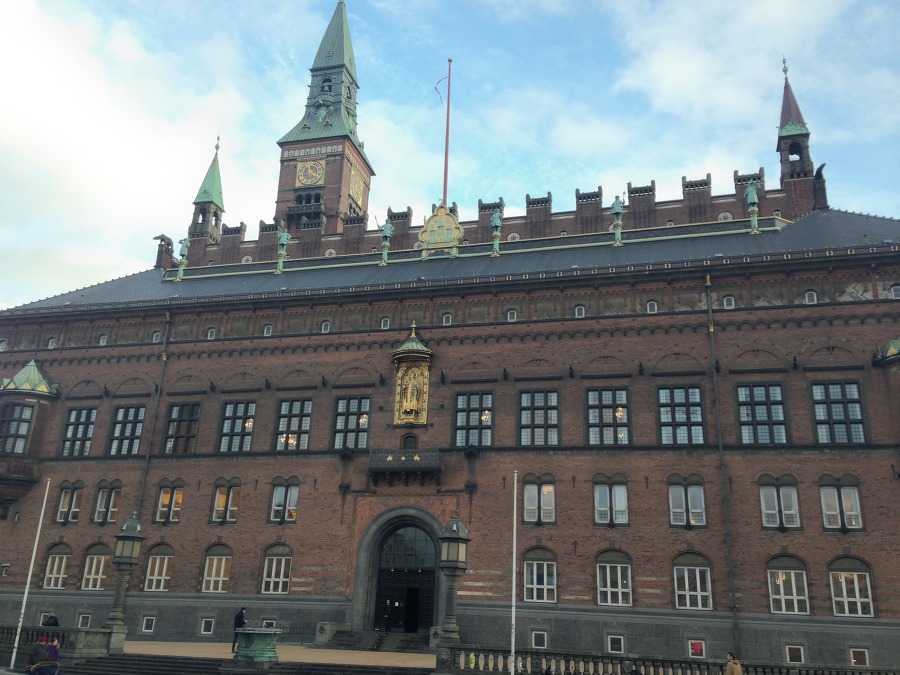
Copenhagen City Hall; the camera isn't great so the sky-blue bleeds and the building color is hazy, but at this time when I asked a staff member about going into city hall, they said it was nearly closing time so a tour was hard and to come next time. Well, I just looked around the outside. From the clock tower you see in the upper left, the bell rings every 15 minutes.
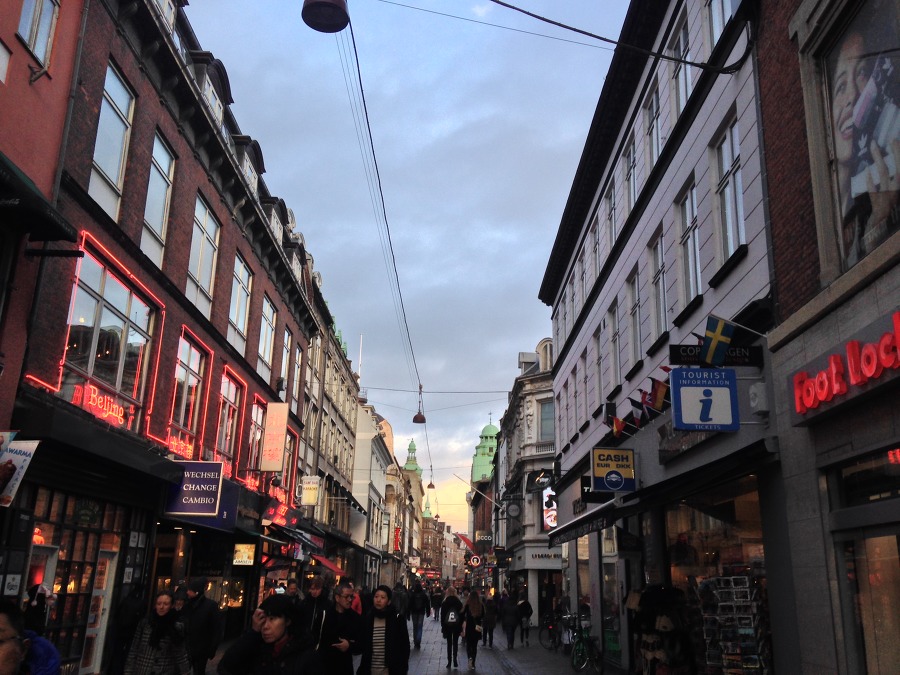
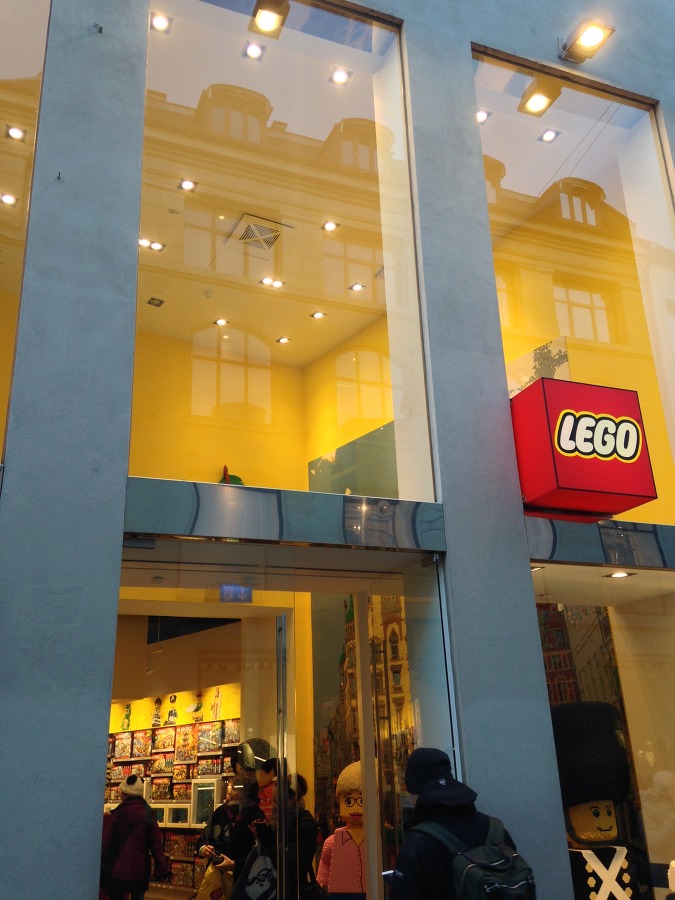
When you think of Denmark, it's LEGO of course; the photo above is roughly the entrance to the downtown area. It's the entrance to downtown Copenhagen. When you approach downtown from the station, you usually enter following that road. The LEGO Store was a really good place for me, who also liked LEGO. But there was no room in my bag to buy and pack LEGO, so I cleanly gave up. If Copenhagen had been my last destination I might've bought some LEGO, hehe..
The greatest charm of winter travel is that there are few people. There are few people wherever you go. Most travel destinations in Europe are warm in summer, so everywhere is peak season and everywhere is crowded. But in winter there's usually a lot of building repair work going on, and some places don't even open at all. It rains often too, so it's weather not suited to travel. But meeting a clear day while traveling in winter is wonderful in its own way. The sunlight isn't hot, and the scenery lit in white light gives a strange feeling too. I liked it.
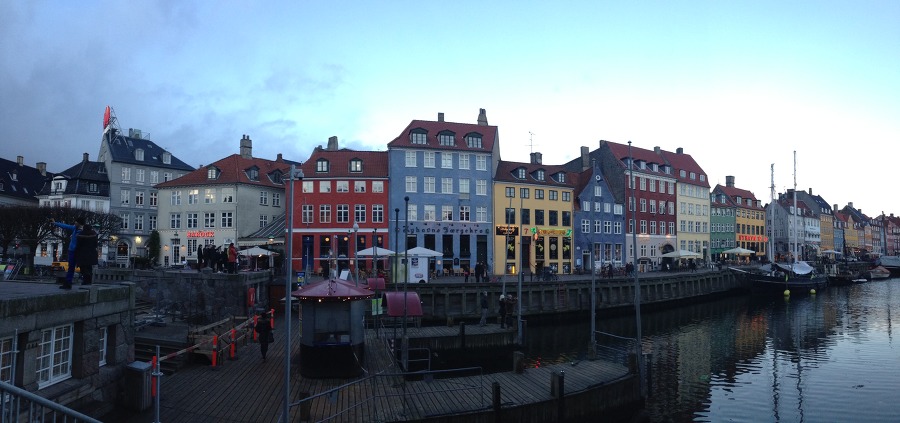
Nyhavn is, well, a place famous and beautiful enough to appear even in the spot-the-difference puzzles at arcades; the time was a bit late so it was a dark spot, but in summer it'd be more vibrant. It's all restaurants and cafes. Denmark's grocery prices are similar to Korea's, but service-industry prices are usually more than double, so buying something to eat at a restaurant definitely costs a lot.
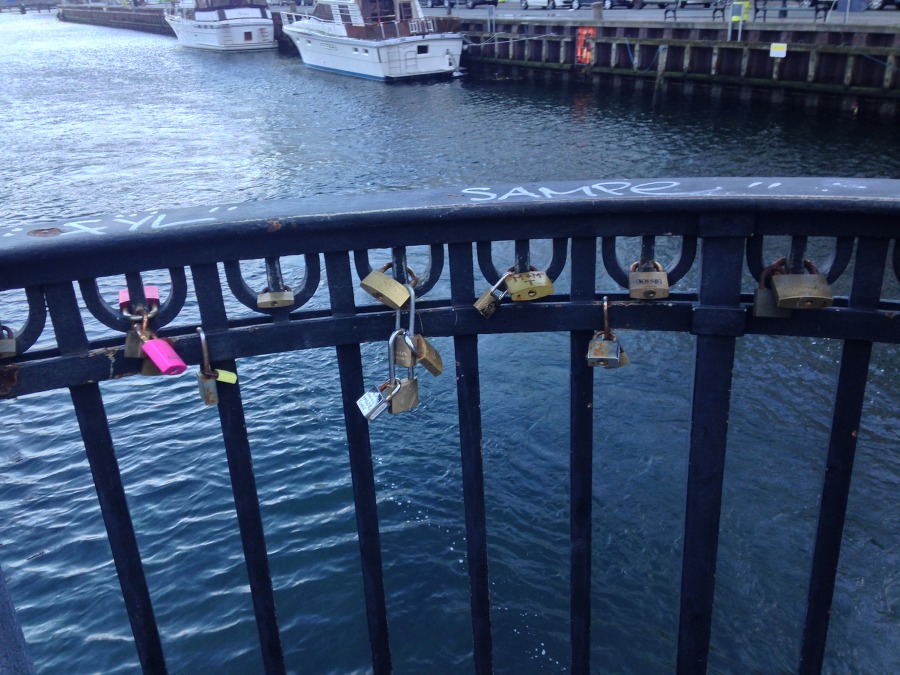
The padlocks I photographed while crossing Nyhavn; the one 'performance' created by the lovers of Pont Neuf became a performance of people worldwide. Padlocks hung without fail wherever you go. I'm curious whether the lovers who hung those ever think about coming back to see them together again, and actually carry it out. How many would, I wonder,
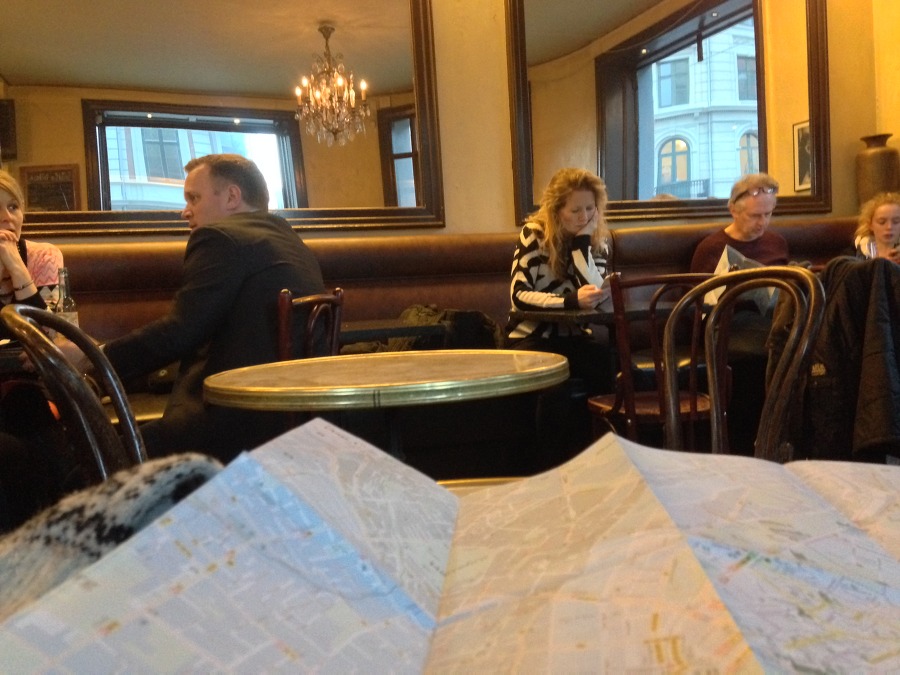
A cafe I went into midway because it was so terribly cold; the old-looking wooden chairs and sofa and the iron table were really impressive. It was a cafe in an out-of-the-way spot, but it was a place that took card payment too. I drank one espresso and came out. I also checked the map to see where I should go.
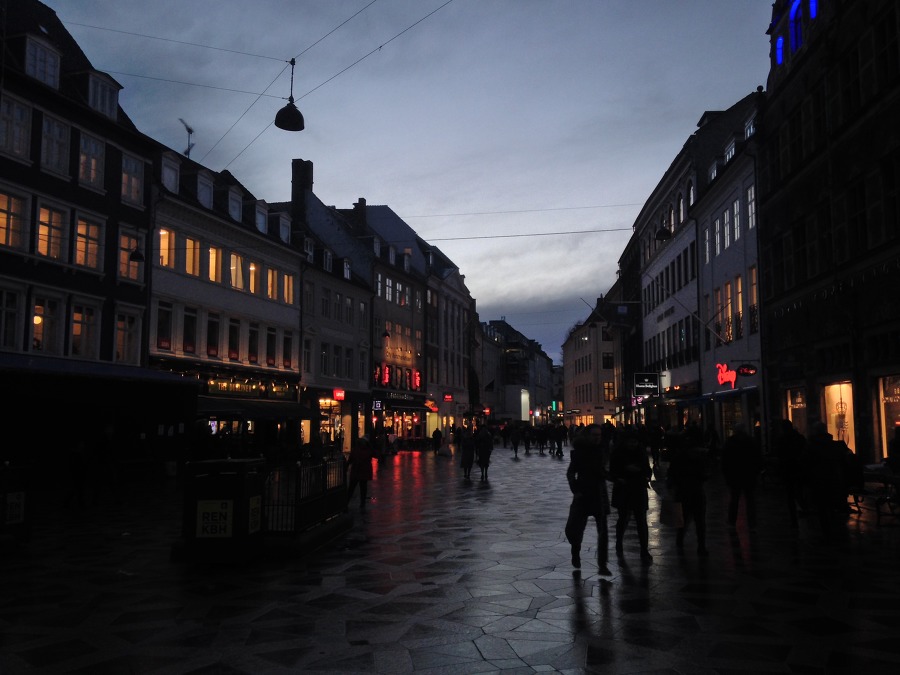
Wherever you go, music can't be left out. Coming back to the downtown center, it's a street where a street musician was giving a wonderful performance. It's a city that'll stay much in my memory. The people were kind. When I raised my camera to take a photo this day, two women coming from afar showed consideration by stopping for a moment and looking at me so I could take the shot. Seeing that, I bowed my head in thanks. Inside, I thought, this Copenhagen is a neighborhood where there are such kind people. I talked about bicycles but didn't actually take any bicycle photos, but people do ride bicycles a lot. Service prices are expensive so I didn't eat food at restaurants, but this day too I made cream pasta. It was really delicious; I think it might be the most wonderful city among the capitals of Northern European countries.
Comments 0
No comments yet. Be the first.