1.
Is there another author in Korean society viewed as diversely as Yi Mun-yol? An author interpreted this diversely is truly rare. Probably half the reason is his political activity, and the other half is his countless works. Actually, let me say in advance that I haven't even read the Romance of the Three Kingdoms that Yi Mun-yol adapted, I wasn't interested in it to begin with, and the best Three Kingdoms for me is the comic-book Three Kingdoms. In any case, I had no personal fantasy about the author Yi Mun-yol. The work I thought was the most famous among the works he wrote was 'Our Twisted Hero,' so I suppose that's because it loomed large that this work had been in the textbook. Looking at this work again now, I can't see anything good about it for a student to read and move past besides the spatial setting of a 'school classroom,' yet for the one reason that it was in the textbook, Yi Mun-yol became a memorable author to me.
2.
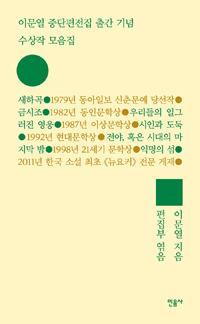
Like my previous post, I'll write briefly, mentioning the works in short bursts. Before talking about the works, one thing I'd like to say in advance is that the novellas and short stories Yi Mun-yol created had the problems of their times dissolved into them. I think it'll help to read Yi Mun-yol's other works while keeping that in mind.
1) Saehagok: Saehagok is Yi Mun-yol's debut work. This work has the problem of 'the military,' a problem of Korean men, dissolved into it. The 'military' is too complex an organization to explain simply as the duty of national defense. Because within it are tangled various factors: the misguided concept of 'obedience,' age and duty, one's occupation or authority in society, what one did in the past, expertise within one's assignment, and so on. The way he reveals a social work through the military, called a microcosm of society, is impressive.
2) Geumshijo: In this work no social condition manages to affect the protagonist. Also, the protagonist tried until the end to find a specific value he pursues. The scene at the very end where he comes to see the 'geumshijo (golden-winged bird)' has a strangely similar aspect to the ending of Sonata of Mad Flames. Here no macroscopic history manages to intervene in the individual. The only part that intervenes is the occasion of 'Gojuk' being separated from his father.
3) Our Twisted Hero: I think this work probably contributed the most to making Yi Mun-yol a popular author. Though it borrowed a story set in elementary school, countless people including me must have felt that this story is actually no different in 'the society of adults.' A strange longing for 'obedience,' a society where freedom is somehow suppressed yet seems to run well within it, and on top of that, the self-contradictory behavior where, at the time the absurdity was first brought up no one said anything, but once everyone became terrified, they all spat it out as if they'd been waiting for it—I think these various aspects can still be evaluated as symbolic and meaningful scenes even now. Moreover, the fact that the spatial setting of the novel is an 'elementary school' is also a part deserving attention. It's a work that discusses 'obedience' and 'silence.'
4) The Poet and the Thief: A story containing the subject matter of 'revolution.' It's a story like a classical novel, but in reality it depicted a response method similar to modern society. This work is a bit daunting to explain, but put simply it's like this. The poet, to help the revolution the thief wants to achieve, writes and spreads ideological poems, but those rather become the source of trouble, the people prepare countermeasures, and the masses who wanted to achieve the revolution instead vent their emotions through 'poetry' and fall silent.
5) The Eve, or the Last Night of an Era: Within this is the story of the 'bubble.' It places two ordinary citizens under the period circumstances of the IMF crisis. It depicted protagonists in a situation where something seems about to come but isn't coming, through a man and woman who couldn't be free from society's gaze, who thought it was an 'ideal' but couldn't translate it into reality. It reveals two people who can't be free from 'the economy,' and the emptiness that comes after thinking they'd achieved the value they pursued.
6) The Anonymous Island: The anonymous island is actually not an island but a very deep 'mountain-valley' village. The 'anonymity' here is anonymity in the sense that it turns a blind eye to Gaecheol's behavior. It's awkward to explain roundabout, hmm.. honestly, since I didn't quite understand what it was trying to say, I can't write the introduction in depth. I think you can take it as 'Gaecheol' secretly satisfying the sexually lonely women in the village. Nevertheless, the 'Anonymous Island' village consistently keeps silent about this. I get some sense of it, but writing it down would take too long, so I give up..
2.
Yi Mun-yol's award-winning novellas and short stories generally contained 'problems of the times.' I think that can be chosen as a characteristic of Yi Mun-yol's fiction. Then again, if you asked which author hasn't pulled 'problems of the times' or 'macroscopic social problems' into their fiction, I'd also answer 'most of them did,' yet I think the problems Yi Mun-yol dealt with came across a bit more because they were relatively easy to interpret within the scope of contexts of events around my age that I could experience. I didn't directly experience the Korean War, and I didn't directly experience a revolution either, but I did experience the peer order of school days, I've done my military service, I understand sexual loneliness to some degree, and I think I understand a little the feeling of struggling within 'the bubble' and 'emptiness,' so these works came across well..
As for buying the book, I bought it on Sunday and finished reading it straight through by Monday, so I'd like to say reading it was no trouble. The difficulty wasn't hard, and the style wasn't abstruse either. If I ever get the chance to read one of Yi Mun-yol's full-length novels, I think it'd be good to read. Because he engaged in 'political' activity several times, the image of the author Yi Mun-yol particularly remains more in my memory as 'an author who does political activity,' but I'm glad this time, because the works I read were a chance to glimpse at least a little of his artistic world.
Comments 0
No comments yet. Be the first.