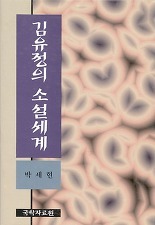
1. I'll briefly organize mainly the parts I remember, recording only the essential things. Trying to record every single thing takes too much time, which is a drawback. Here's how I came to read a research book on Kim Yu-jeong's fiction. Yesterday was the day I reviewed past exam questions related to Kim Yu-jeong's works, and the past works included 'Spring Spring,' 'Manbubang,' and 'A Wanderer in the Mountain Valley.' The biggest works that usually make people talk about Kim Yu-jeong's fiction in terms of 'humor' and 'peasant novels' are works like 'Spring Spring' and 'Camellias,' but in 'A Wanderer in the Mountain Valley' that image doesn't hold, and in 'The Wife' it changes too. So I felt I needed to organize a bit, which is why I read the book. 2. His perception of reality generally appears in the class structure of rural society. The relationship between landlord and tenant farmer is the most frequently appearing subject in his fiction. That said, if you view his works from the angle of depicting the pitiful lives of ordinary 'individuals' beyond rural society, it becomes easier to understand more of his works.
3. Situational irony: Situational irony, literally, is the point that the 'situation' is ironic. The protagonists who appear in Kim Yu-jeong's fiction are largely people with upright values. Here 'upright values' doesn't mean values that are correct for the era, but carries the meaning of 'not wrong.' Yet even though these figures act and live based on those values, they suffer. Precisely because of the 'situation.' This is exactly situational irony. In 'Manmubang,' the act of stealing rice is wrong, but in fact there's a hidden irony of a situation where one has no choice but to steal the rice. In 'Camellias,' the figure of the live-in son-in-law demanding marriage is somehow strange, but in fact it's because the 'father-in-law' had always used live-in sons-in-law as mere labor and then cast them out. This too corresponds to situational irony. In 'A Wanderer in the Mountain Valley' as well, both the situation of supporting a husband through a false marriage and the situation of Deok-dol having hope correspond to irony. In other words, an unethical situation and an ordinary individual appear, and these interlock to appear throughout the novel.
4. His literature, which uses the method of 'humor,' was unique in its time. No literary works of a similar form to Kim Yu-jeong are visible, and you can confirm in his works that 'laughter' always rests on ordinary individuals grounded in a pitiful reality. His fiction, which features so-called 'commoners,' is also a part that can be evaluated as realist.
5. In terms of style: the savory regional dialect appears well, everyday language is well revealed, psychological description is well achieved through vulgar language, and an atmosphere created by native vernacular pervades the works overall. Because the colloquial style appears well, some researchers say the characteristics of pansori-style fiction remain. Also, regarding the inconsistent, back-and-forth point of view, depending on the researcher there's debate over whether this was intended or not. In any case, the confused point of view is verifiable in the works.
6. I haven't read his autobiographical fiction, so I won't mention it. I'll post again with direct and brief talk about the works after I read a collection of Kim Yu-jeong's short stories.
Comments 0
No comments yet. Be the first.