0.
Renoir is known as the painter who opened Impressionism. Among his paintings, especially the famous ones that express 'light,' which explains that 'Impressionism' so well, there are paintings that anyone who has ever properly looked at Western art or Impressionism even once would recognize. For example, there are paintings like these.
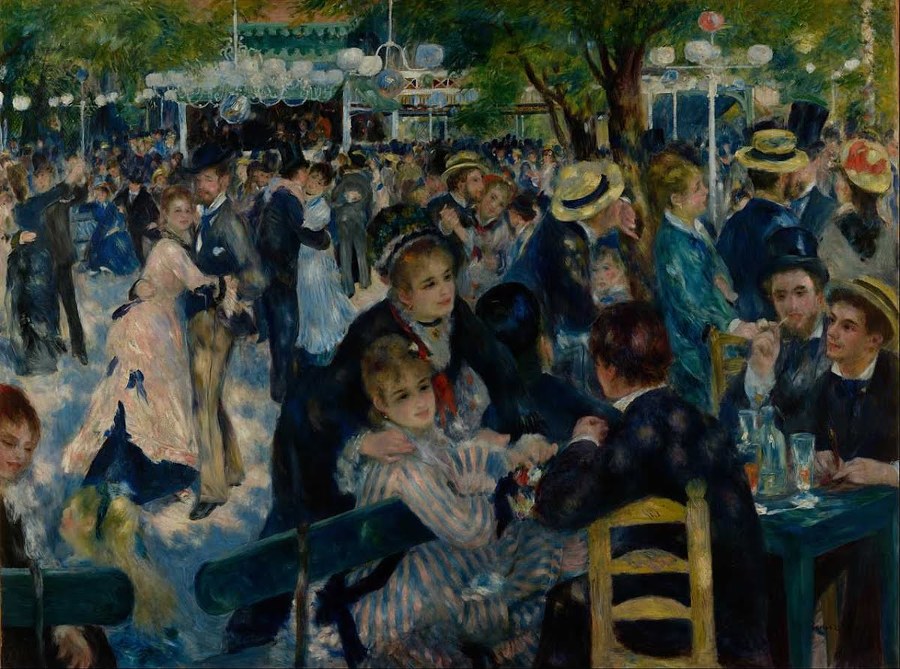
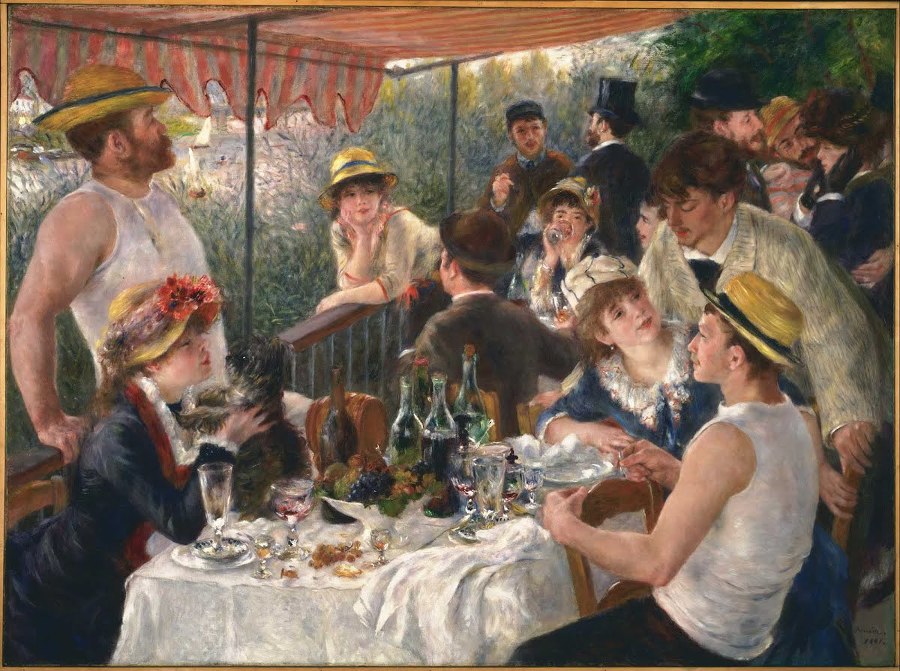
These are the kinds of paintings, but unfortunately, at this Seoul Museum of Art exhibition, these paintings weren't there. I think it's because the special exhibition itself, rather than being about looking at Renoir's life's body of artwork and famous works, focuses on the 'women' he always pursued as aesthetic objects or as subjects for his paintings. The exhibition name itself is outright 'Renoir's Women.' For now you'll need to take this into account.
1. Impressionism
The process by which Renoir became an 'Impressionist' was by no means a smooth course of life. It was a succession of a truly hard, hard life. The reason is exactly that he didn't follow the existing art, that is, the 'classicism' that was the mainstream of the time, but tried to express his own values. The word 'Impressionism' actually isn't a word that explains the 'ideological foundation' Renoir held. The word Impressionism refers to a certain painting style; it's far from ideology. But it's something you absolutely need to know that what they generally focused on were paintings in a different direction from realism. At the time, the art world was split into two forms, classicism and realism. Classicism is quickly understood if you think of it as a reproduction of Renaissance art, and realism corresponds to the trend that, like Courbet, valued the social function of art - in other words, valued performing the function of criticizing reality through painting - and Renoir followed neither of these two, focusing instead on painting 'beautiful figures.' Those 'beautiful figures' correspond to a somewhat limited beautiful figure. Because this is nothing more than an idealized yet limited reality far from the actual. Anyway, this expression 'Impressionism' came about when numerous Impressionist painters including Renoir - for example, people like Manet and Monet would be included here too - held an exhibition, and some newspaper started using the expression 'impression,' and the painters took it and used it. In any case, up until the late 19th century, you could say collaboration among these painters took place.
The characteristic of Impressionist paintings is generally known as paintings that use 'light.' There are several reasons for this, and the biggest reason can be cited as the fact that, unlike the painting style of 'classicism,' as they tried to depict the appearance of reality and thus reflected a lot of outdoor scenes, light appears, and at the same time the tendency to depict the bright appearance characteristic of the 'Impressionist' atmosphere was at work.
2. The reason the exhibition's concept is 'women.'
I thought about it in various ways, and well, there's only one answer. It's that Renoir greatly loved women. Here, the meaning of the word 'love' is somewhat distant from 'loving' as a partner with whom to combine physical lust. If you look at the records about Renoir, there are very many traces of him having thought of 'woman' as an ideal beauty. There may also be people who 'dislike' this part by taste. Recently, in any case, feminism and whatnot, gender equality, is an issue, and you may feel an aversion to the act of objectifying women, but maybe because I'm a man, this part is something I only find enviable. Unlike how most many painters painted women as objects of beauty, there's almost nothing that painted men as objects of beauty. It's the painters' personal taste and at the same time a common idea of many people at the time. 'Women are beautiful.' The beauty of the women Renoir painted is a full-figured womanly image, and although there will be many who object to this part, let's understand it as personal taste and move on. Honestly, I don't think such things are important. The subjects Renoir tried to paint could be largely divided into two, 'middle-class life' and 'women,' so I think 'Renoir's Women' was a concept worth making. There were that many paintings of women.. I'll link a few of the paintings that were there.
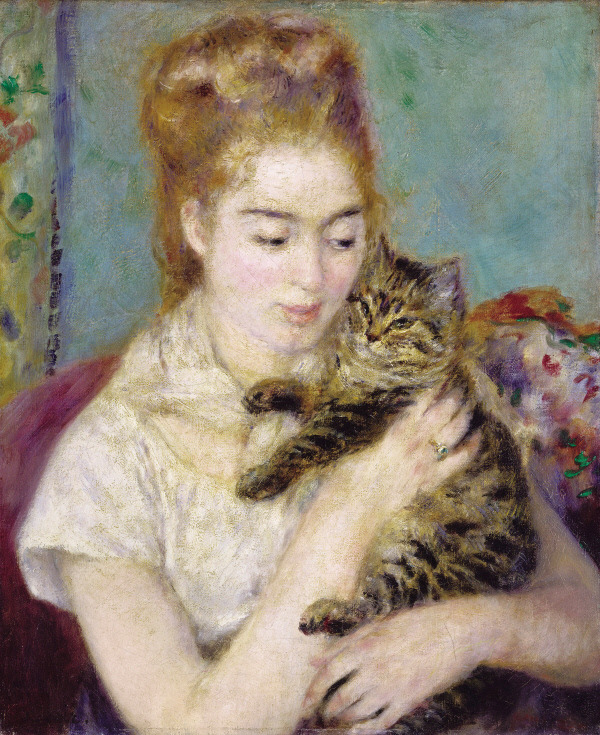
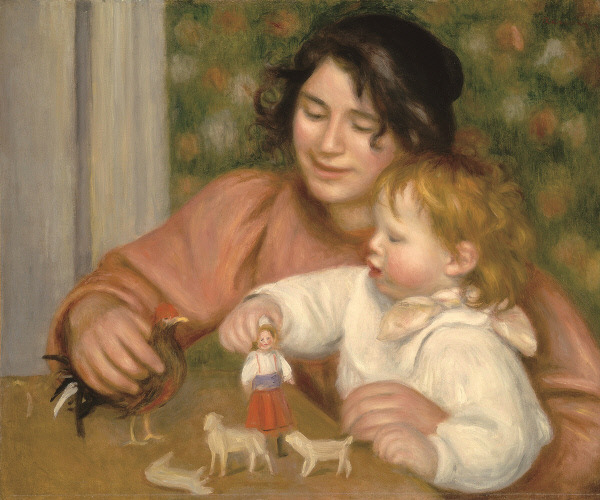
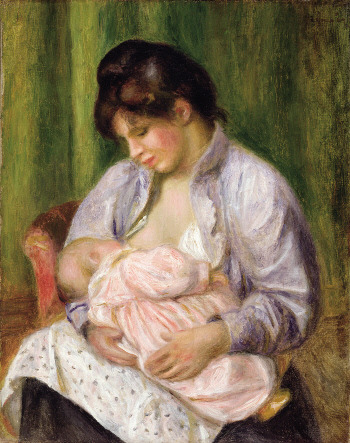
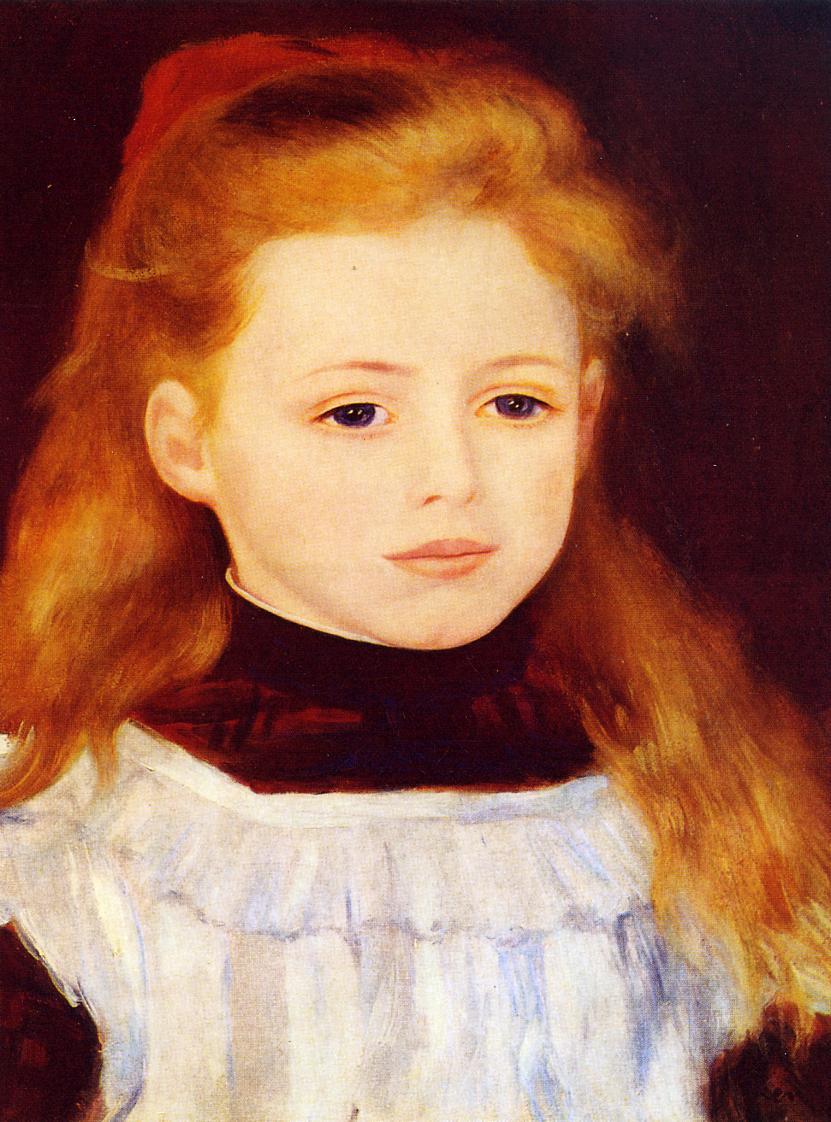
3. Exhibition review
You can see an awful lot of paintings of women. Really a lot. There are so many paintings of women that it makes you wonder whether there was ever a painter who painted women this much. However, for those who come expecting ordinary Impressionist paintings, it'll be a not-very-interesting exhibition. Renoir's paintings have an extremely wide spectrum. In the early period there are many paintings that reveal his own color, but afterward, as he was influenced by the paintings of Ingres, the paintings of Rubens, and Raphael, in the later period those paintings undergo change. Compared to the early period, in the later period the lines become clearer and the color composition becomes simpler than in the early period. However, due to the nature of the exhibition, the paintings weren't arranged by the year each was painted, so reading the paintings while checking this one by one will be somewhat difficult.
However, those who think they want to know 'Renoir's' taste in women will, I think, be able to enjoy it. Also, if you want to see his life even briefly, this too is an exhibition I can recommend. Thanks to the influence of Durand-Ruel, Renoir's representative patron, Renoir's paintings are spread all over the world. Because of that, it's hard to see all his paintings at once, but this exhibition seems like it'll be a fairly good opportunity.
Comments 0
No comments yet. Be the first.