The first-round exam is over, and I borrowed The Bird's Gift, one of the books I'd wanted to read. Well, my reading speed has gotten faster now, so something like The Bird's Gift was fully doable in a single day. After reading for about four hours, I read through Eun Hee-kyung's novel of nearly 400 pages quite quickly. For a while I plan to read works by the authors I've wanted to read like this. I'm not sure how much I'll read, but anyway. For a while I should write in a relaxed way.
The Bird's Gift is one of the novels Professor Na Byung-cheol occasionally mentioned. Since it was a novel he mentioned often after Eun Hee-kyung's fiction appeared on the exam, I only roughly knew it was a Bildungsroman, and reading the details from beginning to end as I did today was a first. It's also one of the novels my university classmate L likes./
The narrator was a little different from those of other novels. The narrator of this novel said she became an adult early. But I had a somewhat different thought. Because I wondered whether that's really possible. The fact of a child saying she has become an adult, that is. So too with saying that affectation and hypocrisy aren't all that different, and so too because the narrator still shows herself 'growing' within the novel. She shows growth in her love with Heo Seok, and so with the nicely featured younger brother of Aunt Hye-ja, and so with feeling that many things changed after the accident at the oil factory, and so with menstruating—the 'protagonist whose growth has stopped' was still growing. Is that just how it is? Right. It seems it makes no sense to say growth has ended.
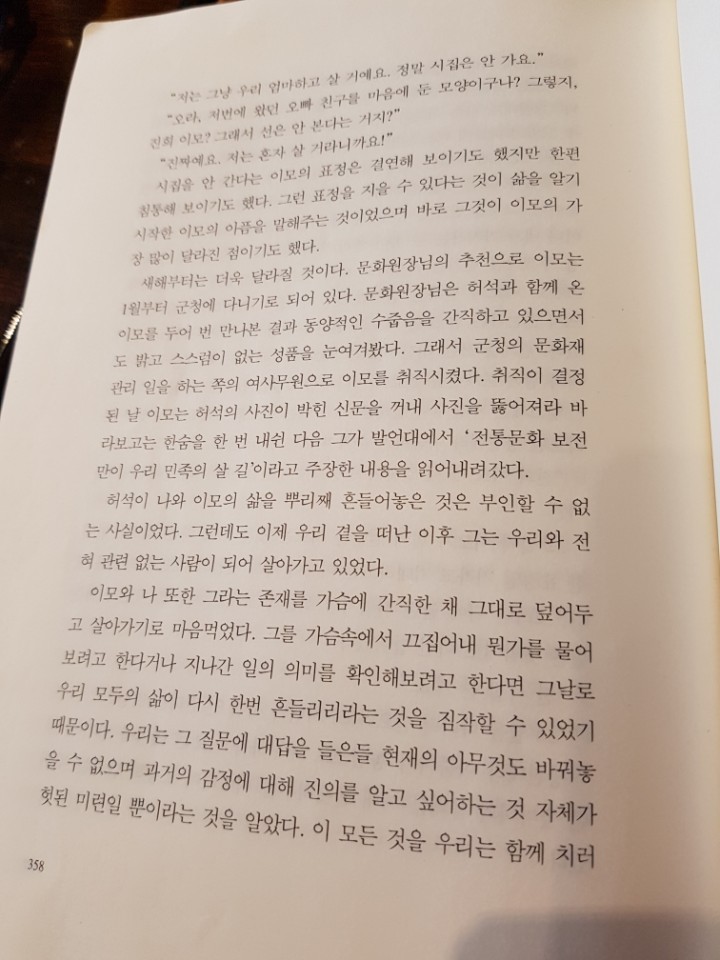
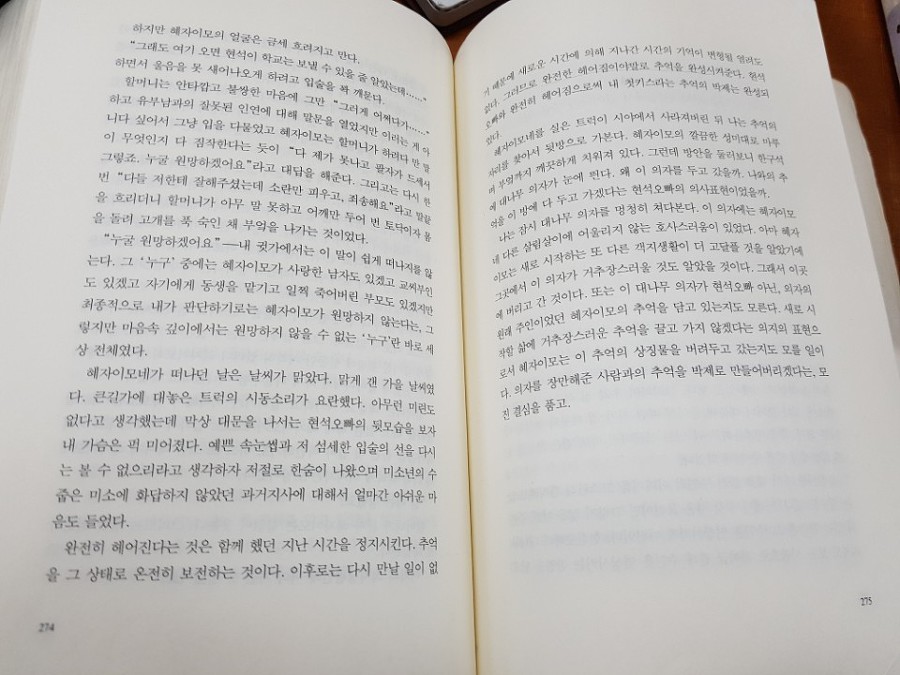
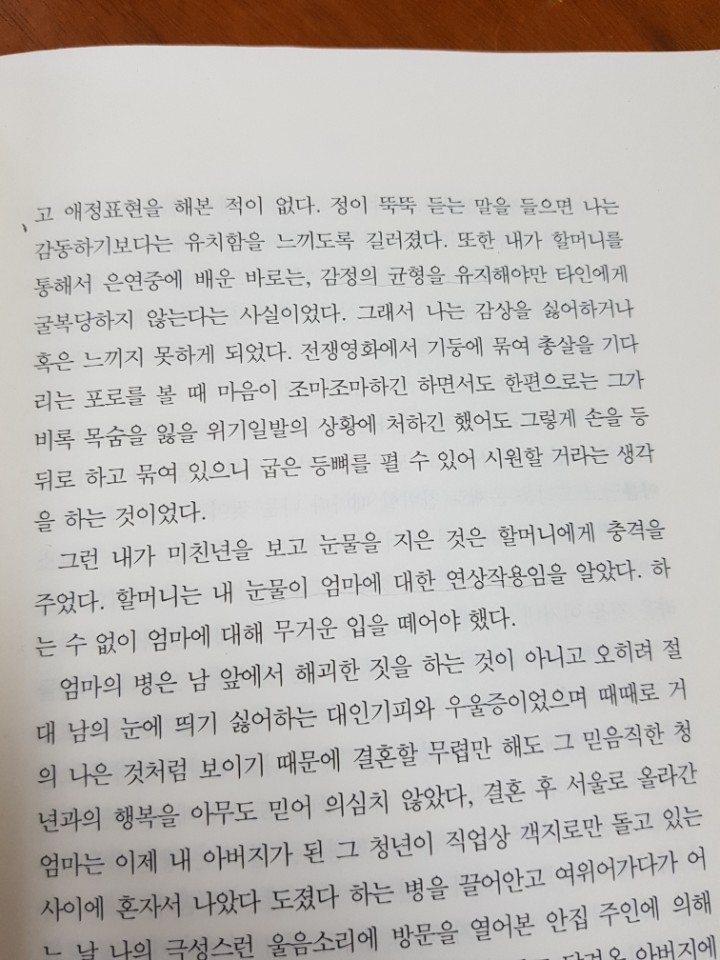
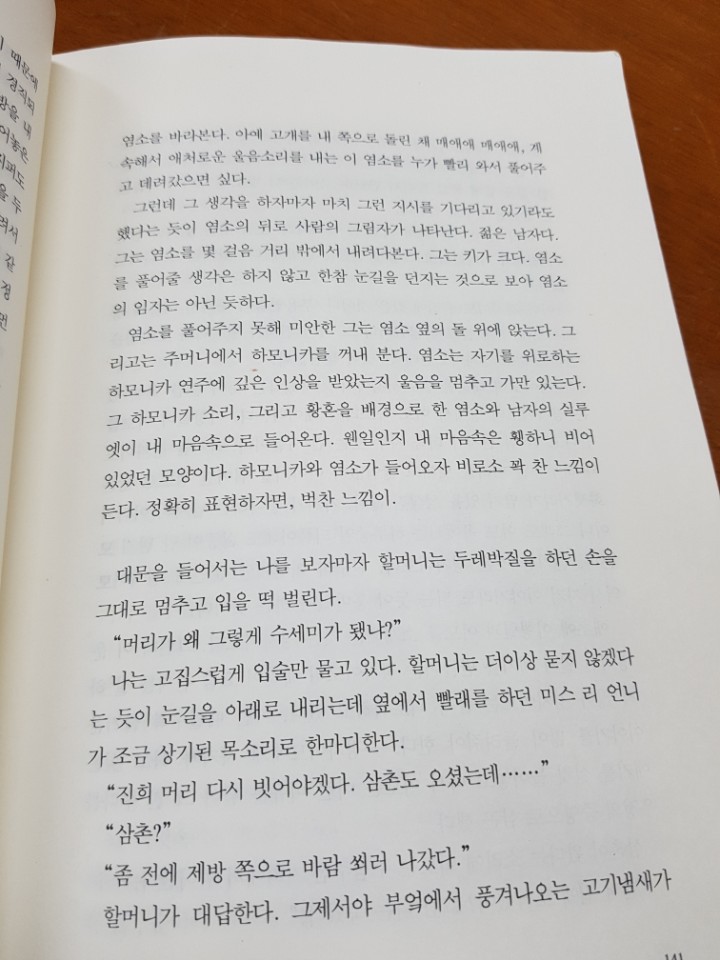
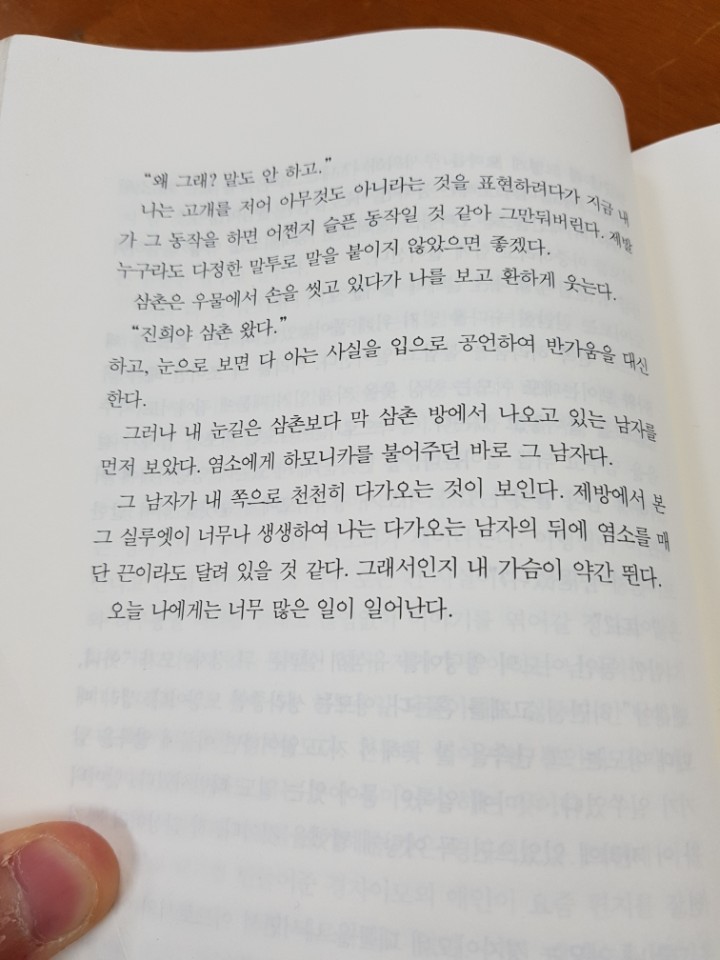
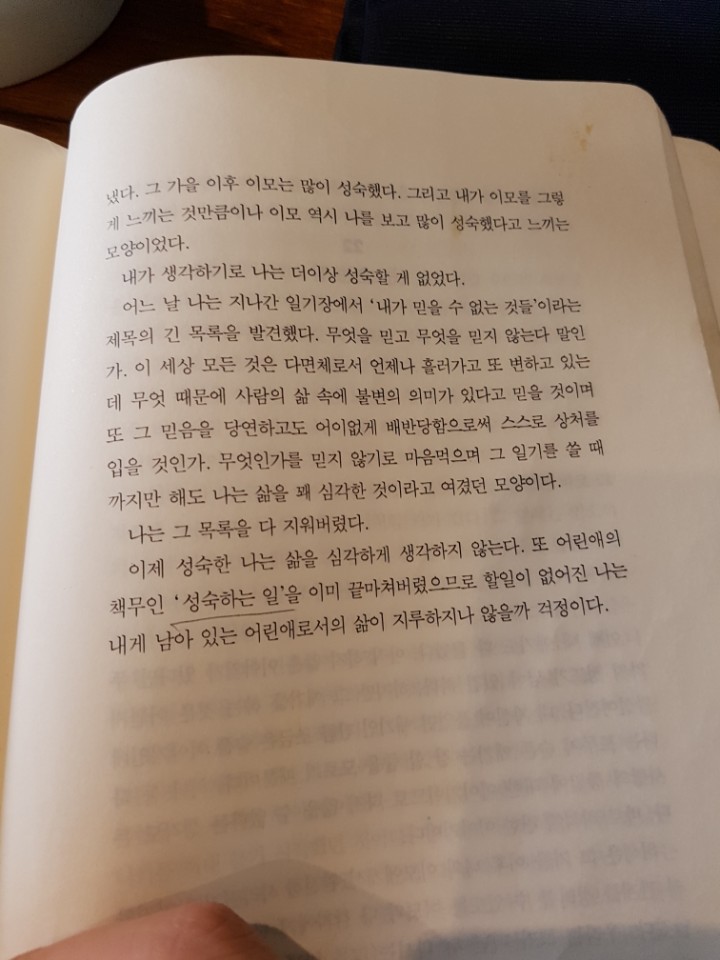
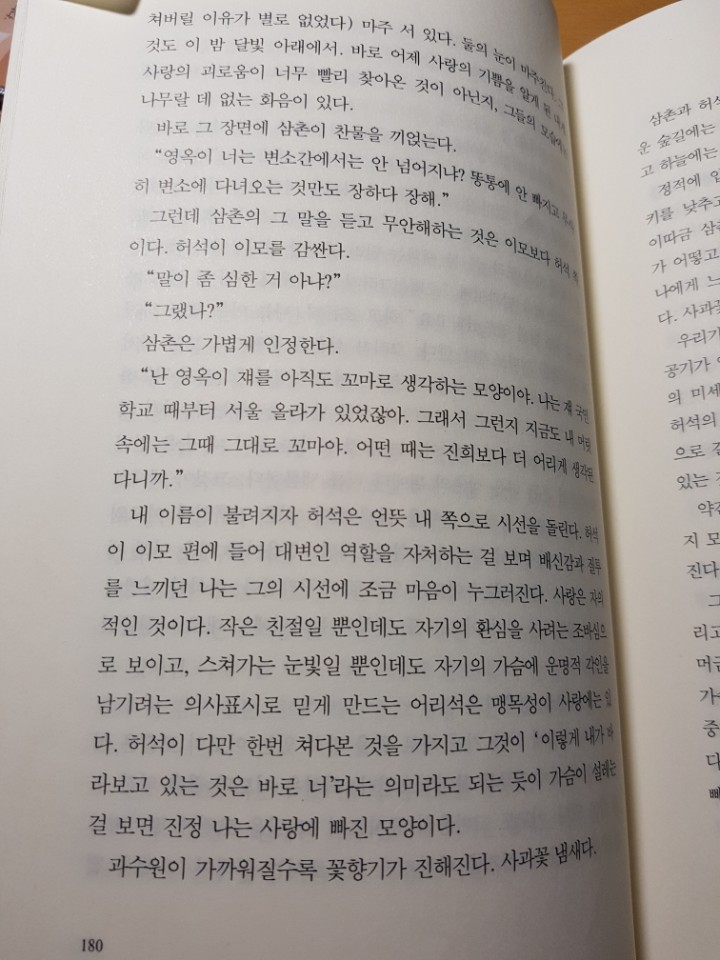
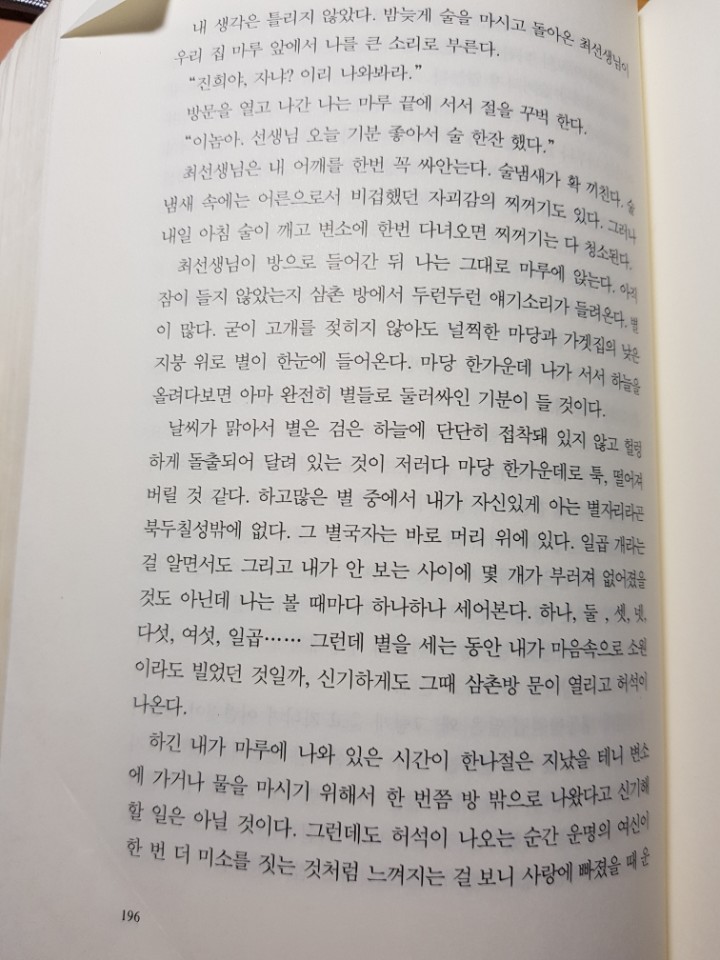
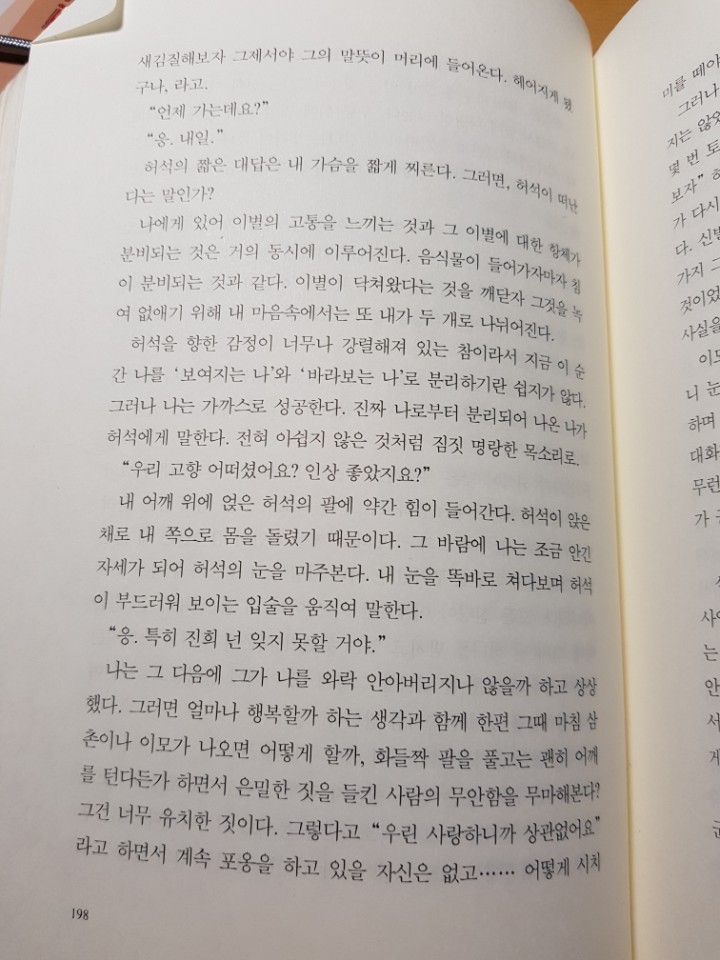
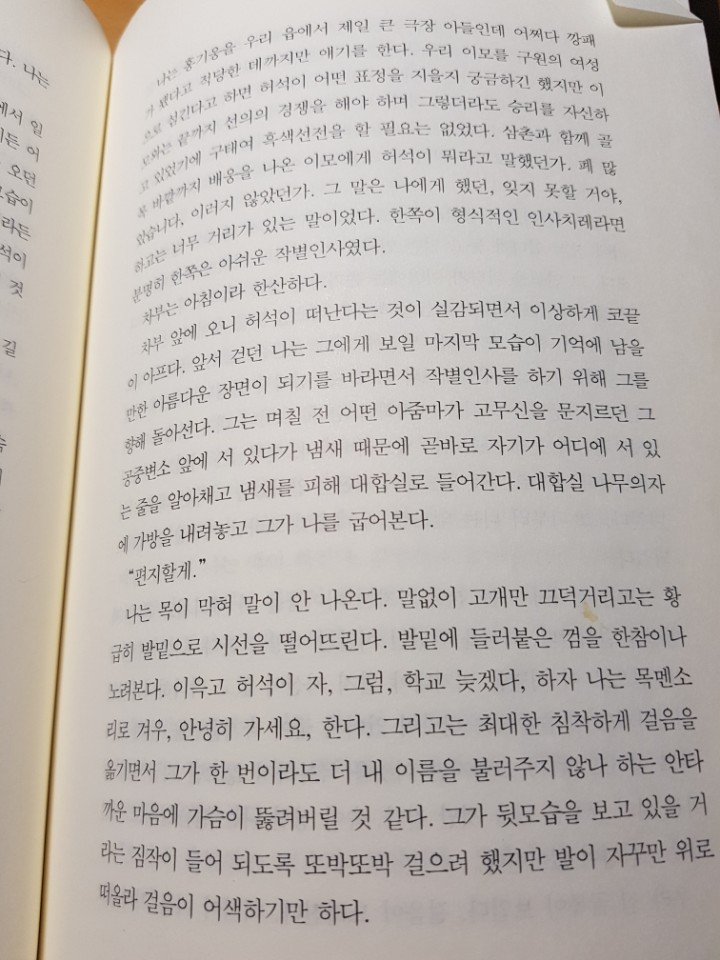
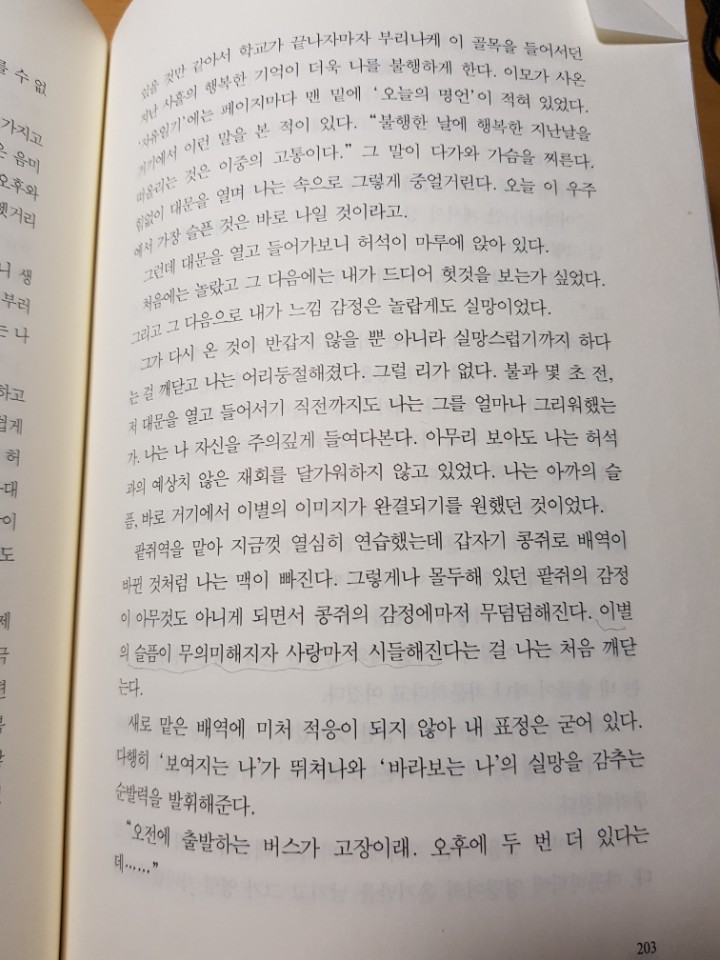
Reviving the painful memories entangled with a past love can change nothing of the present, and because people know they'll suffer because of it, many tend to keep them covered up. I too, when things I've covered up pop out sometimes, find it hard but cover them up again. As Aunt Hye-ja says, there's also the life of a wanderer. That love withers once the sorrow of parting becomes meaningless is something I'd thought even before reading Jin-hee's account of Heo Seok. The moment the sorrow of parting disappears, love no longer remains in the hot form it once had but tends to remain in a warm form. And the loved one saying 'I'll write to you' was something you could see up until the 90s, but these days that 'I'll write to you' feels like it's changed to 'I'll call you,' 'I'll text you.' It was a good piece of writing. Nothing in particular stayed with me, but I just have the feeling that, even at the risk of someone holding a weakness over me, I don't want to live like the narrator. A feeling of, let's live a little more honestly?
I too carry quite a strongly cynical disposition, but it can be called cynicism of a different meaning from this protagonist's. Kang Jin-hee's cynicism at age 12 was mainly directed at adults who saw and mistook 'her' as nothing but a child. By contrast, the cynicism I have is different from cynicism that begins with the people around me seeing me as a child. It's mostly made up of cynicisms like 'the world doesn't change,' 'the world can't get any better.' This cynicism is different in direction from Kang Jin-hee's, so what I could relate to was the protagonist's cynical attitude and feel, but the substance of the cynicism was beyond reach.
If the future of human relationships were full of cynicism, then in fact the world could only be seen as a world made up of nothing but hypocrisy and affectation. I just don't want to be that way.
For an explanation or interpretation of the general 'Bildungsroman discourse'—the father-absent type of Korean Bildungsroman—Professor Na Byung-cheol's research paper among the references below can be considered the most accessible. This is because most interpretations of the Bildungsroman deal with problems arising from the 'absence of men' distinctive to Korean society. The position the existence of the 'father' occupies within the household appears as the 'norms of society,' and you can grasp the explanation that 'Kang Jin-hee' of The Bird's Gift experiences the absence of a father and seeks to fill that absence in an uncle's friend like 'Heo Seok.' There are more stories, but I'll omit the rest.
(Various perspectives related to the Bildungsroman on Eun Hee-kyung's 'The Bird's Gift' can be examined in various research papers. I'll attach the references below. Most of this is just my own thoughts. I'll say in advance that most of the papers on this novel concern the 'absence of the father.')
References
Kim Joo-ri (2012), Maternal Love and Blood Kinship: A Study of the Meaning of Women's Growth in Eun Hee-kyung's <The Bird's Gift>, The Gaesin Language and Literature Society, Gaesin Language and Literature Studies Vol. 36, p105~132
Na Byung-cheol (2003), Women's Bildungsroman and the Absence of the Father, The Korean Women's Literature Association. Feminist Literary Studies Vol. 10, p183~214
Yoo So-hong (2017), A Study of the 1990s Women's Bildungsroman - Focusing on Eun Hee-kyung's <The Bird's Gift>, The Korea Entertainment Industry Association, Journal of the Korea Entertainment Industry Association No. 11, p25~35
Comments 0
No comments yet. Be the first.